Vano Removals
About Us
Contact
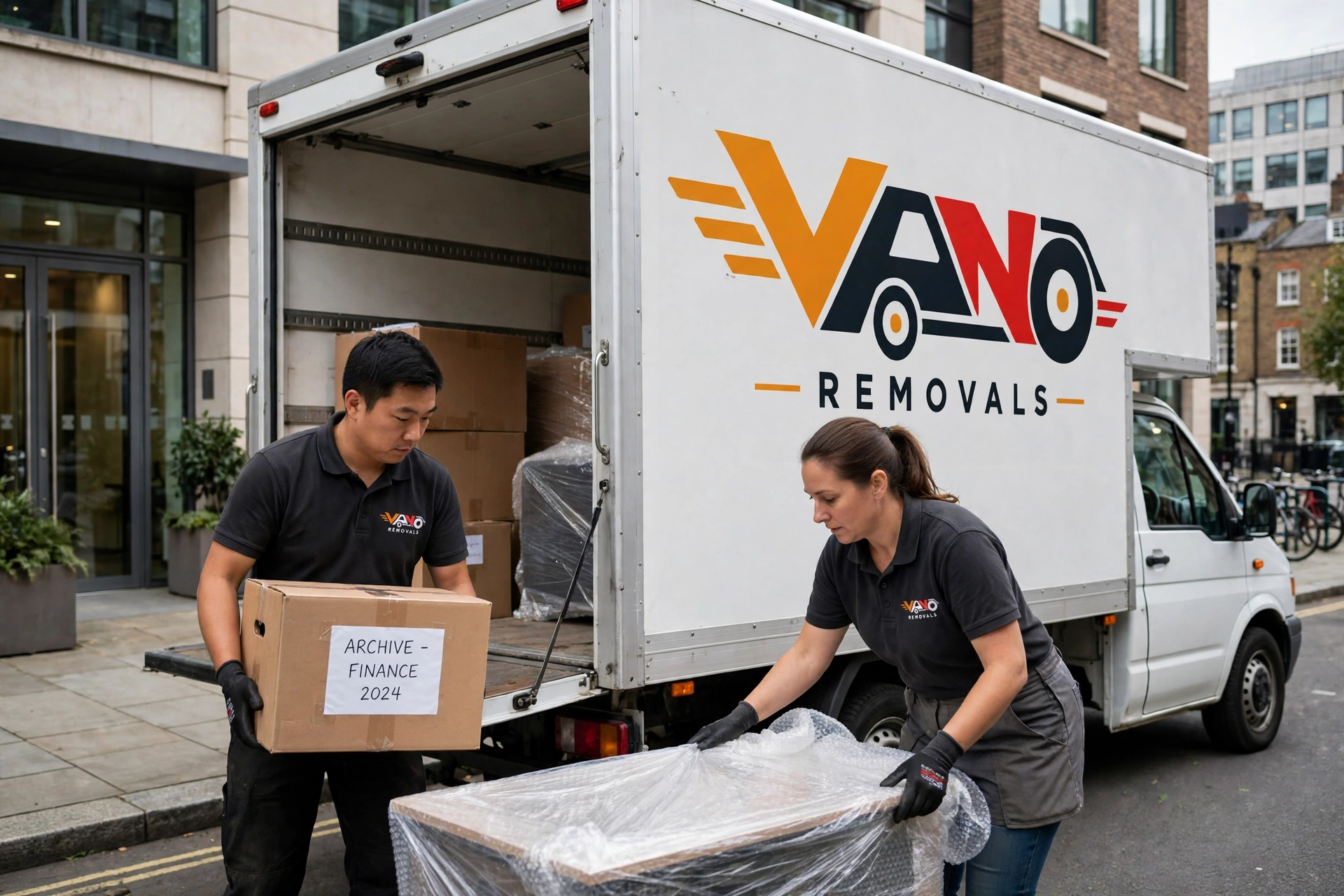
Vano Removals crew loading labelled archive boxes outside a London office for transport to a storage unit the business rents
Rated 5.0 on Google

Business Storage in London

You rent the unit; we run the transport. Collection, loading and stacking in retrieval order, part-load retrievals and full redelivery, every run priced on a published hourly card from £140, with the unit contract kept where it belongs: between your business and the operator.

No deposit to bookFree cancellation up to 24 hours beforeRated 5.0 on Google
07459 180023

START YOUR ENQUIRY

Tell us about your move

Enter the key details so we can review your moving enquiry.

We'll confirm the details before you book.

By submitting, you agree to our Privacy Policy and Terms.

Storage Runs From £140
Published card, 2-hour minimum per run
Written Quote First
Every run priced as a total before it is booked
Stacked for Retrieval
First-needed by the door, labelled to your list
No Deposit to Book
Free cancellation to 24 hours before a run

Quick answer

Business storage with us is transport, from £140 a run. You rent the unit from an operator in your own business name; our crew collects your stock, archives or equipment, stacks the unit in retrieval order, brings part-loads back when you need them and redelivers everything when the unit closes. Transport is priced on a published card (Driver Help £70 per hour, 2 Men £85, 3 Men £100, 2-hour minimum). The rent is a second bill, between you and the operator. We do not run a storage facility.

Price
Transport on the published card: £70 / £85 / £100 per hour, runs from £140. The unit rent is the operator’s price, not ours
Minimum booking
2 hours, per run
Who it is for
Businesses storing stock, archives, equipment or office contents in a unit they rent themselves
Where
Collections and deliveries London-wide, to any operator’s facility
Terms
No deposit; free cancellation to 24 hours before; quotes valid 7 days; payment at the time of service
WORKED TOTALS

What the Transport Typically Costs

Real totals for the runs businesses actually book, worked from the published card. These figures are the transport only; what the unit itself costs is covered in the next section, and household storage is on our storage solutions page.

Storage runCrewTypical timeTypical total
First load-in for a small unit: archive boxes and a few desks from one office2 Men2 hours (minimum)£170
Stock overflow load-in: a full van of cartons and racking for a 50 to 100 sq ft unit2 Men3 to 4 hours£255 to £340
Palletised load-in: several pallets of stock, tail-lift work at both ends3 Men4 to 5 hours£400 to £500
Part-load retrieval: a few pallets or boxes brought back to the premisesDriver Help2 hours (minimum)£140
Retrieval with a restack: half the unit comes out, the rest is restacked in order2 Men2 to 3 hours£170 to £255
Full redelivery day: the unit emptied and delivered to your new premises2 Men6 to 8 hours£510 to £680

Illustrations, worked from our published hourly card (Driver Help £70, 2 Men £85, 3 Men £100 per hour, 2-hour minimum), checked October 2026. Your written quote confirms the total for each run before you book it. Included beside every price: collection, loading, unloading and carrying at both ends, blankets and straps, stacking in retrieval order, and fuel and mileage within London. Add £5 per floor where the carry at your premises is by stairs and tell us the floors when you ask for the quote, so the charge is in the quote, not a surprise on the day. The unit’s rent is not in these figures: it is your own separate contract with the operator, priced by them.

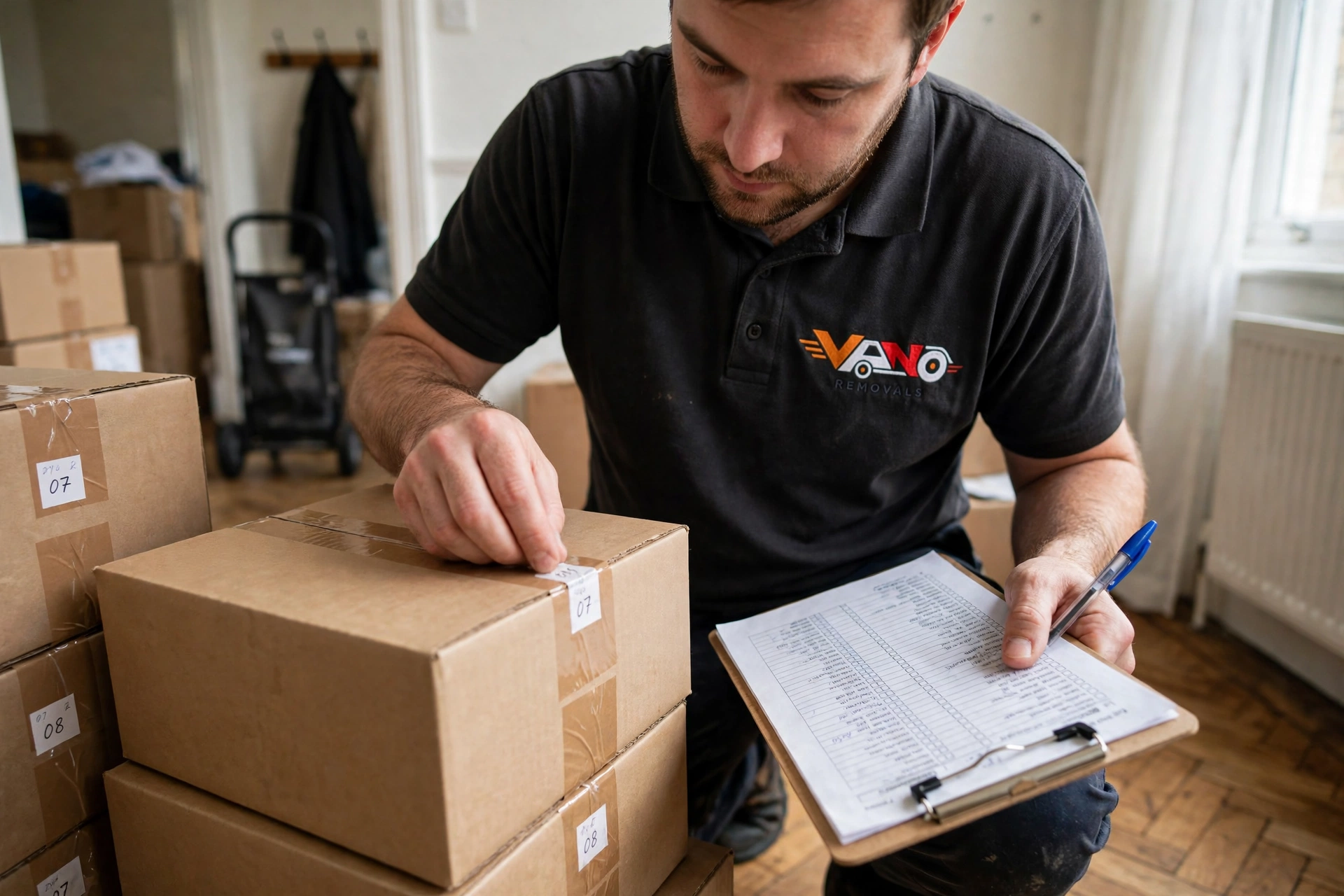
Each box numbered and ticked off the inventory list at the customer's premises before it is loaded for storage
THE TWO BILLS

The Unit Is Yours. The Transport Is Ours.

Business storage is two contracts, and keeping them separate is what keeps both honest. Here is what sits on each side.

Your contract: the operator

  • The unit, rented from a storage operator in your own business name, for as long as you need it.
  • Rent and terms set by the operator. Self Storage Association UK data reported in October 2026 puts London averages at about £98 per month for 25 sq ft, £196 for 50 sq ft and £293 for 75 sq ft, including VAT.
  • Access under the operator’s hours, for the staff you authorise with them. The codes, keys and permissions are yours.
  • Contents protection for what sits in the unit is the operator’s product, or your own insurer’s: your arrangement, on your contract.
  • The operator’s prohibited list governs what may go into the unit.

Our contract: the transport

  • Collection from your premises, loading, protection on the van, and the run to the unit.
  • Stacking the unit in retrieval order, labelled to your inventory, checked off with your person on site.
  • Part-load retrievals as booked runs from £140, with what stays behind restacked in order.
  • Full redelivery when the unit closes, to the premises you name.
  • Every run priced on the published hourly card and confirmed as a total in a written quote before you book it. Payment is at the time of service.

Why it matters to a business: two invoices that never mix. The operator bills the rent on their terms; we bill the runs on ours. Your accounts team files each where it belongs, your stock never sits in a mover’s own warehouse on a mover’s terms, and if you change operator, the transport simply runs to the new unit.

Archive boxes being collected from a London office for transport to storage

Business Storage Work We Run

Six situations cover most of it. Each starts with your list and the unit you have rented, or are about to rent.

Stock Overflow and Seasonal Peaks

Usually 2 Men, 3 to 4 hours for the load-in

The stockroom is full a month before the stock is. Overflow cartons and pallets go into your unit before the peak, come back in part-loads while you trade through it, and the unit closes when the season ends. Each movement is a booked run, priced before it happens.

Archives and Business Records

Usually 2 Men, 2 to 3 hours

Boxed files that have to be kept but not kept close. We collect from the office and stack the unit in the order your own inventory uses, so a retrieval for an audit or a client file is one run to one labelled section, not a morning of digging. Retention and data protection stay your responsibilities; the boxes stay under your contract.

An Office Move With a Gap

Load out, then phased delivery, each run quoted

Out of the old office on the day it has to be empty, into your unit, and out again in phases when the new office is ready: desks and IT first, archives and surplus furniture once you know what fits. The gap is storage; the moves at both ends are ordinary office removals.

A Shop Refit

Usually 2 Men, 3 to 4 hours each way

Fixtures, rails, shelving and stock out of the shop so the fitters get a clear floor, held in your unit for the length of the refit, then back in the order the shop is rebuilt. The unit sits near the shop, not near us: choose the operator that suits the refit, and we run the transport around their access hours.

Exhibition and Events Kit

Out for one show, back the same week

Stands, cases and display kit earn their money a few weeks a year and take up space the rest of it. Into your unit between shows, out as a part-load retrieval when the next show comes, and back again after. Labelled cases travel as they are; loose display items get wrapped for the van.

Equipment and Furniture Between Uses

Usually Driver Help or 2 Men at the minimum

Kit between contracts, furniture between tenants in a furnished office, the spare desks nobody wants to sell. Small loads at the 2-hour minimum, stacked so the next use is a single retrieval rather than a clear-out.

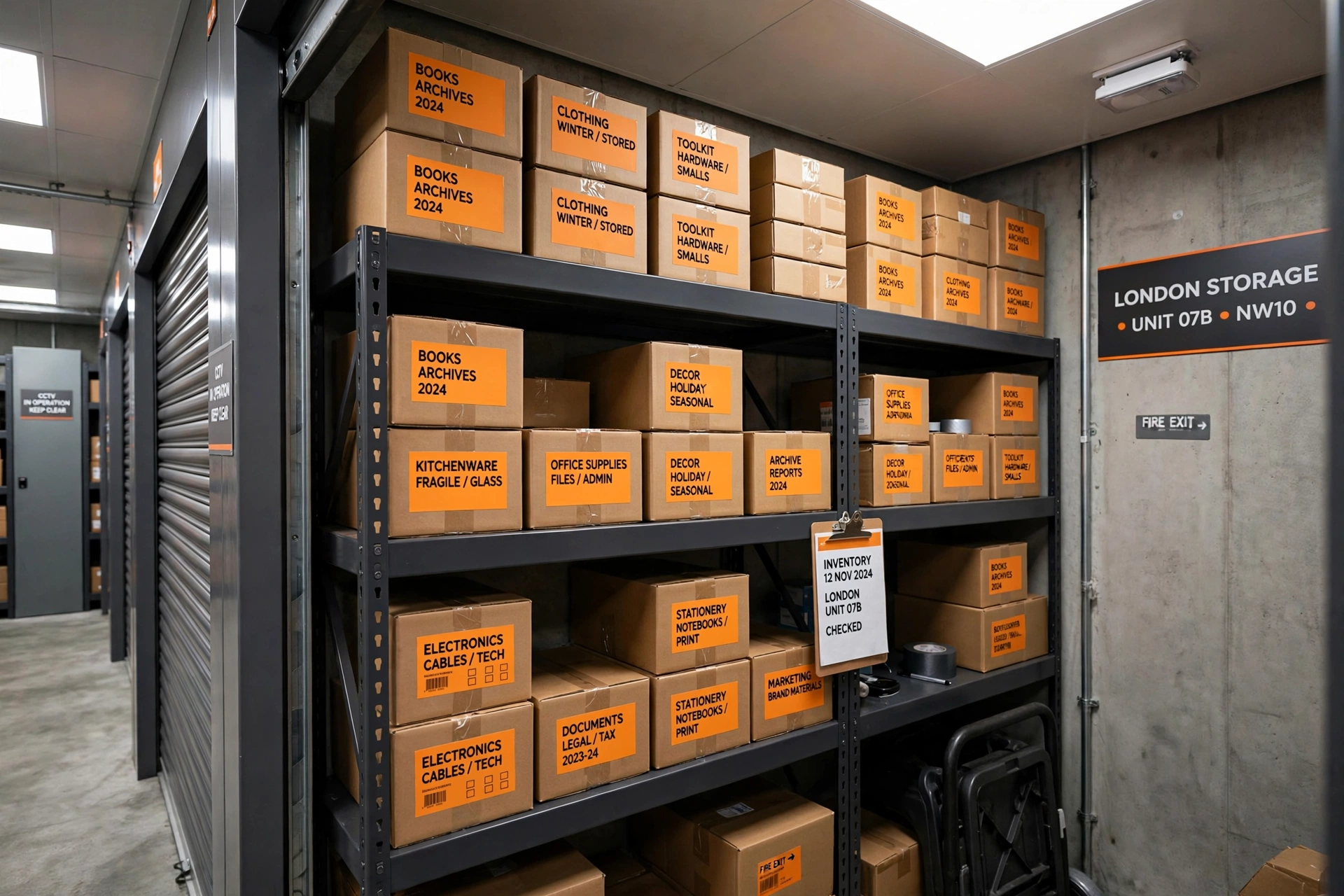
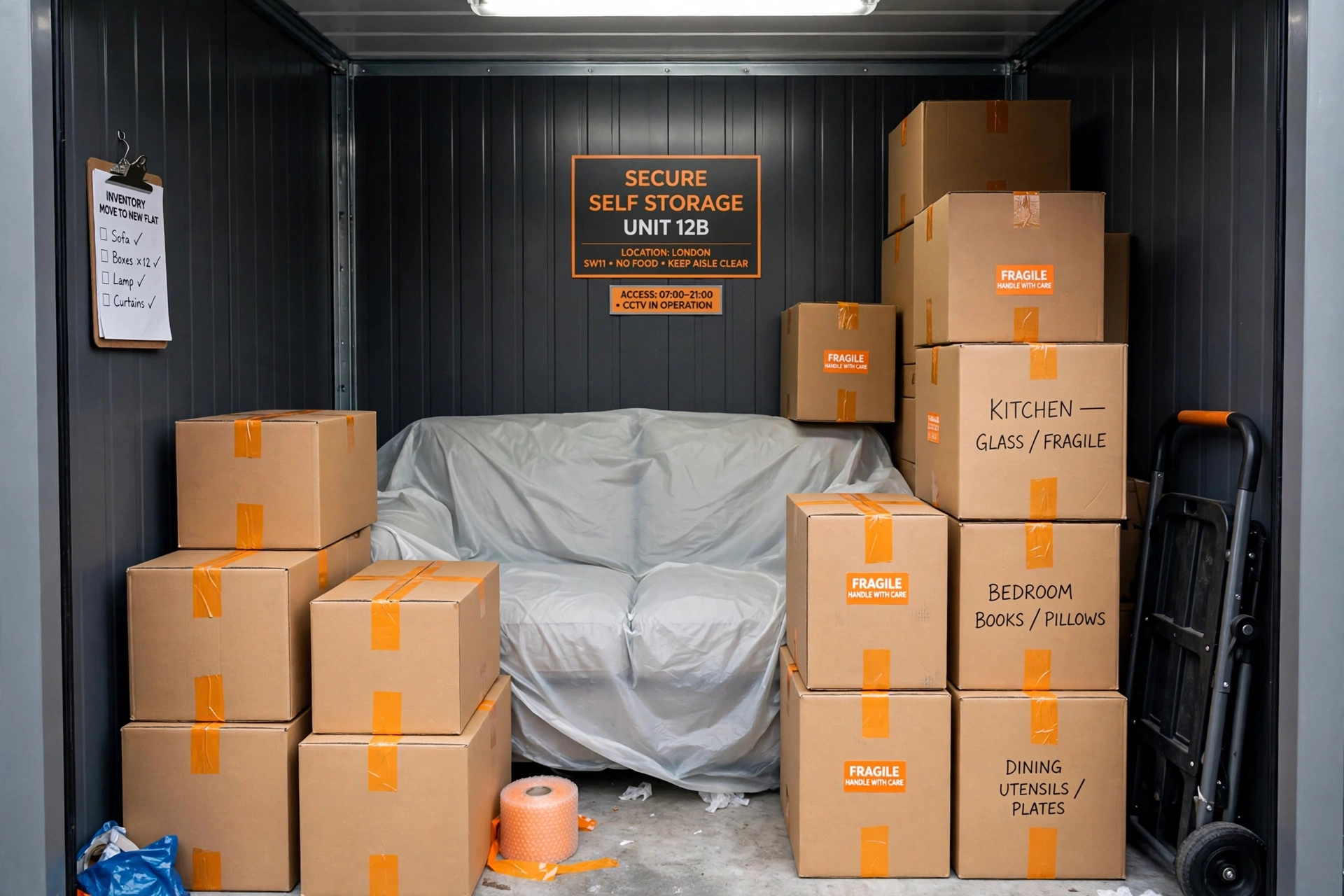
Labelled archive boxes and business stock stacked inside a unit the business rents in London

Stacked for Retrieval, Not Just Stored

The difference between a stored unit and a working one is the stacking. A unit loaded in the order things came off the van is a unit you have to empty to reach the back. We stack in retrieval order instead: what you will need first, seasonal stock, the stand for the next show, the file run for the audit, sits by the door; heavy and stable goes low; a working aisle is left in bigger units; and every stack is labelled to your own inventory as it goes in, then checked off with your person before the door closes.

Labelling follows your system, not ours. If your stock has SKUs, your archives have box references and your kit has case numbers, those are the labels the crew works to, and the quote for a retrieval asks for the reference, not a description. If there is no system yet, a simple numbered list made on the day beats a perfect one that never happens.

Access stays with your business throughout. Your staff hold the codes and keys under your operator contract; on a run day your person meets the crew or opens up, which keeps the record of who has been in the unit exactly as the operator’s own logs show it. We do not hold keys or codes as a service, and we do not visit your unit without your person there.

Crew stacking labelled archive boxes and wrapped office chairs inside a storage unit rented by the business, heaviest items low

Racking and shelving: carried, not installed

If your business already owns racking, shelving or stillages, the crew carries them and stands them in the unit as part of the stack, and shelves can be loaded in place where the design allows. What we do not do is supply or install a storage system: racking is part of your fit-out, bought or hired with the operator or your own supplier, and it needs to be at the unit before the load-in so the stacking plan allows for it.

What stays out of the unit

Every operator publishes a prohibited list, and it governs. The usual exclusions are perishable food, fuel and other flammables, gas cylinders, chemicals and anything living; for businesses the borderline cases are aerosols, paints and solvents, and lithium batteries in quantity. Check borderline stock against the operator’s list before the load-in: a load the operator refuses is a wasted run, and the decision is theirs, not ours.

A seasonal stock collection being carried out of a shop back room to the van, on its way to the shop's rented unit
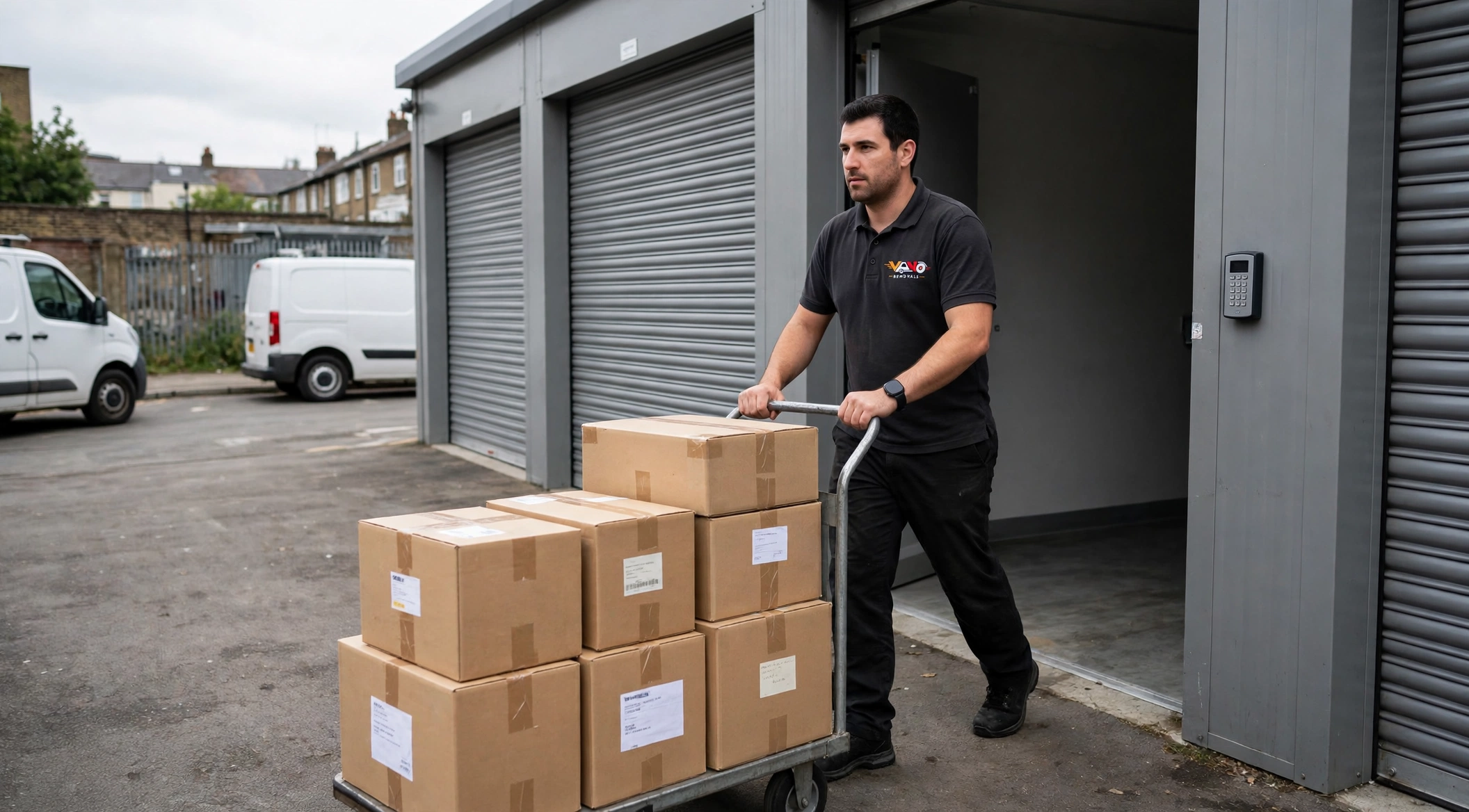
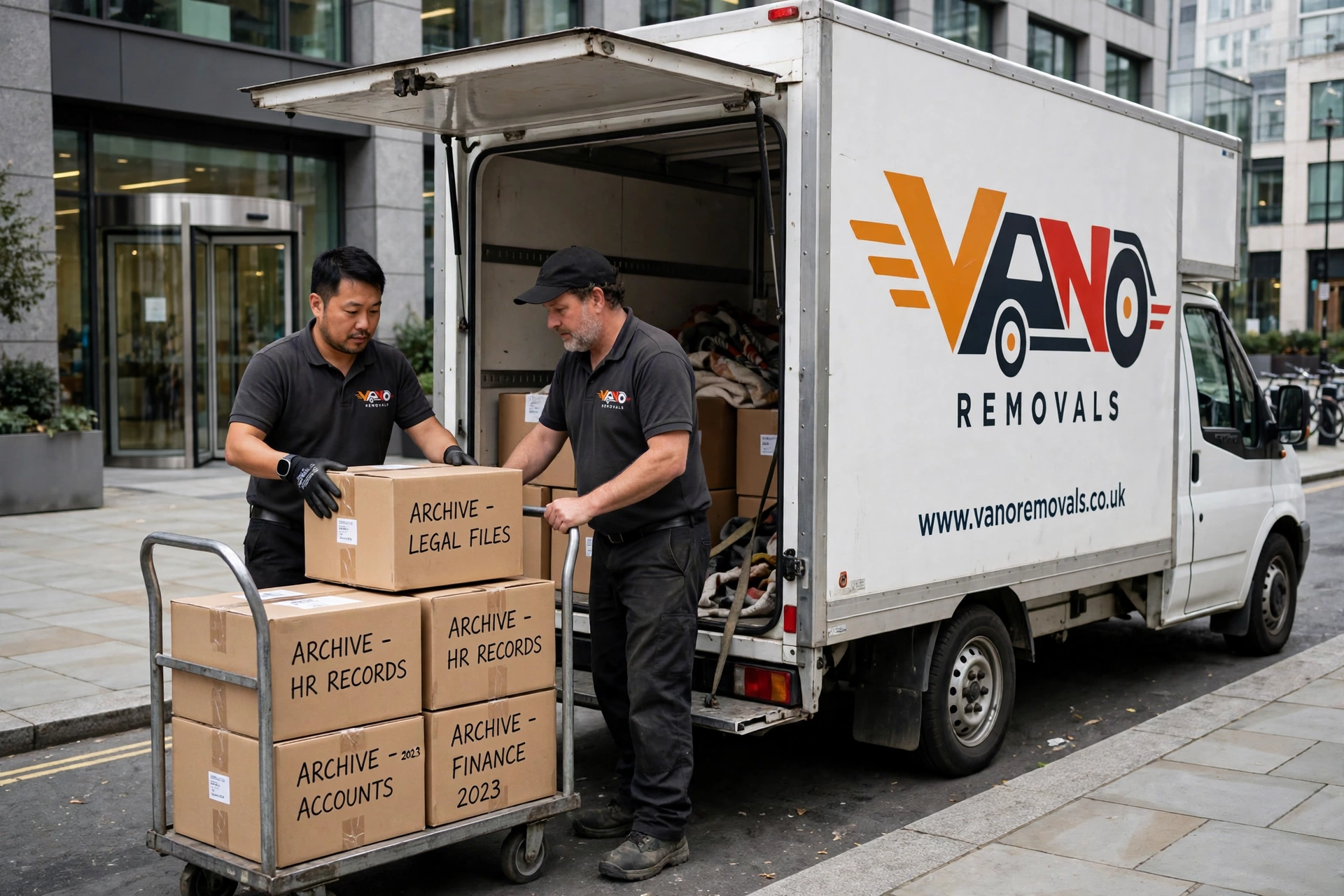
Document boxes being wheeled from the van into the unit the business rents

Unit Sizes, in Business Terms

The operator sells the size; this guide just translates it into loads. Sizes are floor area at about 8 feet of stacking height, and two businesses of the same size hold very different amounts.

25 sq ft

Holds

About 50 archive boxes, or a small stock overflow

Best For

Records, samples, a market stall’s kit

50 sq ft

Holds

About 100 archive boxes, or a small stockroom

Best For

E-commerce overflow, seasonal stock

100 sq ft

Holds

4 to 5 pallets, or a small office’s furniture

Best For

Office gaps, retail stock rooms

200 sq ft

Holds

8 to 10 pallets, or the contents of a full office

Best For

Wholesale stock, refit holding

500+ sq ft

Holds

Multiple pallets, machinery and large equipment

Best For

Larger operations and trade kit

Picking the wrong size is normal, and operators generally let you swap up or down as the load changes, so an estimate is not a trap. Our room-by-room storage size guide works through the sizes in more detail.

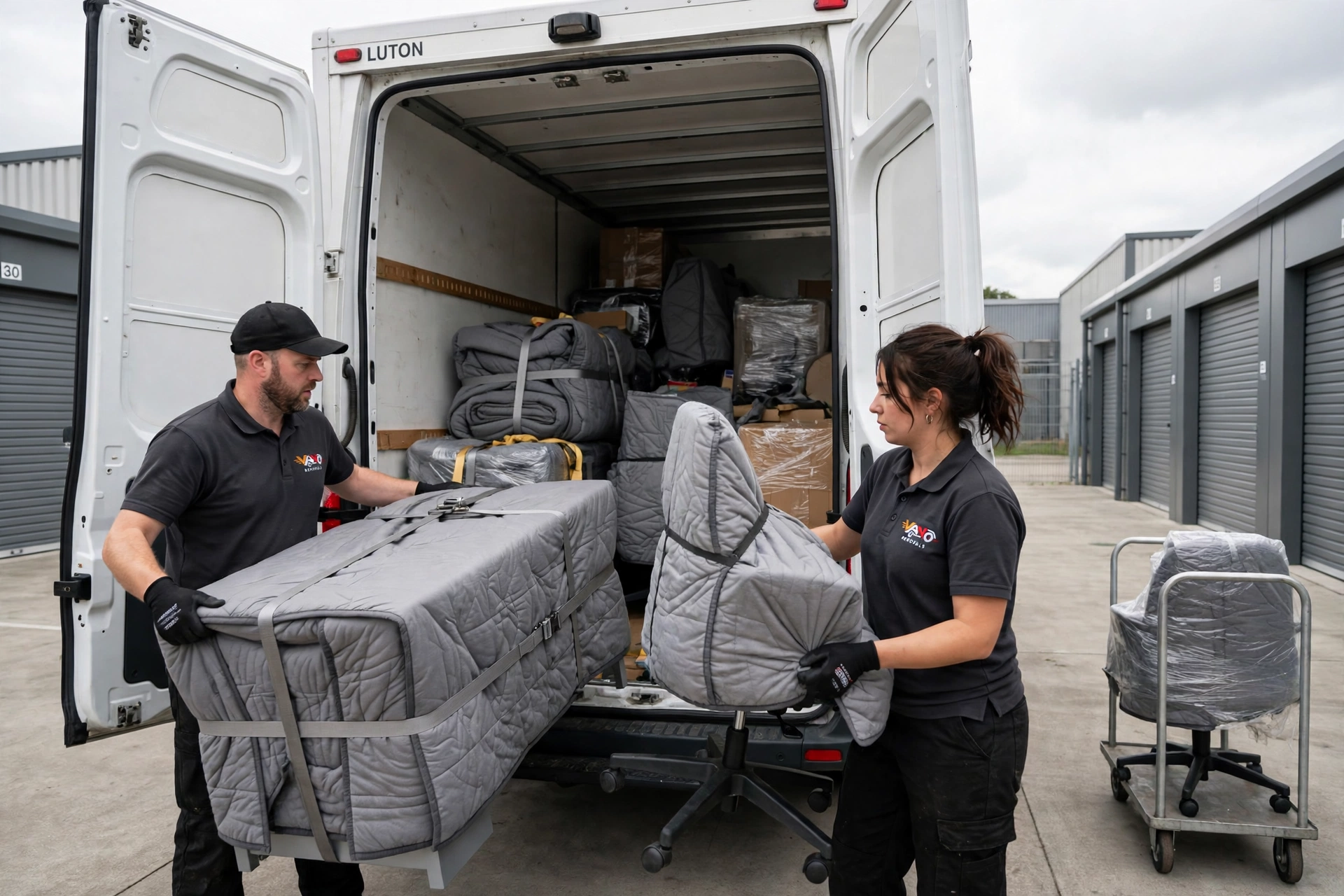
Blanket-wrapped office furniture being loaded for the run to the customer's storage unit

What Is Included, and What Is Not

Included in every run

  • Collection from your office, shop, warehouse or site by our crew
  • Loading, unloading and carrying at both ends, at every tier including Driver Help
  • Blankets, straps and protection for stock, furniture and equipment on the van
  • Stacking the unit in retrieval order, labelled to your inventory as we go
  • Fuel and mileage within London
  • Part-load retrievals and redelivery booked as separate runs, each with its own written total
  • A written quote for every run, confirmed before you book it

Not included, stated plainly

  • The storage unit itself: you rent it from an operator in your own business name; we do not run a storage facility
  • Contents protection or insurance products for the unit: those are your arrangement with the operator or your own insurer
  • Shelving or racking supplied or installed: we carry yours and stand it in the unit, we do not fit storage systems
  • Holding your keys, gate codes or access rights: access stays with your business and your authorised staff
  • Anything on the operator’s prohibited list: their rules govern what goes into their unit
  • Disposal of stock, packaging or equipment you no longer want: we are a removals firm, not a licensed waste carrier

One honest note on stock and packaging you are finished with. We move goods to your premises, to a unit, or to a person or organisation you name. We are a removals firm, not a licensed waste carrier, so we do not take stock, packaging or equipment away for disposal. For disposal, a registered waste carrier is the legal route, any carrier can be checked free on the Environment Agency public register, and the duty of care for the waste stays with your business.

Business equipment loaded for a redelivery run from a rented unit back to new premises

How a Storage Run Works

Four steps per run, whether it is the first load-in, a part-load retrieval or the day the unit closes.

01

Send the list and the unit details

What is going into storage, where it is collected from, and the unit’s address, size and access hours. If you have not rented the unit yet, send the list anyway: the run is priced from the load and the distance, and the unit choice is yours.

02

Written quote for the run

The quote comes back in writing with the crew size, the time the run should take and the total, valid for 7 days. Booking takes no deposit. Retrievals later are quoted the same way, as their own runs.

03

Load-in day, stacked for retrieval

Your person opens the unit and stays as the contact; the crew collects, protects and transports the load, then stacks it in retrieval order and checks it off against your inventory before the door closes.

04

Retrievals and redelivery

Part-loads come out as booked runs from £140, with what stays behind restacked in order. When the unit closes, a full redelivery run takes everything back to the premises you name.

A redelivery run arriving back at new premises: archive boxes and a wrapped desk coming off the van
COMPARE

The Typical Way vs With Vano Removals

Point of comparisonThe typical wayWith Vano Removals
The unitPart of a bundle: your stock held in the mover’s space, on the mover’s terms, under the mover’s accessRented by you from an operator in your business name; your contract, your terms, your access
Who carriesYour own staff in a hired van, with the day rate, the fuel and the deposit on a cardOur crew collects, loads, transports and stacks, at every tier including Driver Help
The priceA storage figure with transport folded in, so neither half can be checked against anythingTwo bills kept apart: our transport as a worked total in writing, the operator’s rent at their rate
The stackingIn the order it came off the van, so the thing you need is behind everything elseIn retrieval order, labelled to your inventory, with what you need first by the door
Getting things backEverything out in one redelivery, or another trip in your own vanPart-load retrievals as booked runs from £140, and the rest restacked in order behind them
AccessArranged through whoever is holding your goods, in their hoursYours, under your operator contract; we hold no keys and visit only with your person there

Based on the published prices and terms of London van hire, self-storage operators and bundled business storage offers, checked October 2026. The full four-way comparison of every way of moving goods is on our compare page.

Content updated October 2026. Transport prices from our published hourly card, checked October 2026. Unit rent averages are Self Storage Association UK figures reported in October 2026 and are the operators’ prices, not ours. Unit sizes, access arrangements and prohibited items are each operator’s own, confirmed on your contract with them.

Price Your Storage Runs

Send the list of what is going into storage, the address it is collected from, and the unit’s address and access hours. The quote comes back in writing with the crew, the time and the total for the run. No deposit, and free cancellation up to 24 hours before.

Or email info@vanoremovals.co.uk

Rated 5.0 on Google

“Best house removal company around. The team at Vano Removals was punctual, hard-working, and handled our furniture with great care. If you need reliable, stress-free local movers or packing services, I highly recommend them.”
Muhammad Saad
“Vano Removals moved our 2-bed flat from Croydon to Sutton last week…”
Irfan Shahzad

Business Storage FAQs

Common questions about business storage transport, cost first. If you do not see yours, call us. We are happy to help.

Talk to the team

Published rates, a written quote for every run, and no deposit. The fastest way to price a load-in or a retrieval is to send your list and the unit’s address.

07459 180023

There are two bills, and only one of them is ours. Our transport is priced on the published card: Driver Help £70 per hour, 2 Men £85 per hour, 3 Men £100 per hour, with a 2-hour minimum on every run. A first load-in for a small unit is usually £170 with 2 Men at the minimum; a stock overflow load-in usually runs £255 to £340; a part-load retrieval starts at £140; and a full redelivery day, the unit emptied back to your premises, is usually £510 to £680. The unit rent is the second bill: your own contract with the operator you choose, at their price. No deposit, and every run is confirmed as a total in a written quote before you book it.

No. We do not run a storage facility, for businesses any more than for households. You rent the unit from an operator in your own business name, on your own contract, and the access, the terms and the rent stay between you and the operator. Our part is everything that moves: collection from your premises, loading, transport, stacking into the unit in the order you will need things back, part-load retrievals, and the redelivery run when the unit closes. If you have not chosen an operator yet, pick the unit first and then book the run in: the transport price depends on where the unit is and how much is going in.

As a guide, at roughly 8 feet of stacking height: 25 sq ft holds about 50 archive boxes or a small stock overflow; 50 sq ft holds about 100 archive boxes or the contents of a small stockroom; 100 sq ft holds 4 to 5 pallets or the furniture from a small office; 200 sq ft holds 8 to 10 pallets, the contents of a full office or a shop’s worth of fixtures. The size is the operator’s to sell you, not ours, and operators generally let you swap up or down as the load changes. Our storage calculator and room-by-room size guide give a closer answer for your list, and your written quote for the run in is based on the load, not the unit size.

Yes, that is the core of the service. We collect from your office, shop, warehouse or site, load and protect everything for the journey, and stack the unit in retrieval order: what you will need first sits by the door, heavy items sit low, and archive boxes are stacked in the sequence your own inventory uses, labelled as we go. A unit stacked in the order it was loaded is a unit you have to empty to find anything; a unit stacked for retrieval gives you the front third back every time you visit.

Yes. Part-load retrievals are a normal part of business storage: a few pallets of stock for a promotion, the exhibition stand for one show, twenty archive boxes for an audit. Each retrieval is its own booked run on the card, from £140 at the 2-hour minimum with Driver Help, and the crew restacks what stays behind so the unit is left in order. Tell us what is coming out when you book, and where in the unit it sits if you know, and the run is planned around it.

You do. The unit is your contract, so the access rights, the gate codes and the keys stay with your business and the staff you authorise with the operator. We do not hold keys or codes as a service. On a run day, someone from your business meets the crew at the unit or opens up for them, which keeps the chain of who has been in your unit exactly as your operator’s records show it. If several staff need access, that is arranged between you and the operator; it does not change the transport.

Insurance is as stated in your written quote: ask us to confirm in writing.

No. We carry racking, shelving and stillages if your business already owns them, and we will stand them in the unit as part of the stack, but we do not supply or install a storage system. If the unit needs racking, buy or hire it as part of your arrangement with the operator or your own supplier, have it at the unit before the load-in, and tell us it is there so the stacking plan allows for it.

The operator’s rules govern, and every operator publishes a prohibited list. The usual exclusions are perishable food, fuel and other flammables, gas cylinders, chemicals, illegal items and anything living. If your stock includes anything borderline, aerosols, lithium batteries in quantity, paints and solvents are the common ones for businesses, check it against the operator’s list before the load-in, because a load the operator refuses is a wasted run. We load what the operator accepts; we do not decide their list.

Separately, which is the point. Our written quote covers the transport runs only and states what is included in them: the crew, the van, loading, unloading, carrying and stacking, and fuel within London. The operator’s invoice covers the unit: rent, their terms, and any contents protection you take with them. Their pricing, including how they show VAT, is theirs; ours is the transport total in your quote. Two contracts, two invoices, and no figure that mixes the two, so your accounts team can file each where it belongs.

Yes, and it is one of the most common business storage jobs. We clear the old office into your unit on the move-out date, stacked so the essentials sit by the door, and deliver out of the unit in phases when the new office is ready: desks and IT first, archives and surplus furniture when you know what fits. Each run is quoted separately on the card. Our office removals page covers the move itself; this page covers the gap in the middle of it.

Send us the list of what is going into storage, the address it is collected from, and the unit’s address and access hours. The quote comes back in writing, valid for 7 days, with each run priced as a total. There is no deposit to book, cancellation is free up to 24 hours before a run, and payment is at the time of service. If the load grows or shrinks between booking and the day, tell us: the quote is based on your list, and a load that has doubled takes longer than the run that was priced.

Storing between addresses? Send both postcodes and the unit’s address with your quote request and every run is confirmed in writing.

Customer Reviews

What our customers say

Real, unedited reviews from customers we’ve moved across London.

5.0Excellent
Google reviews

“Best house removal company around. The team at Vano Removals was punctual, hard-working, and handled our furniture with great care. If you need reliable, stress-free local movers or packing services, I highly recommend them.”

Muhammad Saad

Google review · October 2026

Review 1 of 7: Muhammad Saad
Read all reviews on Google

These are unedited reviews from our Google Business Profile. Moved with us recently? Your honest review helps other Londoners choose with confidence.