
Updated 14 November 2026 · Reviewed by Ahmer Faiz, Founder, Vano Removals
Most people book storage the wrong way round: they pick a unit size first, then try to make their belongings fit it. Do it the other way round. Count what is actually going into storage, then match that list to a unit — and leave yourself room to get things back out again.
This matters most when storage sits between two addresses. A unit that is too small means a second unit, a second trip, or furniture left on the van. A unit that is too big means paying every month for empty floor. A room-by-room count, done once before you book, avoids both.
Start with the inventory, not the unit size
Walk through your home room by room and write down the bulky items first — beds, sofas, wardrobes, tables, white goods, bikes — then estimate the boxes. Bulky items decide the unit; boxes fill the gaps around them. Anything you plan to sell, donate or throw away should come off the list before you size anything, not after you have booked. If the sort-out turns into a proper clear-out rather than a few items, we can move the pieces you are keeping into storage, to a charity or to another address before you size the unit; anything for disposal goes via the council's bulky collection or a registered carrier you appoint.
Two things people consistently under-count: the contents of a loft, garage or garden shed, and the boxes from a kitchen. Kitchens alone can run to 15–20 boxes once cupboards, small appliances and crockery are counted. If either applies to you, size up, don't squeeze.
Our storage calculator works the same way — enter your rooms and items and it estimates your total volume and suggests a unit size. Use it to check the guide below against your own list. Decide early who is doing the packing, too: our comparison of packing yourself vs professional packing weighs the time it takes against the risk of damage in store.
The sizes, in plain terms
Storage units are usually sold by floor area in square feet, but height matters just as much — a tall unit holds far more than a low one of the same footprint. Always check the height as well as the floor size before booking. The sizes below follow the bands our calculator uses:
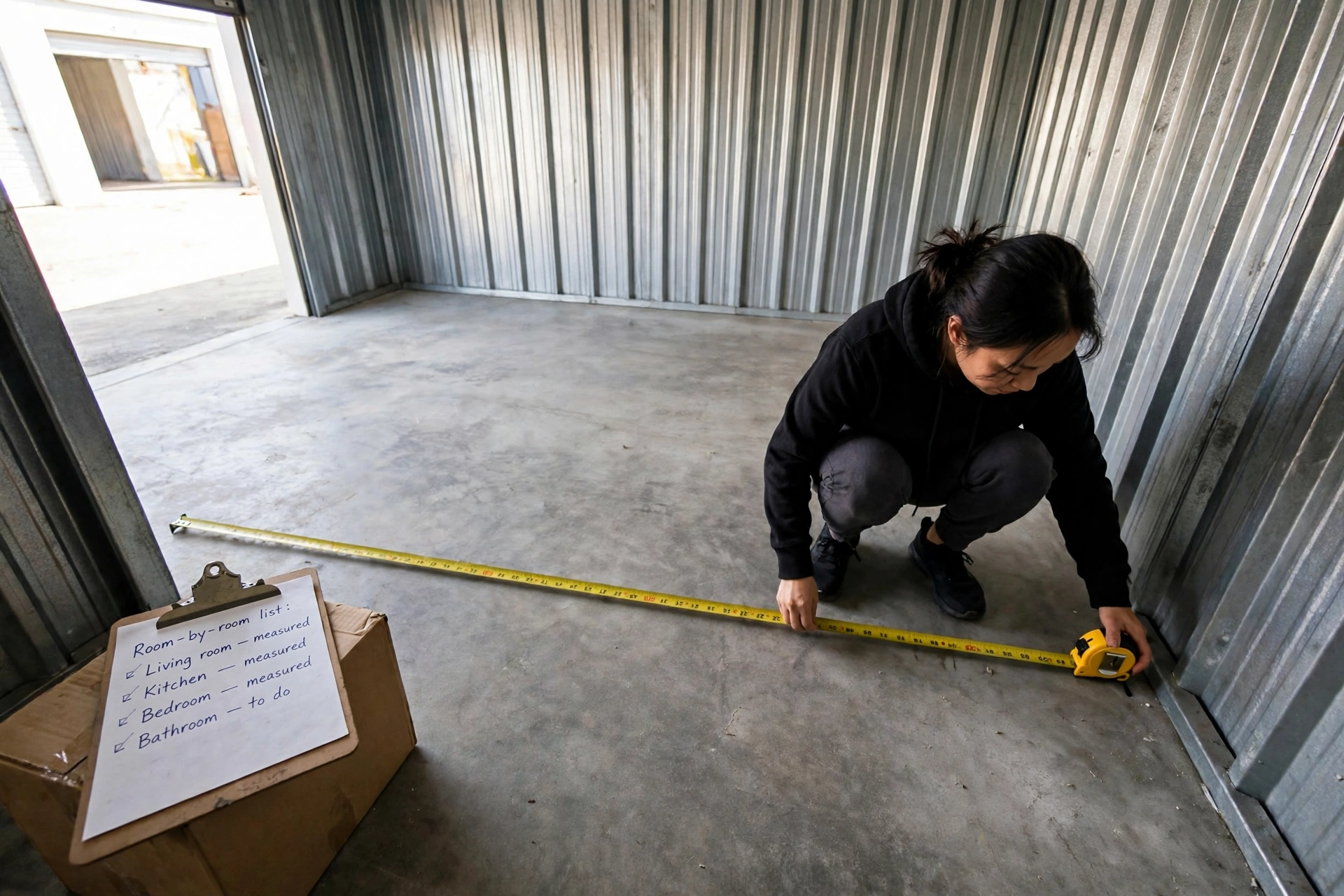
- 15 sq ft: boxes and small items. Suitcases, seasonal things, boxes and a bike. Think of a locker to a small room, about 8 ft high: floor area is small, so stacking does the work.
- 25 sq ft: studio overflow (about 5x5 ft, garden shed size). A single bed, a dresser, small appliances and boxes. The band most studios and decluttering projects land in.
- 35 sq ft: a 1-bed flat's contents, partial or lightly furnished (about 5x7 ft). A mattress, a dining set, a sofa and boxes, without a full set of white goods.
- 50 sq ft: a full 1-bed flat (about 10x5 ft). One transit van load, or half a single garage: sofa, bed, wardrobe, white goods and the boxes that come with them.
- 75 sq ft: a 2-bed house (about 7.5x10 ft). One Luton van load: two bedrooms of furniture, sofas, white goods and 40 to 60 boxes.
- 100 sq ft: a 2 to 3-bed house (about 10x10 ft, a single garage). This is the point where most families stop trying to Tetris everything in and start planning how the unit will be organised, with an aisle if you need regular access.
- 200 sq ft: a large house, or business stock and archives (about 10x20 ft, a double garage). A full house's contents going into storage, or a large business inventory. If you are at this size, the loading order matters as much as the floor area: see below.
These are planning guides, not guarantees: two two-bedroom houses can hold very different amounts. Confirm the unit's actual dimensions with the facility before booking, and remember that facility charges are set by the storage provider — confirm its current rates and terms directly. Our storage moving costs page separates the transport and handling side from the facility's own charges, so you can see which part of the bill is which.
A worked example: a three-bedroom house
A three-bedroom house with a garage is the sizing question that catches most people, because the house alone and the house with its outbuildings are two different units. The furniture and boxes from the house itself usually land between 100 and 150 square feet, stacked properly. Add a garage with tools, bikes and stored boxes and a loft that has been filling for a decade, and the same move can run to 200 square feet. The honest way to size it is the inventory, room by room, with the garage and loft counted as rooms of their own rather than as an afterthought.
The gap-between-addresses case
Storage between addresses is the most common reason London movers need a unit, and it has its own trap: you pack for the old home, but you unpack into the new one. Pack the unit in the order you will need things back.
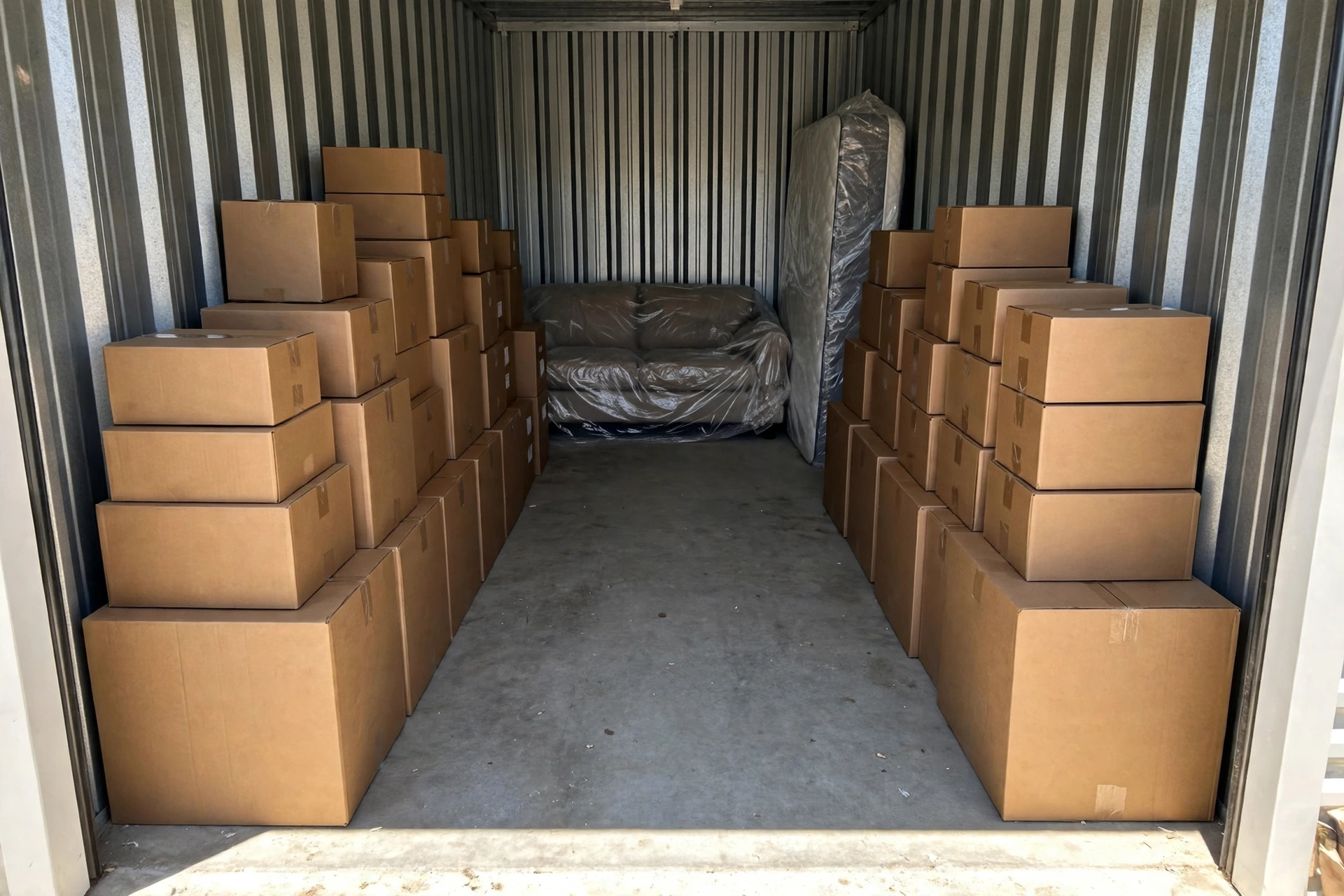
- Last in, first out. The things you will need first at the new address — beds, bedding, basic kitchen boxes, children's essentials — go in last, nearest the door.
- Leave an aisle. A unit packed wall to wall with no walkway means unloading half of it to find one box. One narrow aisle down the middle costs a little space and saves hours.
- Label every box on two sides. Boxes get turned round in a unit; a label on one side only is a label you cannot read.
- Keep an inventory list, and photograph it. A phone photo of the list, plus a photo of the unit door once loaded, settles most "where is it?" arguments later.
If the gap is short — a few days between completion dates — ask yourself whether storage is needed at all, or whether a phased move (non-essentials first, essentials on moving day) covers it. Our storage solutions page covers how storage fits into a move, from a few days between addresses to longer stays.
Access: how often you will visit changes the size
A unit that is sealed on moving day and opened once, months later, can be packed tight to the ceiling. A unit you will visit every week cannot: you need a walkway to the back and the things you reach for most near the door, and that walkway is floor space you are renting. As a rule of thumb, regular access adds roughly a fifth to the size you would otherwise need. Say which kind of storage yours is before you book a size, because the right answer differs even when the belongings are identical.
Three mistakes that cost money
- Booking by bedroom count alone. A sparsely furnished three-bedroom house can need less space than a heavily furnished two-bedroom one. Count items, not rooms.
- Forgetting height. A unit with a low ceiling holds far less than the same footprint with full height. Check it, and stack safely — heavy boxes at the bottom, nothing fragile under weight.
- No access plan. If you will need things during the storage period — documents, seasonal items, stock — you need a unit you can actually get into and move around in, not one packed solid on day one.
How to check your size before you book
- List bulky items room by room, then estimate boxes.
- Run the same list through the storage calculator and note its suggested unit size.
- If your list sits near the top of a size band, go one size up — the cost of a slightly larger unit for a month is usually far less than a second unit or a second van trip.
- Confirm the unit's real dimensions, height and access hours with the facility before you commit.
What we do, and what we do not do
Our part in storage is the moving: we collect your belongings, transport them to the storage facility you have chosen, load them into your unit the way this guide describes, and collect them again when you are ready. We do not operate storage units ourselves, and we do not charge for storage space. That separation is worth keeping: your contract for the unit is with the facility, at the size you chose using the inventory method above, and our written quote covers the crew, the van and the transport at each end of the storage period.
The honest summary
The right storage unit is the smallest one your actual inventory fits into with an aisle left over — not the size a bedroom count suggests, and not the biggest one you can afford. Count first, check with the calculator, confirm the dimensions, and pack in reverse unpacking order. Done that way, storage is a bridge between addresses, not a second move.
Need a hand with the move itself, with or without storage in between? Call Vano Removals on 07459 180023 or request a written quote — tell us both postcodes, what is going into storage, and how long the gap is, and we will plan around it. Our terms are on the table upfront: no deposit, free cancellation up to 24 hours before the move (inside 24 hours, the fee is up to 25% of the quoted price), quotes valid for 7 days, and payment taken at the time of service.
Questions people ask about storage unit sizes
Can I change unit size later? With most facilities, yes, you move your belongings to a bigger or smaller unit on the same site and the rent adjusts. It is easier to start one size up than to re-stack a full unit in a corridor.
Is it cheaper to take two small units? Rarely. One unit of the combined size almost always costs less per square foot than two smaller ones, and it keeps everything in one place.
What if I genuinely cannot estimate? Send the inventory with your quote request. A room-by-room list is enough for us to size the unit with you before you book anything.

Related services and guides
About the author

Ahmer Faiz, Founder, Vano Removals
Ahmer runs the small London crew that carries out every Vano move, sets the published hourly rates on this website, and replies to every Google review personally. Every guide on this site is written from the moves the team actually does, and checked against the council and TfL pages it quotes.
Reviewed by Ahmer Faiz on 5 November 2026 · Next review: 5 May 2027 · More about Vano Removals