Vano Removals
About Us
Contact
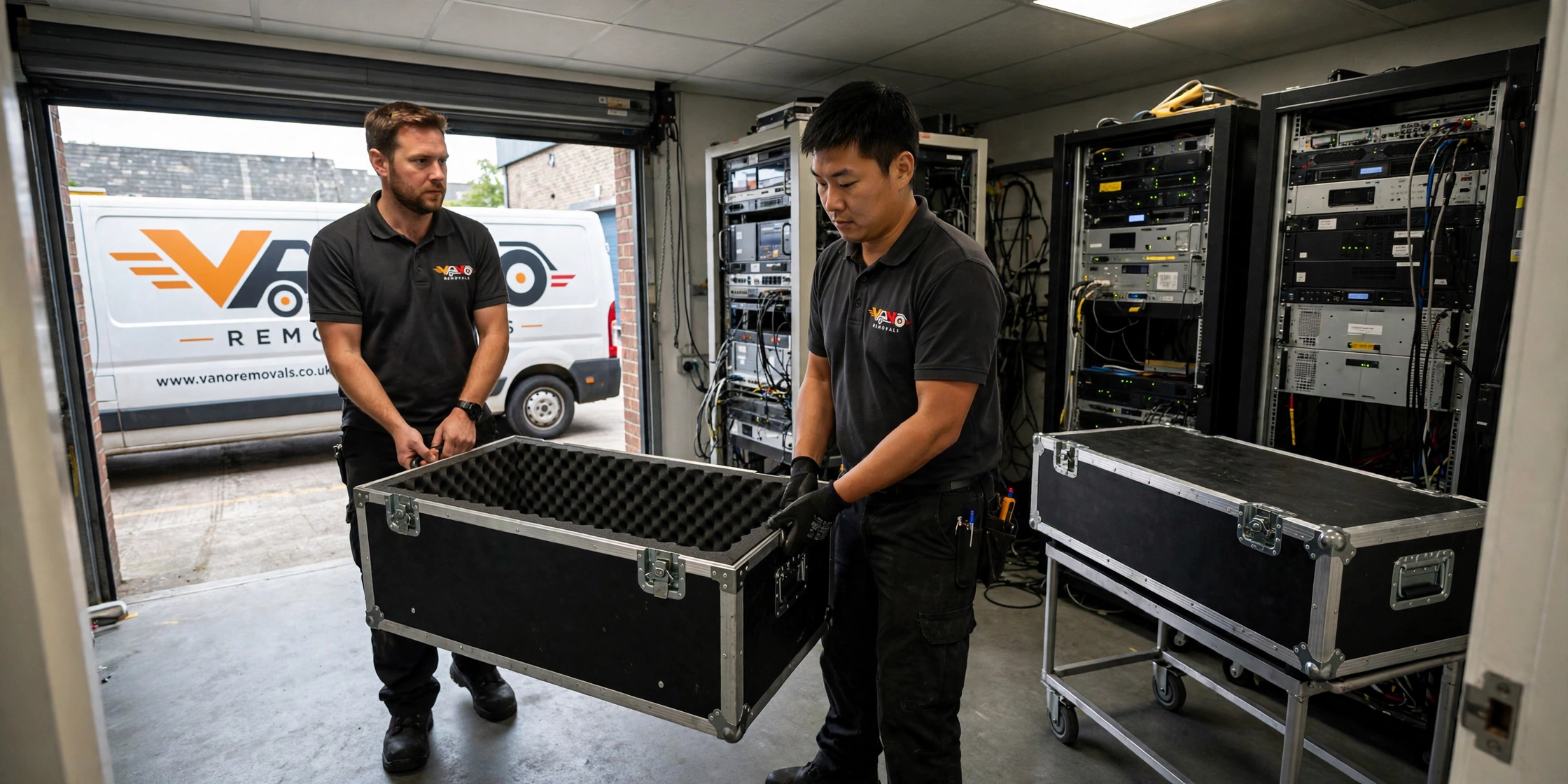
Two movers carrying a foam-lined flight case into a comms room, the Vano Removals van at the loading bay behind
Rated 5.0 on Google

IT Equipment Moves in London

A removals crew that moves servers, comms cabinets and workstations with the care IT kit needs, while your IT team keeps shutdown, connections and testing. Every device labelled to your inventory, packed anti-static and placed to your rack and desk plans.

No deposit to bookFree cancellation up to 24 hours beforeRated 5.0 on Google
07459 180023

START YOUR ENQUIRY

Tell us about your move

Enter the key details so we can review your moving enquiry.

We'll confirm the details before you book.

By submitting, you agree to our Privacy Policy and Terms.

Physical Moves From £140
Published card, 2-hour minimum
Written Quote First
The whole agreed scope, priced before you book
Labelled to Your Inventory
Serials reconciled and signed at handover
Your IT Team Keeps the Systems
Shutdown, connections and testing stay with them

Quick answer

An IT equipment move with us is the physical half of the job, done properly: your kit labelled to your inventory, packed anti-static, transported sealed on a direct route and placed to your rack and desk plans. It costs from £140 at the 2-hour minimum, and a small server room’s kit typically runs £255 to £595 of crew time, priced exactly in a written quote before you book. Throughout, your IT team keeps shutdown, disconnection, reconnection and testing: we move the equipment, they own the systems.

Price
Per-job written quote for the agreed scope; physical moves from £140 on the published card (Driver Help £70/hr, 2 Men £85/hr, 3 Men £100/hr)
Minimum booking
2 hours
Who it is for
Offices and small estates moving servers, comms cabinets and workstations, with their own IT team or provider
Where
London; other routes as written quotes
Terms
No deposit. Free cancellation to 24 hours before. Quotes valid 7 days. Payment at the time of service
WHO DOES WHAT

Your IT Team Owns the Systems. We Own the Move.

Every IT move divides into two halves, and most move failures live in the gap between them. So the split is the product, stated before anything else: nothing on your network is disconnected or reconnected by anyone who does not run it.

We own the physical move

  • Careful handling at device level, by a crew briefed on the inventory
  • Labelling matched to your inventory, applied as we pack
  • Anti-static packing: wrap, ESD bags, foam-lined cases or padded crates
  • Sealed and documented transport on a direct route, no other loads mixed with your kit
  • Placement at the destination to your rack plan and desk plan
  • A signed handover your IT lead reconciles against the serial list before we leave

Your IT team owns the systems

  • Backups before the move, and checking that they restore
  • Shutdown and disconnection, done gracefully and in their order
  • The labels, port maps, rack plans and desk plans the move works to
  • Reconnection, patching, configuration and testing at the destination
  • Deciding when equipment is safe to move, and when it is live again

The written quote names who does each task, so nothing is assumed on the day. And one signpost, because the two journeys are easy to confuse: if the IT is moving as part of a whole office move, start with office relocations, where the IT travels planned inside the wider move. If the IT is the move, you are in the right place.

WHAT WE MOVE

Servers, Cabinets and Workstations, Handled as IT Kit

Five families of equipment cover almost every standalone IT move in London, from one heavy UPS to a small server room crossing the city.

Servers and Rack Devices

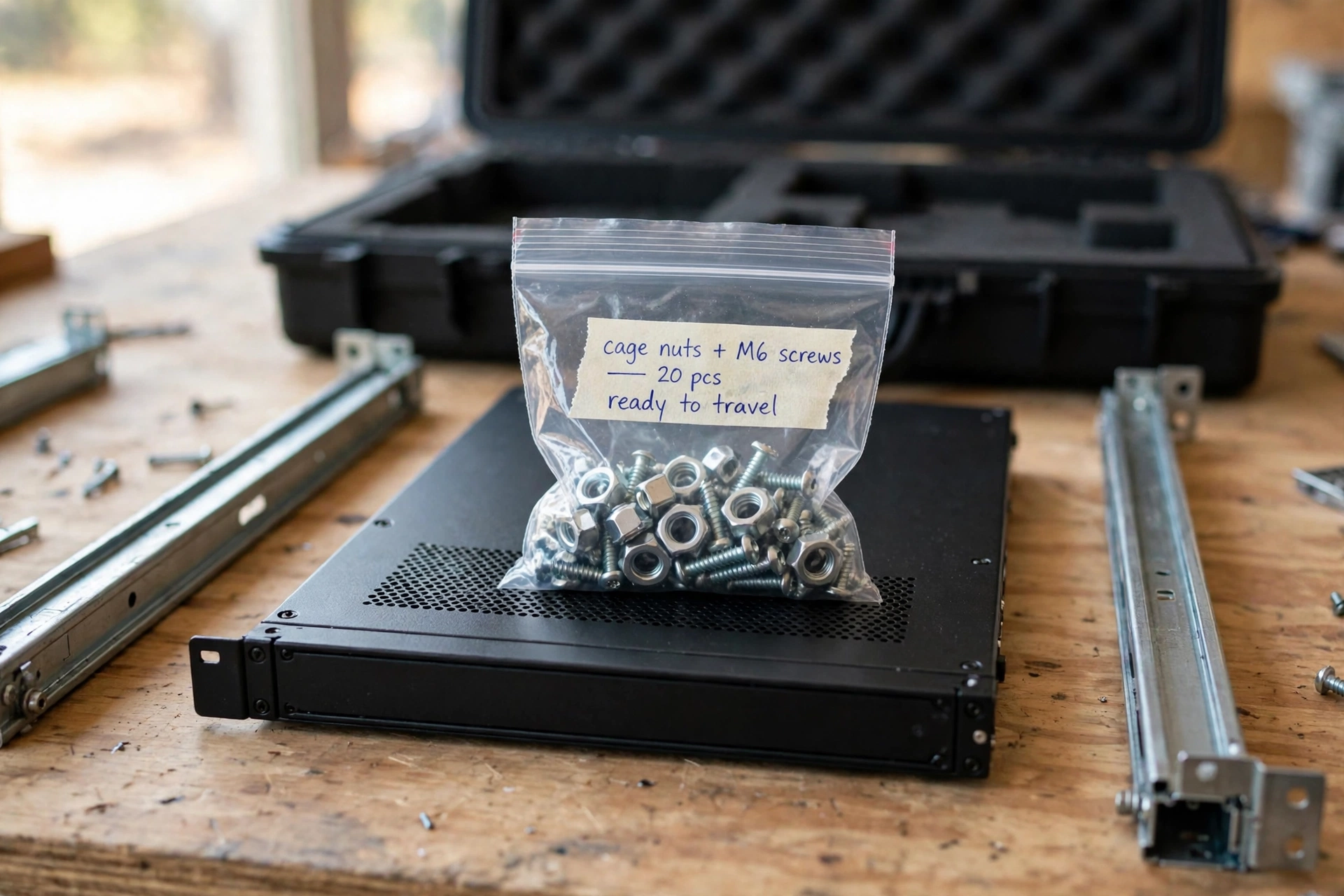
Handed to us powered down and disconnected by your IT team. Rails, cage nuts and screws are bagged and labelled with each device, the wrap is anti-static, and devices travel in foam-lined cases or padded crates, upright, with nothing stacked on top.
Server Rooms and Comms Cabinets

A single rack to a handful of racks, for offices and small estates. Switches, firewalls and patch panels travel as individual devices; the cabinet itself moves empty. Moves into and out of colocation facilities run under the facility’s own rules, with your IT team governing the technical side.

Workstations and Monitors

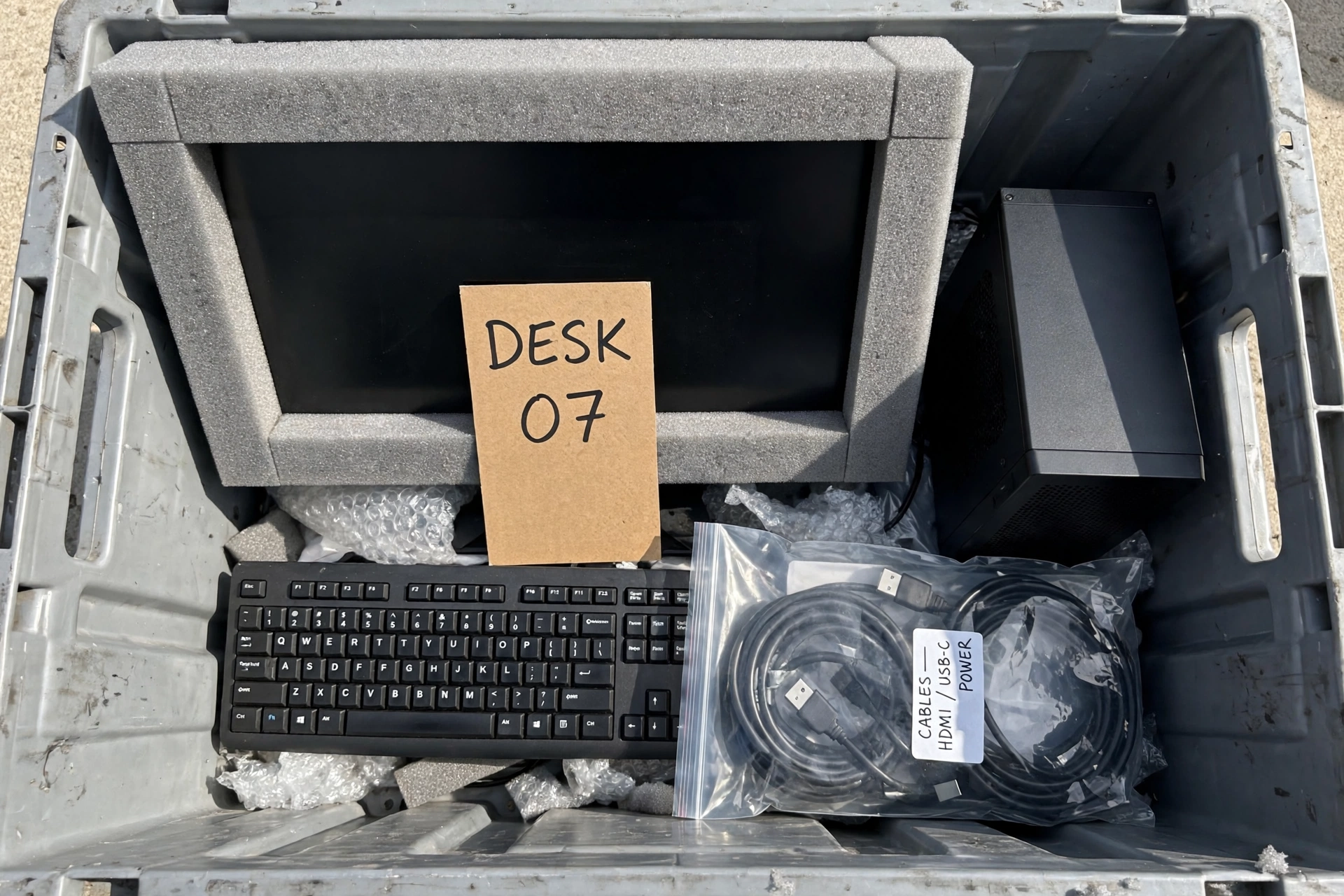
Each desk’s kit bagged together and crated by desk number: monitor, PC, keyboard and cables as one unit. At the destination the crates are placed to your seating plan, ready for your team to connect.

Printers, Plotters and AV

Assessed by size and weight like any heavy item: large-format printers, plotters, video walls and boardroom screens, with the crew sized to the carry and the route checked before the day.

UPS and Battery Kit

Discharged by your IT team before handover, carried upright, and priced by the crew the weight needs. A heavy UPS is the classic two or three man carry of an IT move, and it is planned as one.

Into and Out of Colocation

Kit moving between your office and a colocation facility, in either direction. The facility’s access rules, sign-in and cage procedures govern the visit; your IT team governs the technical work inside it. We handle the transport, the carrying and the paperwork trail between the two doors.

Do racks travel full or empty?

Empty, as the default. A populated rack can weigh several hundred kilos, and the road shock goes through the rails into every device mounted in it, which is why the specialists de-rack as standard practice and so do we. Devices out, labelled, wrapped and cased is also the only way each device can be reconciled at the other end.

A rack that genuinely cannot be emptied is a different job: it is assessed on its route, lifts and floors at both buildings, and quoted only after we have seen it. Tell us about it at enquiry stage, not on the day.

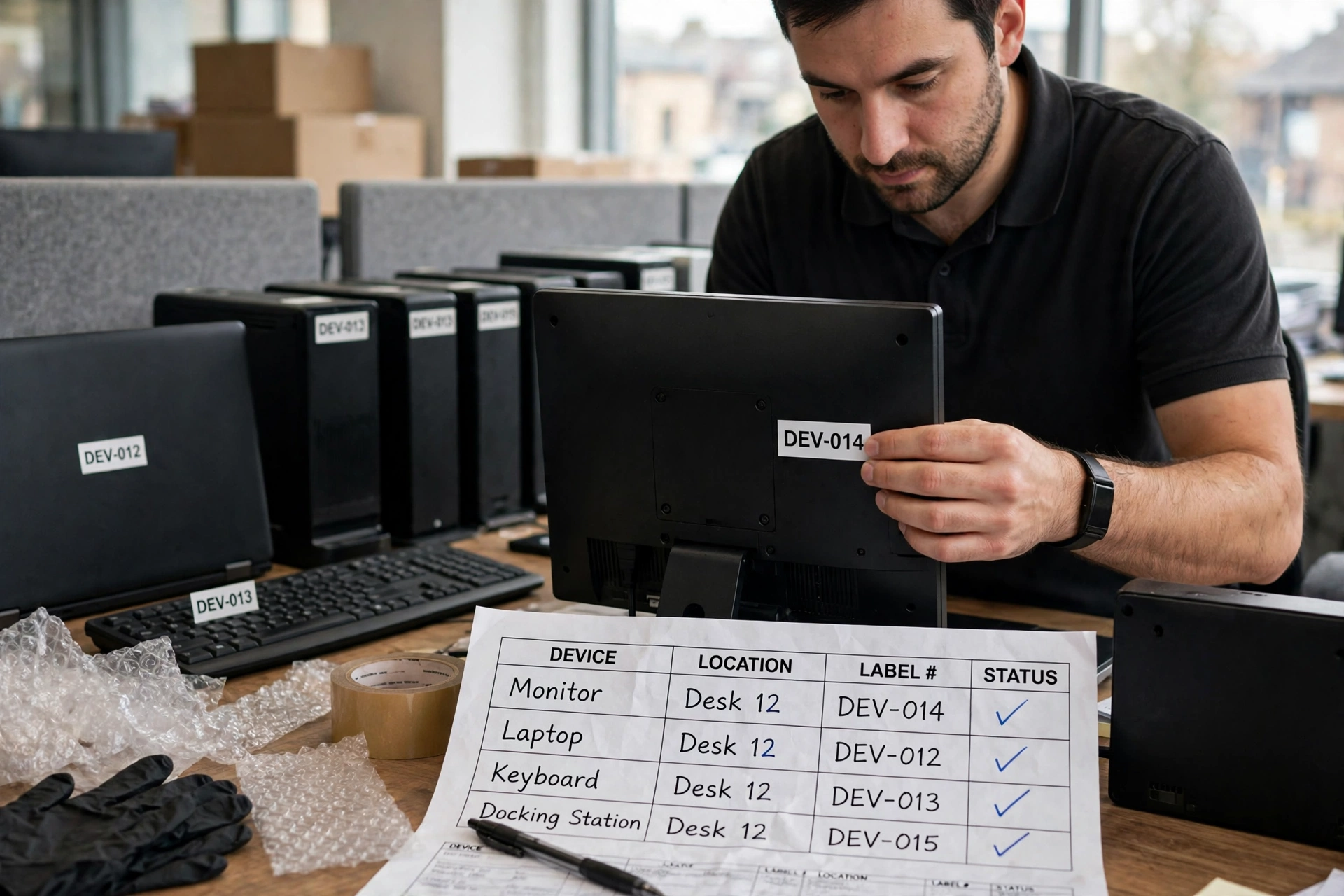
A mover applying a numbered device label to a monitor, the printed inventory list on the desk in front of him
WORKED TOTALS

What the Physical Move Typically Costs

No IT relocation firm in the UK publishes a price, so here is ours, worked from the card. Planning a whole office move around the IT? The office move calculator sizes the wider job.

IT moveCrewTypical timeTypical total
One server or a heavy UPS across London, your team at both endsDriver Help2 hours (minimum)£140
One server or a heavy UPS, we handle at both ends2 Men2 hours (minimum)£170
A comms cabinet’s worth of devices, handed over disconnected2 Men3 hours£255
Ten workstations with monitors and peripherals, bagged per desk and placed to the seating plan2 Men4 hours£340
The same ten workstations inside a tight evening window3 Men4 hours£400
A small server room: devices from two racks, packed anti-static, placed to the rack plan3 Men6 hours£600
Phased over two evenings (desktops one evening, servers the next), per evening3 Men4 hours£400 per evening

Typical totals for the transport and handling element, from our published hourly card (Driver Help £70, 2 Men £85, 3 Men £100 per hour, 2-hour minimum), checked October 2026. Your written quote prices the whole agreed scope for your job before you book.

These totals buy the crew, the van, the packing materials named in your quote, transport and placement. They do not buy disconnection, reconnection, patching, cabling, configuration or testing: that work stays with your IT team, and it is most of what engineering-led relocation firms charge for. If your quote from another firm looks much larger, ask what engineering is inside it; if it looks much smaller, ask who is doing the carrying.

Slide rails and a sealed, labelled bag of cage nuts and screws resting on the server they belong to

What Is Included, and What Is Not

The inclusions sit beside the price, and so do the exclusions. The shortest version of this page is these two lists.

Included in every booking

  • The van: a Luton with a tail lift, sized to the consignment
  • The crew’s loading, unloading and carrying at every tier
  • Labelling of every device against your inventory as we pack
  • Anti-static wrap, ESD bags and padded cases or crates for the kit named in the quote
  • Blankets and straps for furniture-scale items travelling with the kit
  • Placement of devices at the destination to your rack plan and desk plan
  • The equipment itinerary and the signed handover, reconciled against your serial list
  • Fuel and mileage within London
  • A written quote for the agreed scope, before the day

Not included, stated plainly

  • Shutdown, disconnection, reconnection, patching, structured cabling, configuration and testing: your IT team or provider, per the responsibility split
  • Data backup, wiping or destruction: your IT team’s, always
  • Disposal of any equipment: we are not a registered waste carrier (see Old Kit and WEEE below)
  • Parking suspension fees and any road charges: both are confirmed in the written quote where they apply
  • Storage charges at any facility: kit can be taken to a unit arranged by you, in your own name
One workstation's monitor, PC, keyboard and bagged cables packed together as a single desk kit in one crate
THE PROCESS

How the Move Runs, Step by Step

Five steps, each with a named output. Your IT lead counts devices and desks; we price crew time; the two languages meet in the inventory.

01

Inventory and labelling agreed

Your IT lead’s serial list, port maps and rack and desk plans set the labelling scheme. Photographs are taken by your team before anything is unplugged, and the written quote names who does each task, so nothing is assumed on the day.

02

Your team shuts down and disconnects

Backups verified, systems shut down gracefully and disconnected by the people who run them. Devices are handed over powered down and disconnected, ready to pack.

03

We label, pack and seal

Every device is labelled to the inventory, wrapped anti-static, cased or crated, and the consignment is sealed and documented, with the seal numbers recorded on the itinerary.

04

Direct transport

One consignment on a direct route: no other loads mixed with IT kit, no unrelated stops. The chain of custody runs from the seal at collection to the signature at delivery.

05

Placed, reconciled, handed over

IT kit goes in first at the destination, before furniture, so your team gets the longest possible testing window. Devices are placed to the rack and desk plans, serials are reconciled against the itinerary, your IT lead signs the handover, and your team reconnects and tests.

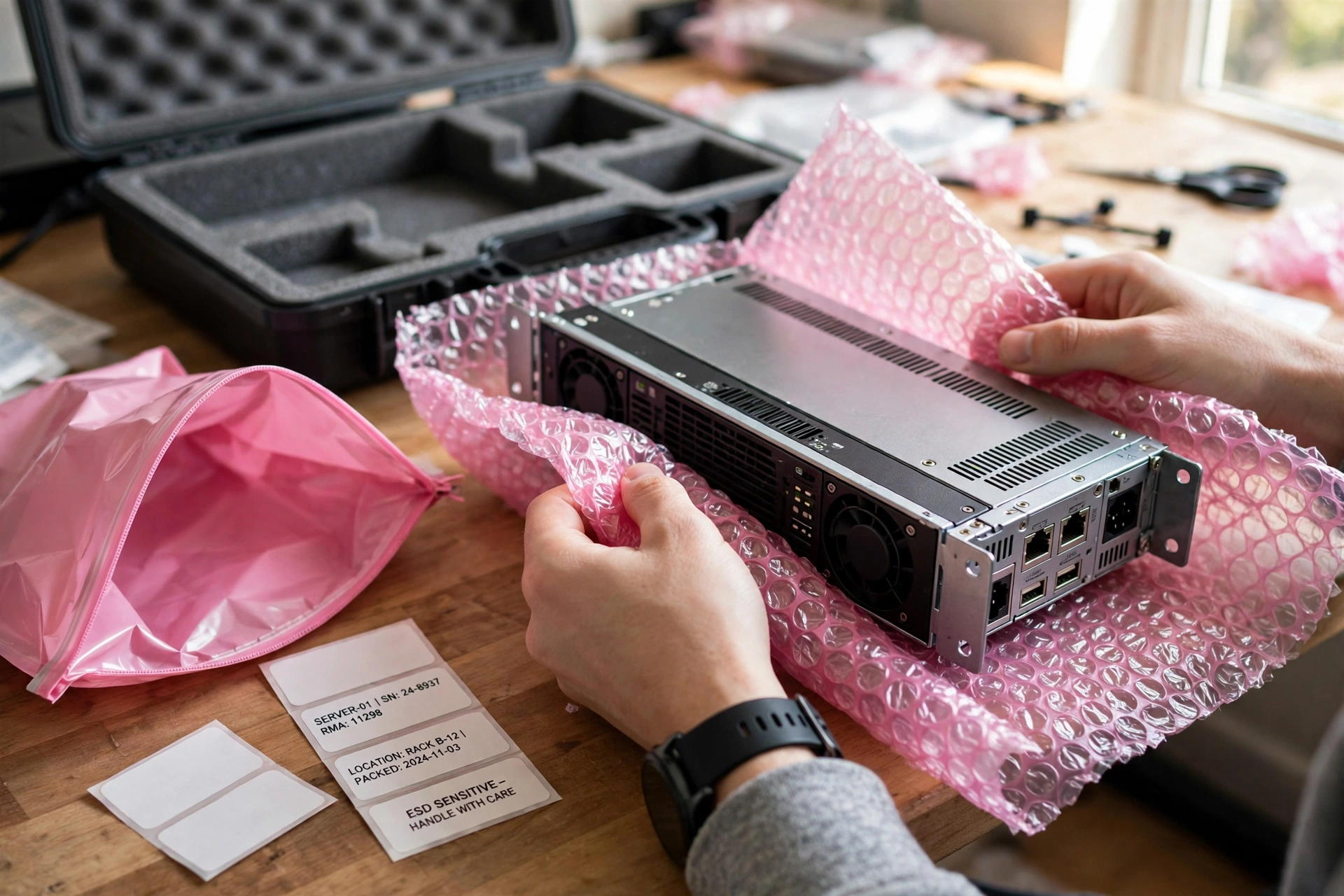
Hands wrapping a server in pink anti-static bubble wrap, an ESD bag and printed labels beside it

Packing and Handling Standards

The physical half of an IT move is mostly materials and discipline. These are the standards your quote names, item by item. Specialist packing beyond the IT materials, for furniture or fragile office contents travelling in the same move, sits with packing services.

Anti-static materials, named

Anti-static wrap and ESD bags are the standard for circuit boards and rackmount devices, for a simple reason: standard bubble wrap generates the static that damages components invisibly. The materials named in your quote are the anti-static kind.

Cases and crates for rackmount kit

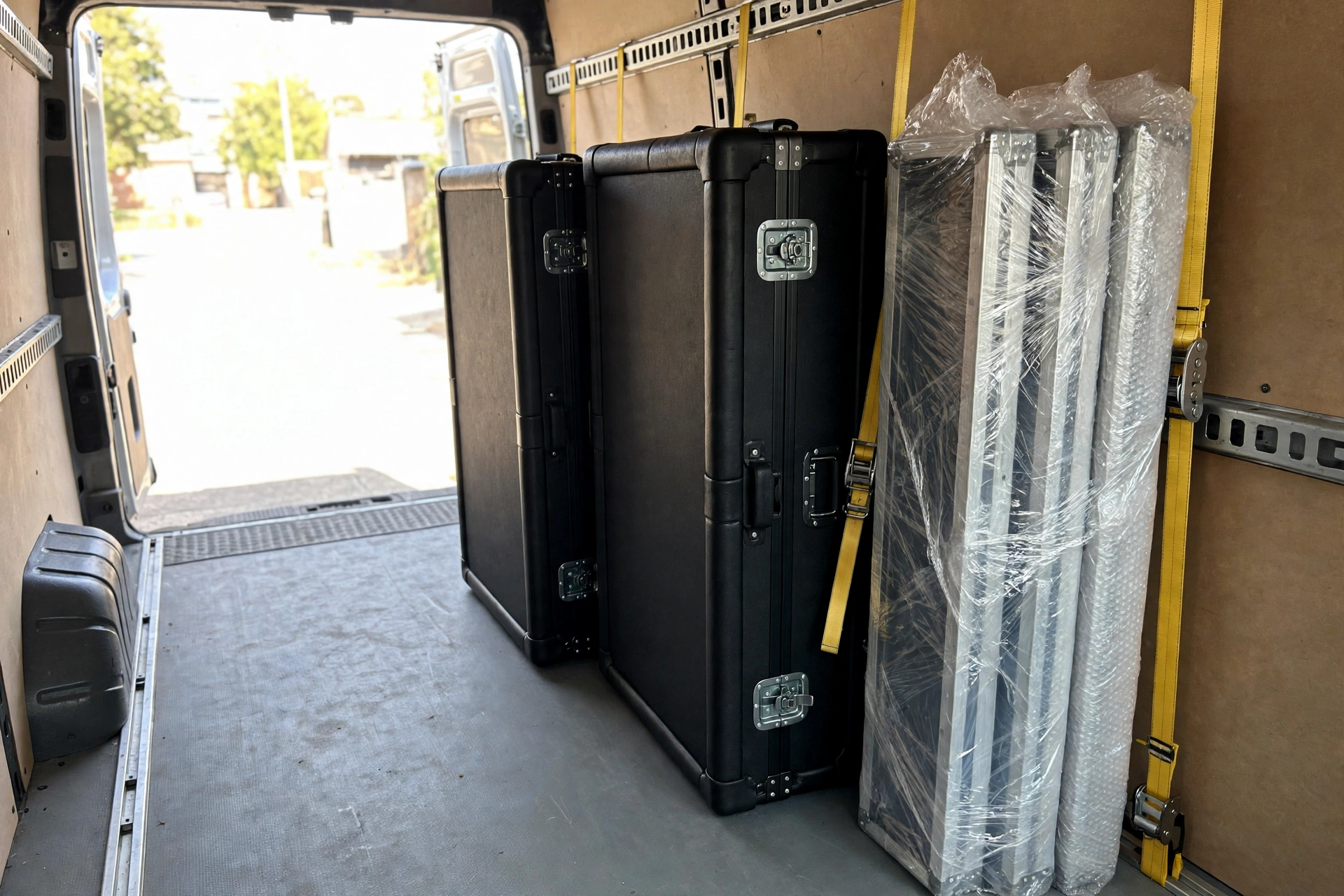
Rackmount devices travel in foam-lined cases or padded crates, upright, strapped, with nothing stacked on IT crates and clear space around them on the van.

Monitors screened and upright

Screens are wrapped, boxed and carried upright, never flat under weight. Each monitor travels with its own desk’s kit, so the seating plan reassembles itself.

Rails and small parts travel with the device

Slide rails, cage nuts and screws are bagged, sealed and labelled with the device they belong to. A server without its rails cannot go back into a rack on the night, so the bag is treated as part of the device.

One consignment, kept together

Your kit travels as a single consignment on one load wherever the size allows, never split casually across loads or mixed with another job’s freight.

Photographs before anything is unplugged

Your team photographs cable configurations, rack layouts and desk setups before disconnection, because the map has to match reality when it is rebuilt. Those photographs belong to your documentation set; we work to them, and we do not move anything that has not been documented.

Padded cases strapped upright inside the van, with clear space around them and nothing stacked on top
CHAIN OF CUSTODY

Every Device Accounted For, Door to Door

What IT managers buy on a move like this is paperwork and sequence as much as transport. A server that arrives physically intact but undocumented is a problem on a Monday morning; a consignment that can be reconciled device by device is not.

So the load is run like a handover, not a delivery: labelled, sealed, signed for, and reconciled while our crew is still on site to answer for it.

  • Every device labelled to your inventory as we pack, so the list and the load agree from the first case
  • Consignments sealed, with seal numbers recorded on the equipment itinerary
  • A direct route with no unrelated stops, and no other loads mixed with your kit
  • A signed equipment itinerary at the destination before unpacking begins
  • Your IT lead reconciles serial numbers against the itinerary at handover, before we leave
  • We never access, power up or wipe your data, at any point in the move
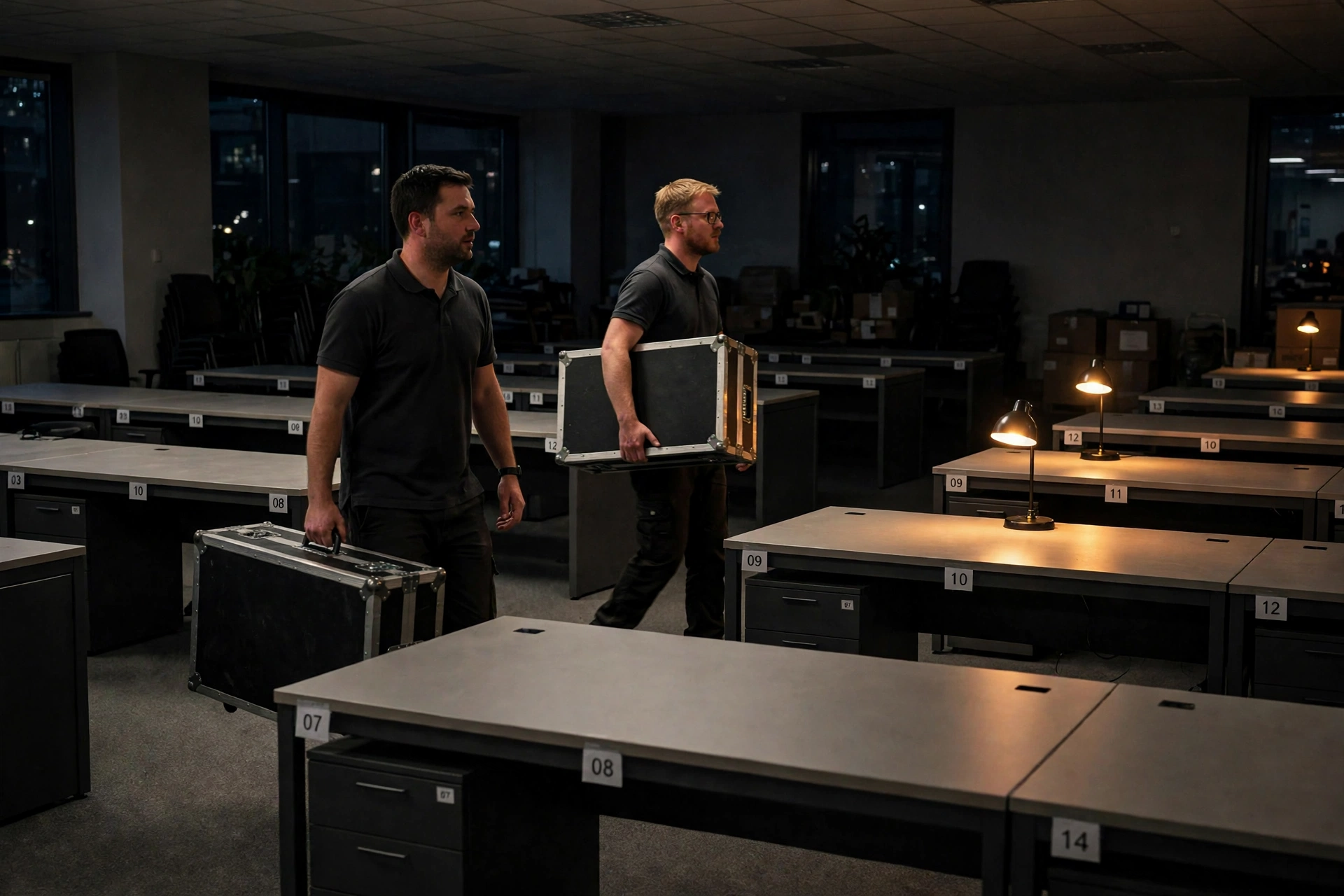
Crew moving flight cases through a quiet, half-lit office in the evening, the desks cleared and labelled

Evenings, Weekends and Phased Moves

Change windows are the normal shape of this work, not an exception to it. Most IT moves run on a Friday evening or across a weekend, planned backwards from one fixed point: the moment your systems have to be live again. Tell us the power-up deadline and the plan is built around it, with the packing order set so the kit your team needs first comes off the van first.

Bigger estates phase: by floor, by department or by kit type, across two or more evenings. The worked totals above carry the standard shape, desktops one evening and servers the next at £400 per evening with a 3 Men crew. Where kit has to wait between sites, it can be staged through business storage or taken to a unit you have arranged in your own name; storage solutions explains how transport to storage is priced.

What actually sets the timetable is rarely the van. Building change approvals, goods lift bookings and security sign-in at both ends decide when a crew can be in the comms room, so those are asked for with the quote, not discovered on the night.

Old Kit and WEEE: What We Can and Cannot Do

Almost every rack or desk move produces a pile of retired kit, and old IT is WEEE: waste electrical and electronic equipment. It cannot go in general waste or a skip. This section is stated plainly because the legal route matters to your business, not just to us.

We are a removals service, not a registered waste carrier, so we do not take equipment away for disposal, and we do not wipe or destroy data. What we can do is transport your redundant kit, as your goods, to a destination you name: your ITAD or recycling provider, another of your sites, or a charity you choose, with the items listed on the same itinerary as everything else.

Disposal itself must go through a registered waste carrier, with a waste transfer note for each load. Your duty of care as the business producing the waste stays with you, and any carrier’s registration can be checked free on the Environment Agency public register before you hand anything over. If a quote from any firm bundles disposal in without mentioning transfer notes, ask where the kit is actually going.

Content updated October 2026. Official sources for this page: GOV.UK waste duty of care guidance; the Environment Agency public register of waste carriers, brokers and dealers; Transport for London (Congestion Charge and ULEZ charges).

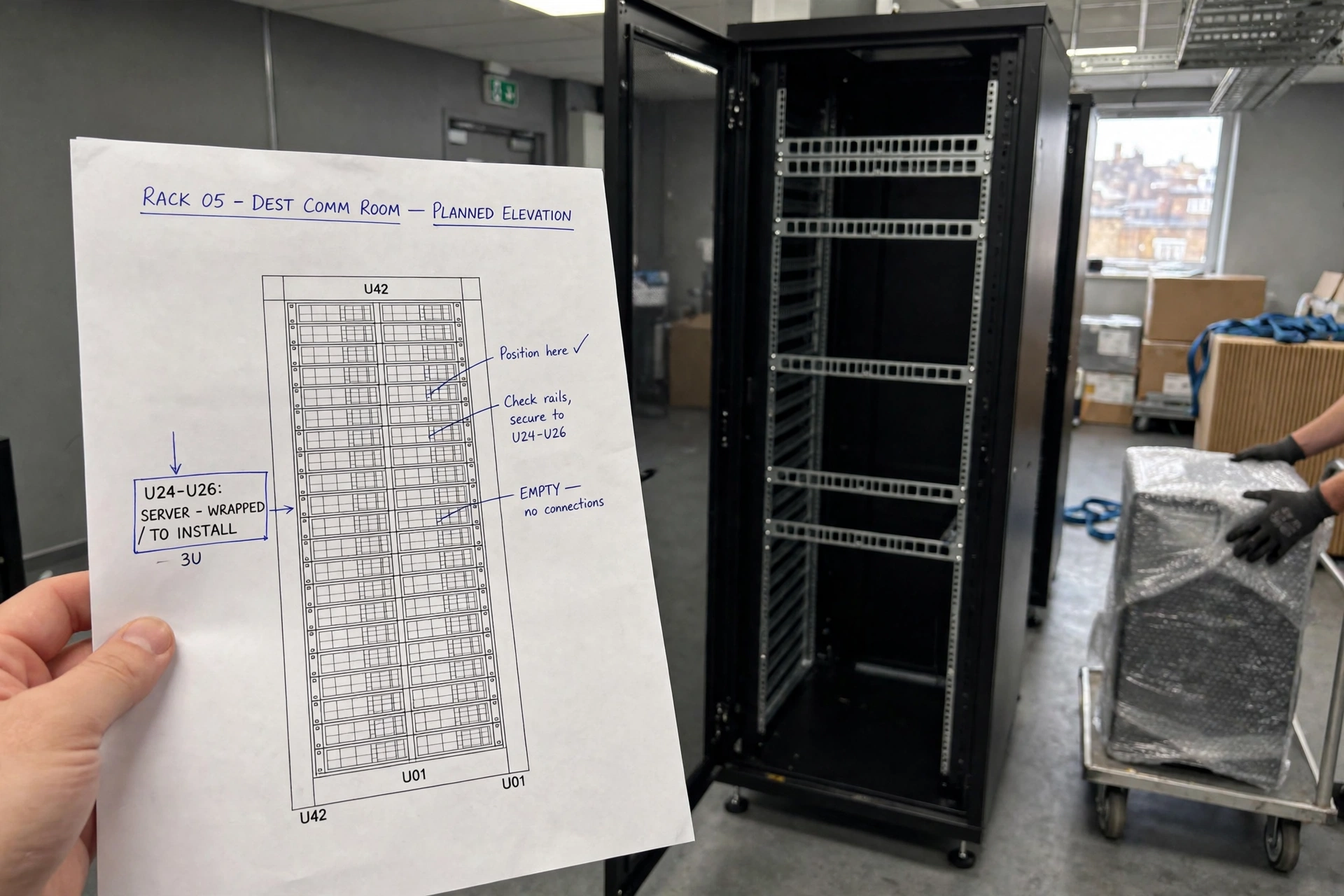
A printed rack plan held beside the empty destination rack, a wrapped server waiting on its trolley
LONDON PRACTICALITIES

IT Moves in Real London Buildings

The kit is only half the job. The buildings, the parking and the road charges are the other half, and they are planned, not improvised.

Goods lifts, loading bays and sign-in

City, Canary Wharf and managed office buildings run on booked goods lifts, loading bay slots, crew sign-in and security passes, and change windows approved by building management. Comms room access rules apply at both ends. The quote process asks for both buildings’ rules up front, because a lift slot missed on a Friday evening is a window missed entirely.

Parking for a longer stop

IT moves are longer stops than household moves: packing, sealing and reconciling take time at both ends. If the van must stand on a residents’ bay, a meter bay or yellow lines beyond the loading allowance, a borough suspension or dispensation is needed, and boroughs ask for 2 to 10 working days’ notice. Give us the parking position at both addresses with the quote request.

Road charges, stated once

The Congestion Charge is £18 per day from 2 January 2026, and ULEZ is £12.50 per day, payable only by vehicles that do not meet the standard. Any road charges that apply to your job are confirmed in your written quote before you book, so the total you agree is the total you pay.

Your IT lead travels separately

The cab seats are for the crew, so your team does not travel in the van. Instead we agree check-in points before the day: a call or message when the load is sealed, and a call on arrival, so your IT lead is at the destination door when the first case comes off.

COMPARE

The Typical Way vs With Vano Removals

Point of comparisonThe typical wayWith Vano Removals
The priceNo IT relocation firm publishes a figure; the first number arrives after a survey or an auditThe hourly card is published, the transport totals are on this page, and the written quote confirms the whole agreed scope before you book
Who touches your systemsEngineering firms sell the whole project; general movers may claim disconnection and reconnection without saying who does itThe split is written into the quote: your IT team owns shutdown, connections and configuration; we own the physical move
PackingAnti-static materials described vaguely, or priced as an unspecified extraAnti-static wrap, ESD bags and padded cases named in the quote for the kit that needs them
TrackingAsset lists vary; reconciliation is often left to the client to chaseEvery device labelled to your inventory, serials reconciled at handover, and the itinerary signed before we leave
DepositProject deposits are common on commercial movesNo deposit to book
CancellationWindows vary by firm and projectFree cancellation up to 24 hours before
Retired kitDisposal bundled in, paperwork rarely explainedThe legal route explained on this page: your registered carrier, your transfer notes, your duty of care; we transport kit to the destination you name

Based on the published services and terms of UK IT relocation specialists and London office removals firms, checked October 2026. The wider comparison of every way of moving a business is on our compare page.

The client's IT lead checking a device serial number against the printed itinerary and signing it off

IT Moves Across London, and Further by Quote

The service runs London-wide, from single devices in the City to server rooms moving between boroughs. Kit moves on longer routes, a comms room leaving London for a regional office, are priced as individual written quotes, because the distance and the window set the shape of the job.

IT kit also travels inside bigger jobs: as part of a warehouse move with racking-scale loads, or inside a whole office relocation. For the full picture of business moves, commercial services is the umbrella page.

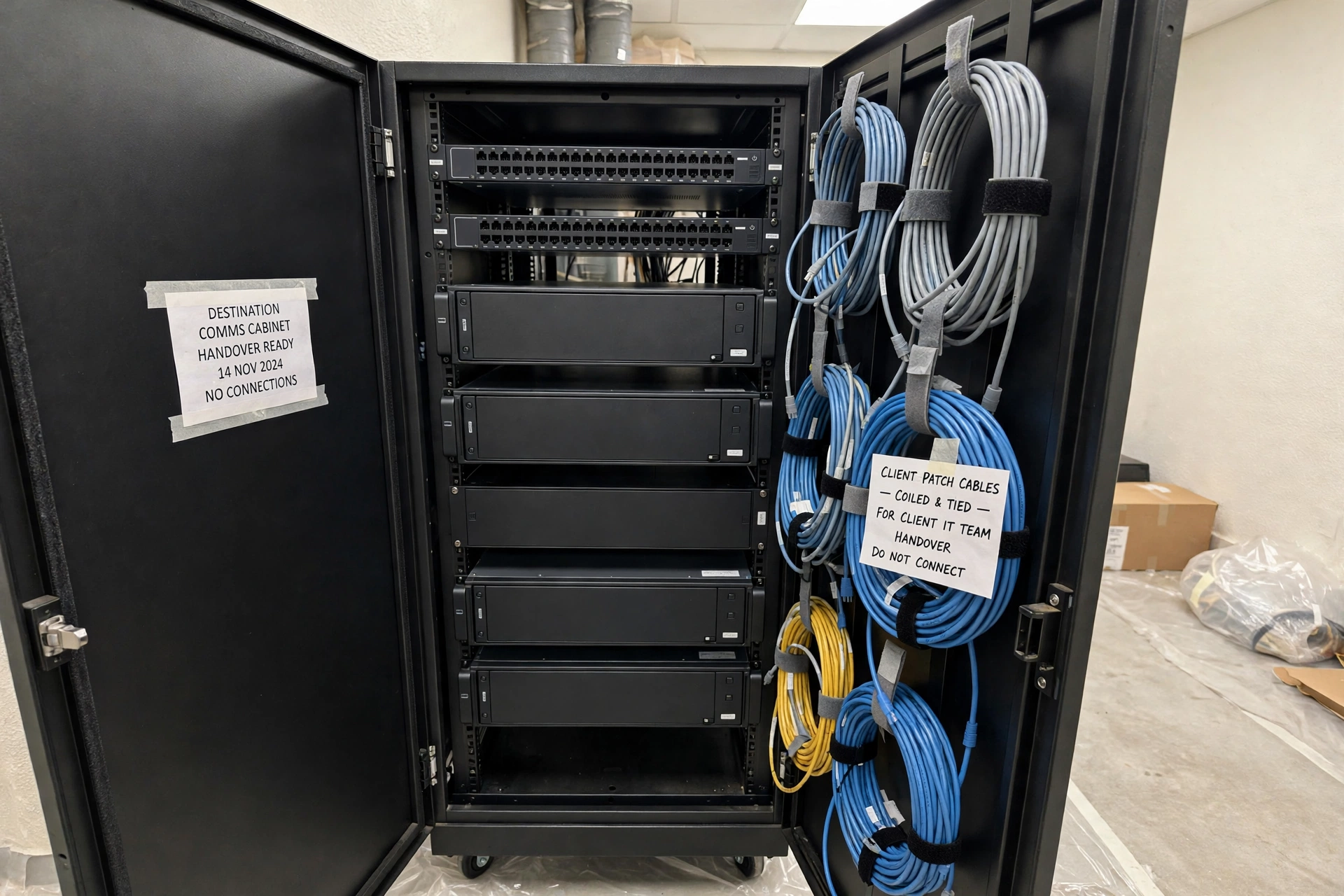
A destination comms cabinet with devices seated in their positions and patch cables still coiled, ready for the client's IT team

IT Equipment Moves FAQs

The questions IT managers ask before they hand over a server room, cost first. If you do not see yours, call us with the inventory and the window.

Talk to the team

A published card, a written quote for the agreed scope, and no deposit. Send the inventory and the two postcodes to start.

07459 180023

IT moves are priced as a per-job written quote for the agreed scope, built from our published card: Driver Help £70 per hour, 2 Men £85 per hour, 3 Men £100 per hour, with a 2-hour minimum on every booking. For the transport and handling element, typical totals run from £140 at the minimum, to £255 for a comms cabinet’s worth of devices, £340 for ten workstations and £600 for a small server room. Those totals buy the crew, the van, the packing materials named in the quote, transport and placement. They do not buy disconnection, reconnection, patching, cabling, configuration or testing, which stay with your IT team. No deposit, and the written quote confirms the whole agreed scope before you book.

We own the physical move: labelling matched to your inventory, anti-static packing, sealed and documented transport on a direct route, placement at the destination to your rack plan and desk plan, and a signed handover your IT lead reconciles against the serial list before we leave. Your IT team owns the systems: shutdown, disconnection, reconnection, patching, configuration and testing stay with your IT team or your IT provider. They work to their own labels, port maps and rack plans, and they decide when equipment is safe to move and when it is live again.

No. Shutdown, disconnection, reconnection, patching, configuration and testing are your IT team’s or your provider’s work, not ours. Devices are handed to us powered down and disconnected. We work to your team’s labels, port maps and rack plans, and at the destination we position every device to the rack plan and desk plan, reconciled against the serial list, for your team to seat and connect. Nothing on your network is reconnected by guesswork, because the people who reconnect it are the people who run it.

Rackmount devices are wrapped in anti-static wrap and ESD bags, because standard bubble wrap generates the static that damages components invisibly, and they travel in foam-lined cases or padded crates, upright, with nothing stacked on top. Monitors are screened and boxed upright. Rails, cage nuts and screws are bagged and labelled with each device, so a server can go straight back into its rack on the night. Your kit travels as one consignment, never split casually across loads.
Every device is labelled against your inventory as we pack it. Consignments are sealed and the seal numbers recorded, the load travels on a direct route, and at the destination your IT lead reconciles the serial numbers against the equipment itinerary and signs the handover before we leave. Placement follows your rack plan and desk plan, so each device lands where your team expects to connect it.

Racks travel empty as the default. A populated rack can weigh several hundred kilos, and the road shock travels through the rails into every device mounted in it. If a rack genuinely cannot be emptied, it needs a route, lift and floor assessment at both buildings and is quoted only after we have seen it. Most IT teams prefer the devices out and into cases, which is also how each device gets labelled and reconciled.

Yes. Change windows are the normal shape of this work, and most IT moves run on a Friday evening or across a weekend. The window is planned backwards from your power-up deadline, building change approvals, goods lift bookings and security sign-in are arranged around it, and evening and weekend work is priced in the written quote from the same published card.

Each side controls part of it. Your team’s part: verified backups with tested restores, a graceful shutdown, and photographs and port maps taken before anything is unplugged. Our part: packing in the order your team will work through, IT kit loaded last and off first, and placement to plan so reconnection starts the moment the handover is signed. We do not promise a downtime figure; the window is agreed in the plan, with your power-up deadline as the fixed point.

We never access, power up or wipe your data, at any point. The load is sealed, labelled and documented, and it travels on a direct route with no unrelated stops and no other loads mixed with it. Every data responsibility stays with your IT team, including backups before the move and the wiping of anything being retired.

Not for disposal. Old IT is WEEE (waste electrical and electronic equipment) and cannot go in general waste or a skip. We are a removals service, not a registered waste carrier, so we do not take equipment away for disposal and we do not wipe or destroy data. What we can do is transport your redundant kit, as your goods, to a destination you name: your ITAD or recycling provider, another of your sites, or a charity you choose, with the items listed on the same itinerary as everything else. Disposal itself must go through a registered waste carrier, with a waste transfer note for each load. Your duty of care as the business producing the waste stays with you, and any carrier’s registration can be checked free on the Environment Agency public register before you hand anything over.

Yes. Small jobs start at the 2-hour minimum: £140 with Driver Help where your team is on hand at both ends, or £170 with 2 Men where we handle at both ends. The same labelling, anti-static packing and itinerary standards apply to one device as to a whole server room.

The transport can sometimes be arranged at short notice; the planning cannot. Your IT team’s inventory, labelling scheme and port maps set the timetable, and building change windows, goods lift bookings and security sign-in commonly need 2 to 10 working days at managed sites. Ask with your date and as much of your inventory as exists, and we will tell you plainly what window the job can run in.

The Congestion Charge is £18 per day from 2 January 2026, and ULEZ is £12.50 per day, payable only by vehicles that do not meet the standard. Any road charges that apply to your job are confirmed in your written quote before you book, so the total you agree is the total you pay.

No. The cab seats are for the crew, so your IT team travels separately. Instead we agree check-in points before the day: a call or message when the load is sealed, and a call on arrival, so your team is ready at the destination door when the kit comes off the van.

Insurance is as stated in your written quote: ask us to confirm in writing. Tell us about high-value items when you enquire, so the quote reflects them.

Free cancellation up to 24 hours before the move. Inside 24 hours, a cancellation charge of up to 25 percent of the quoted price applies, per the booking terms. Quotes are valid for 7 days, and payment is at the time of service.

Price Your IT Move

Send the inventory, the two postcodes and your change window, and the quote comes back in writing: the crew, the scope, who does each task, and the total. No deposit, and free cancellation up to 24 hours before the move.

About the author

Ahmer Faiz, founder of Vano Removals

Ahmer Faiz, Founder, Vano Removals

Ahmer runs the small London crew that carries out every Vano move, sets the published hourly rates on this website, and replies to every Google review personally. Every guide on this site is written from the moves the team actually does, and checked against the council and TfL pages it quotes.

Reviewed by Ahmer Faiz on 5 November 2026 · Next review: 5 May 2027 · More about Vano Removals

A clearer move starts with a clear scope

  • Describe the inventory, route and access at both addresses
  • Identify bulky, fragile or unusually valuable items in advance
  • Agree any packing, storage or specialist work before booking
  • Confirm the moving date and site restrictions before arrangements are final
  • Ask how waiting time or a change in scope affects the quote

Confirm the agreed service, timing, price and any exclusions in writing before booking.

Moving house checklist for London
Tailored moving support

Ready for a Simpler Move?

Request a written quote and let us take the stress out of your move.

Response times vary
Mon-Fri 7am-8pm, Sat 8am-6pm, Sun 9am-4pm
Movers loading belongings into a removals van in London

Customer Reviews

What our customers say

Real, unedited reviews from customers we’ve moved across London.

5.0Excellent
Google reviews

“Best house removal company around. The team at Vano Removals was punctual, hard-working, and handled our furniture with great care. If you need reliable, stress-free local movers or packing services, I highly recommend them.”

Muhammad Saad

Google review · October 2026

Review 1 of 7: Muhammad Saad
Read all reviews on Google

These are unedited reviews from our Google Business Profile. Moved with us recently? Your honest review helps other Londoners choose with confidence.