How a Piano Move Is Done
No specialist mythology: preparation, protection, enough hands, and a route that was measured before the day. That is the whole method, and it works because none of it is improvised.
Measure the route first
Before a price is given, the route is checked at both addresses: the piano’s dimensions against every door it must pass, the width and turns of the stairs, the ceiling height on the half-landing, the lift size if there is one. Photographs of the staircase tell us most of it; send them with the quote request. A piano move is decided by the tightest turn on the route, and that turn is found on paper, not with the piano in the air.
Prepare the instrument
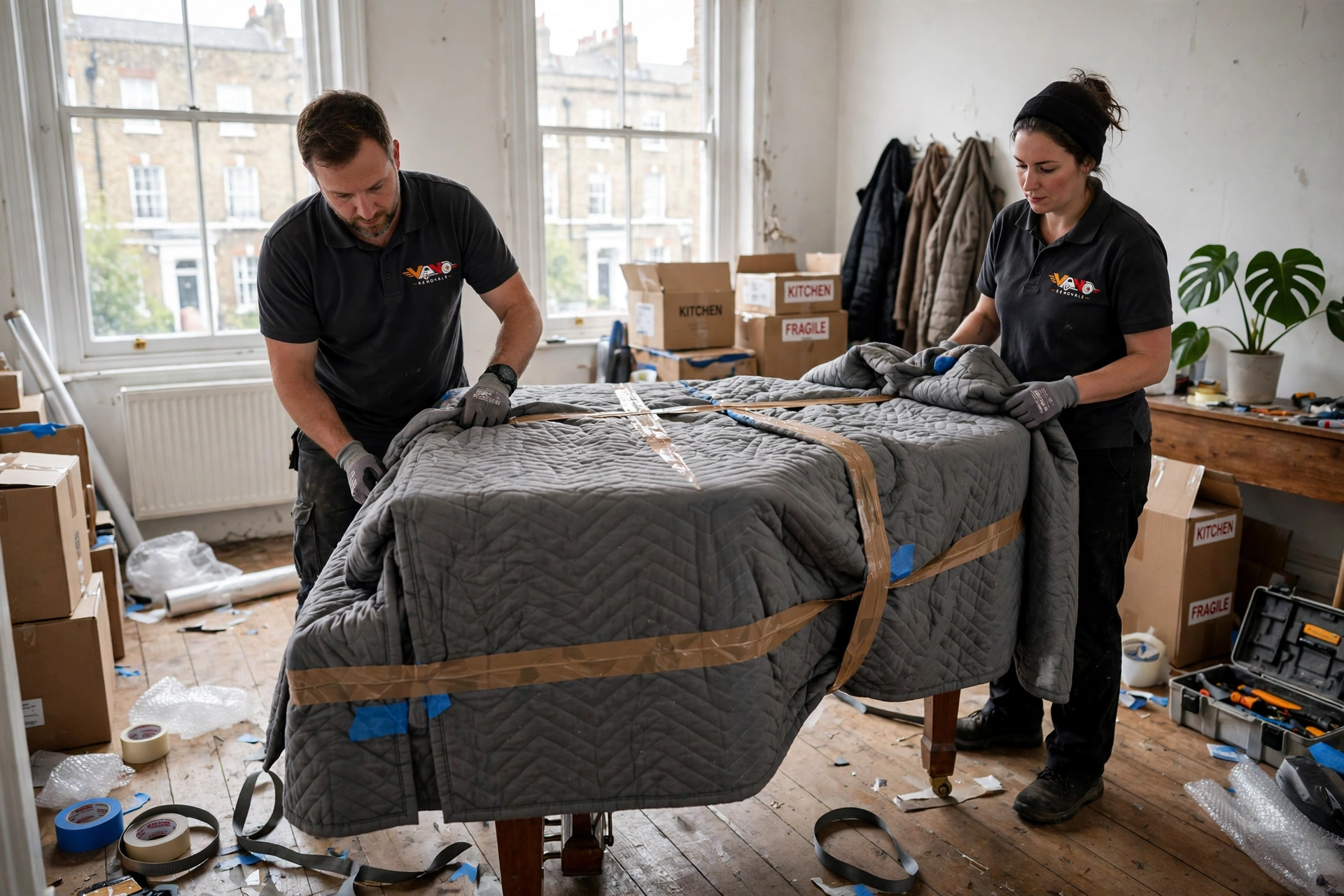
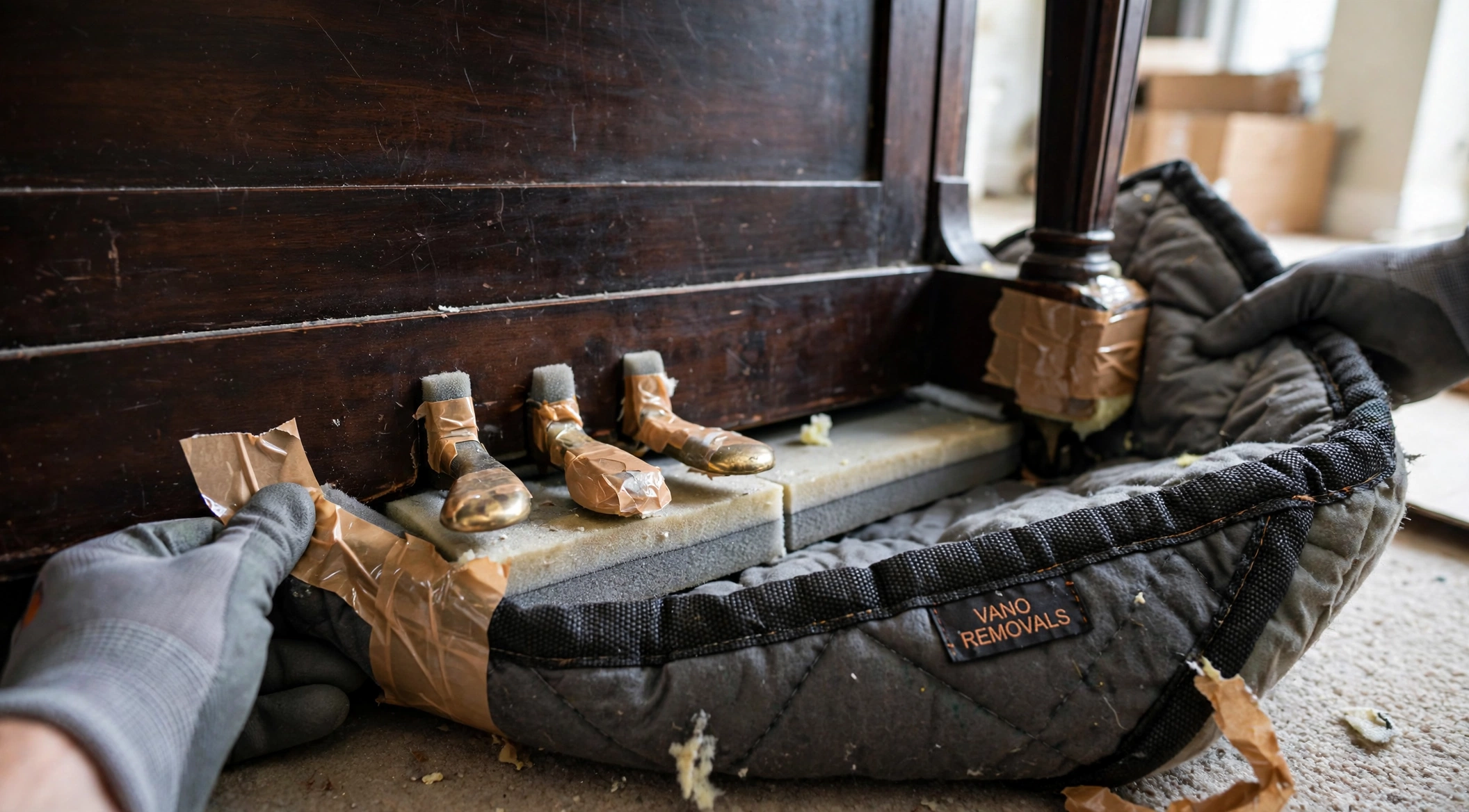
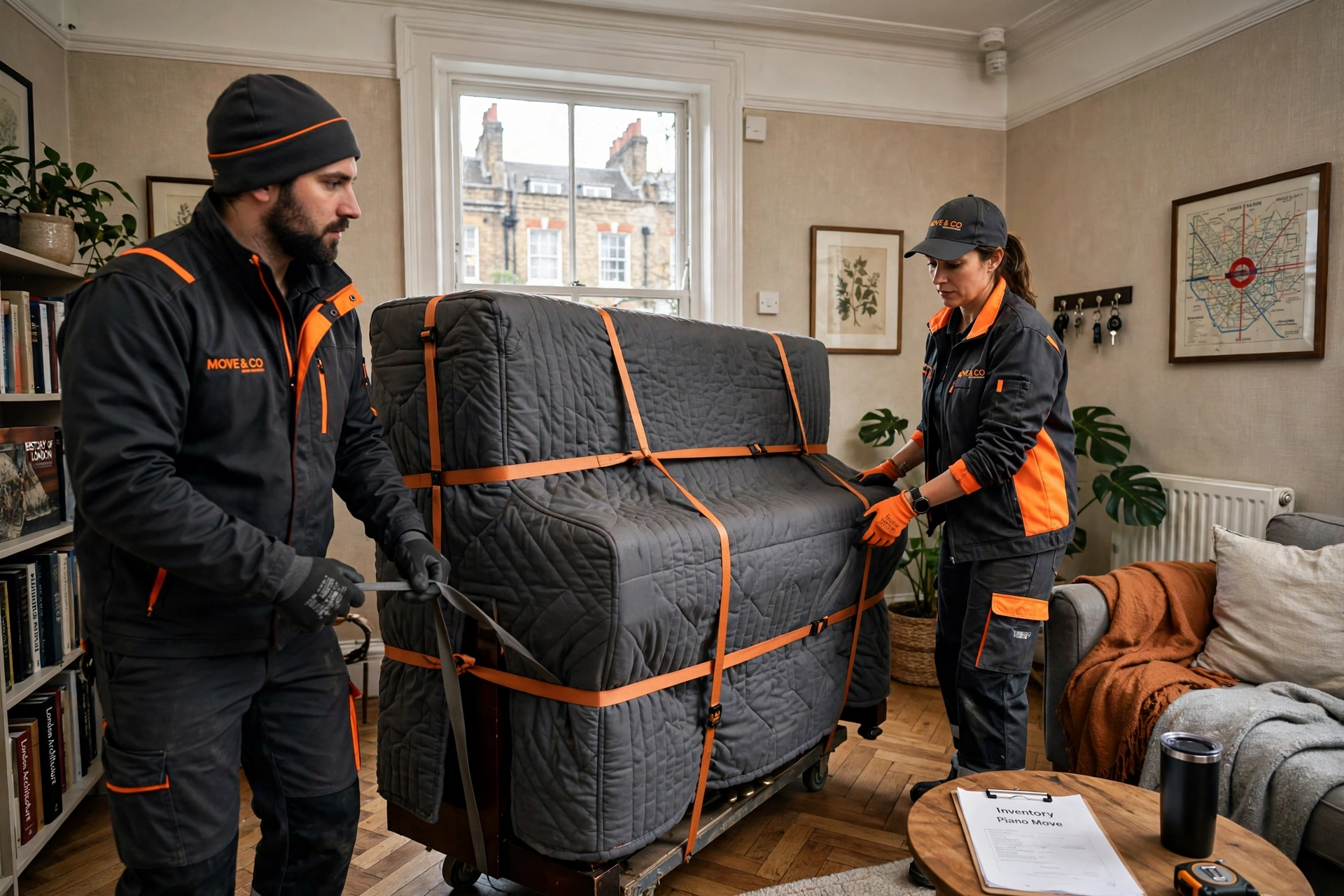
On the day, before anything is lifted: the lid and key cover are closed and secured, music and loose items are taken off and out, and the castors and pedals are protected, because they are the parts that snap when a piano is rolled carelessly or set down hard. A baby grand has its legs and pedal lyre unbolted, each fixing bagged and labelled, so it goes back together in the right order at the other end.
Protect, then carry
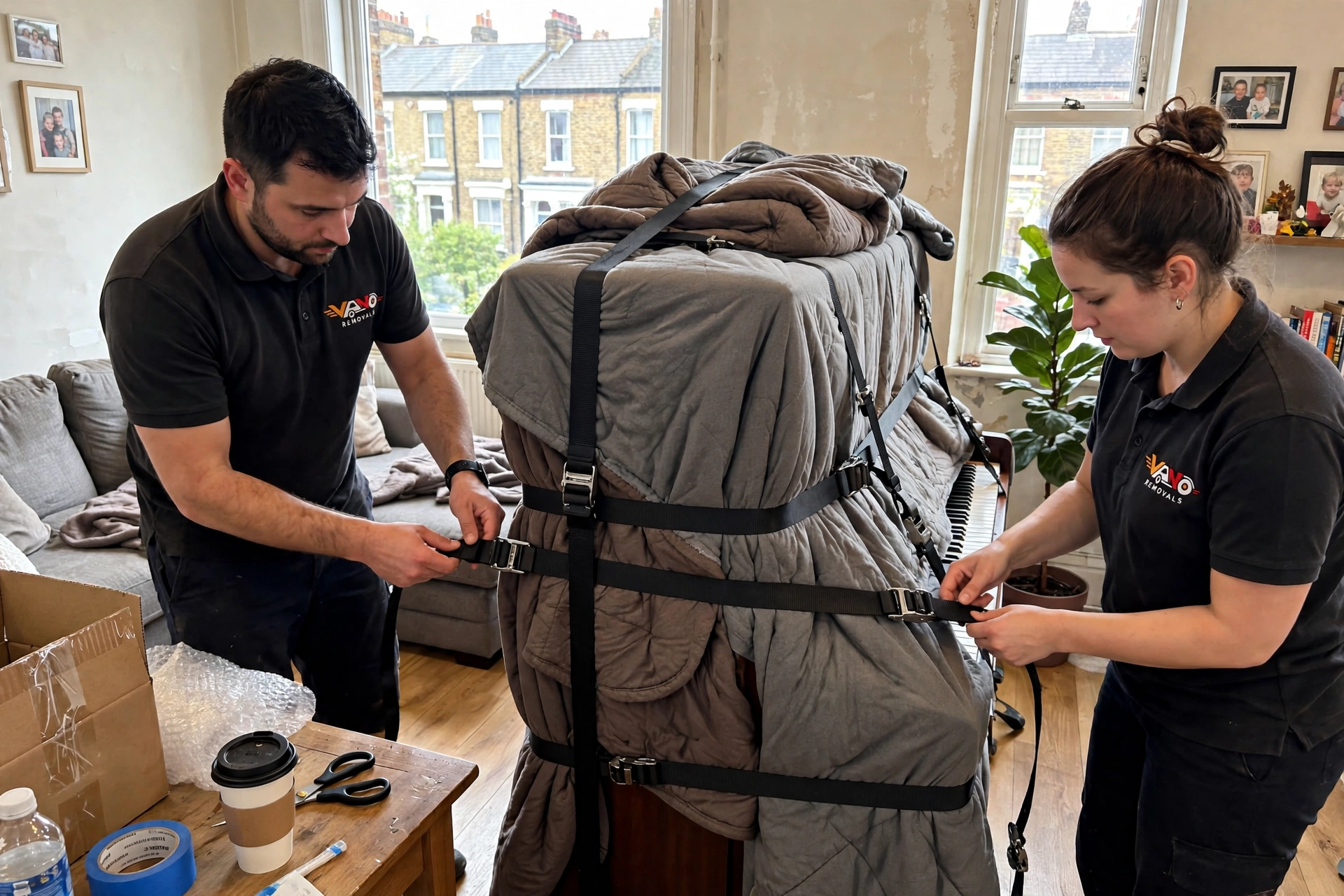
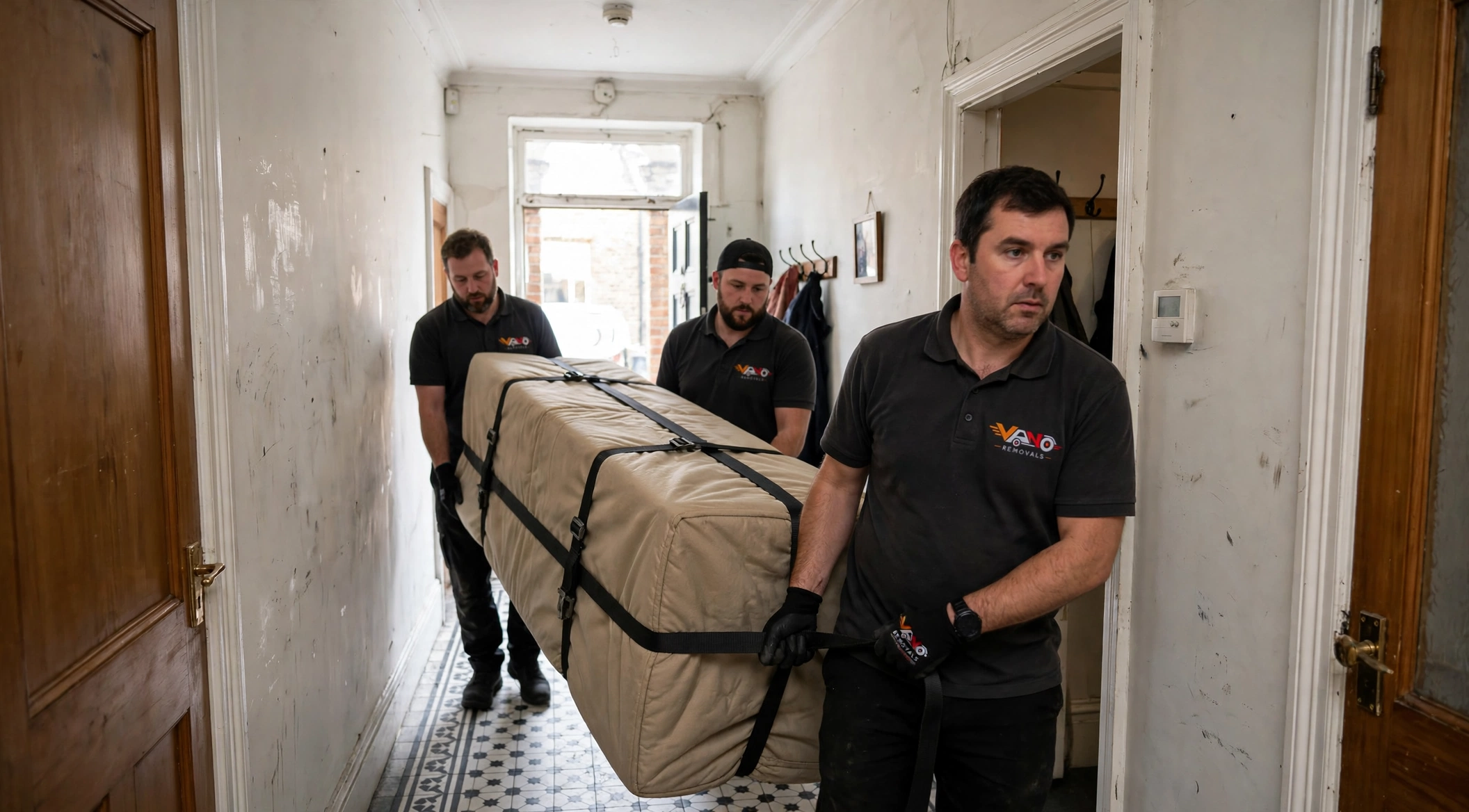
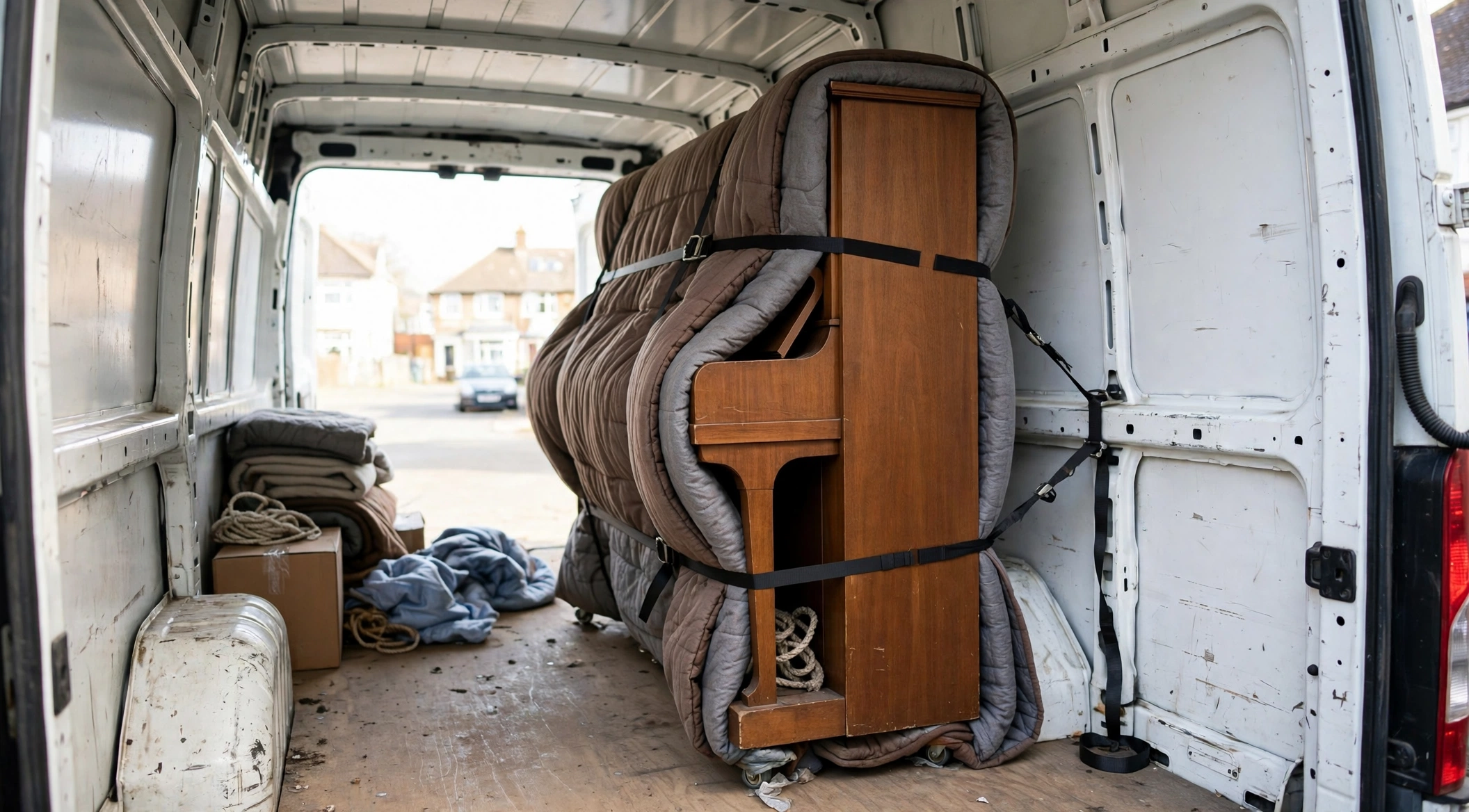
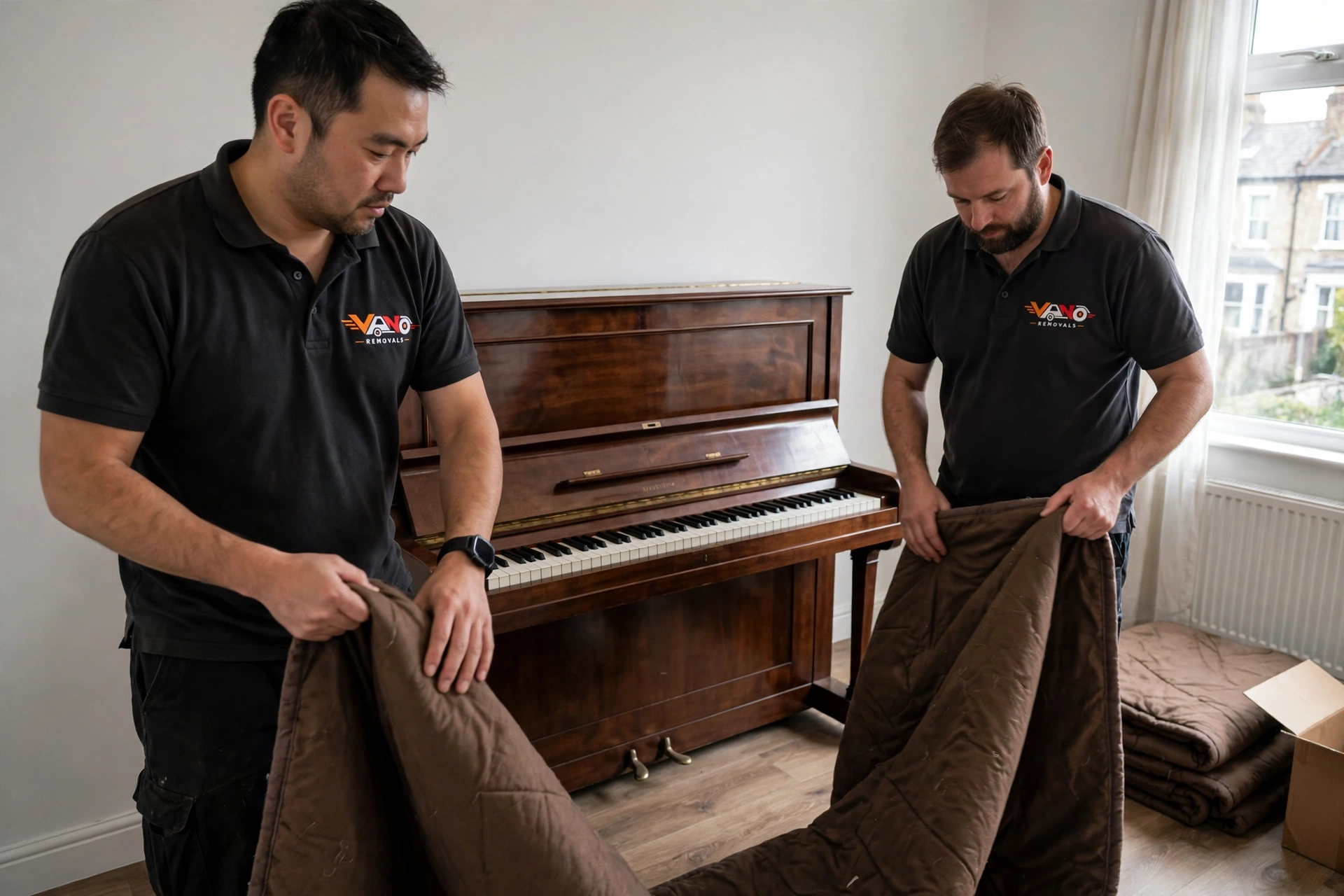
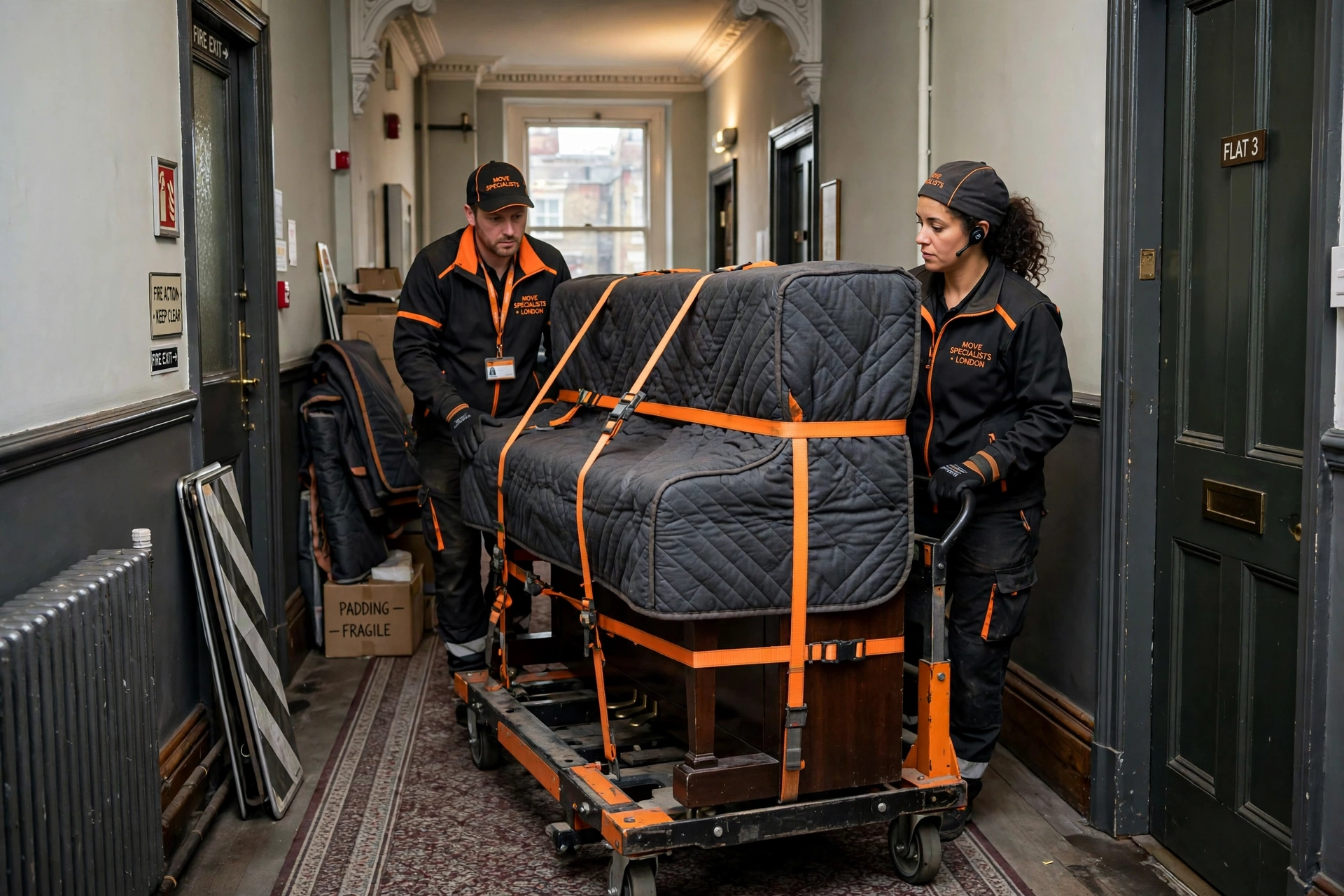
The body is wrapped in furniture blankets and protective wrap before it moves, not after the first doorway has had its chance. Then the carry itself: three movers on an upright, one guiding and calling the turns, the other two on the weight, at walking pace, by the planned route only. In the van the piano travels upright (or on its side, for a grand), strapped against a padded surface so nothing shifts or rubs in transit.
Stairs, honestly
Stairs are charged at £5 per floor where the carry is by stairs, and lift-served floors are not charged. A straight flight is straightforward; the half-landing turn in a converted house is the real test, and it is a measuring question, answered from your photographs before the day. If a piano cannot make a turn without force, the answer you get from us is no, with the measurements explained, before anyone is standing on your stairs holding it.
When we will refuse a route
If the measurements say a piano cannot pass a doorway or a turn without force, or a staircase cannot sensibly take the weight and the crew it needs, we refuse that route, from your photographs, before the day, and we explain the measurements behind the refusal. A piano wedged in a stairwell helps nobody: not you, not the instrument, not the neighbours trying to get past it. Refusing early is part of the service, not a failure of it.