Start with a written quote
Ask every company for the quote in writing, based on the same information: both full addresses, a room-by-room inventory, floor levels, stairs or lift access, the loading point at each property, the preferred date and any key handover timing, and the tasks you want included. A quote built on a bedroom count alone is a guess; a quote built on your inventory and access is a plan.
Give each company the same brief, and keep a copy of what you sent. If one company has not asked about access, packing, dismantling or storage, its quote may be missing work the others have priced. The cheapest offer is often the one with the most left out.
For a larger or awkward move, a survey or a detailed inventory with photographs or measurements of large items is worth arranging. It reduces the chance of a vehicle that is too small, a crew that is too small, or a price that changes on the day. See also our guide to how much removals cost and the frequently asked questions.
What the quote should include
A useful written quote names the addresses, the date, the inventory or volume it is based on, the crew and vehicle, and the tasks included. It should also state the charges clearly, including how additional time, extra trips, waiting or additional labour would be charged if the scope changes.
- Collection and delivery addresses, date and any agreed arrival window.
- The inventory or volume the price is based on, and what happens if it grows.
- Whether packing, materials, dismantling, reassembly, storage or specialist handling are included.
- Charges, including how waiting time, extra hours, extra trips or additional stops are calculated.
- Exclusions: the work and items the price does not cover.
- The applicable terms, including deposits, rescheduling and cancellation.
If the quote does not say whether packing or dismantling is included, assume it is not. Ask for each task to be listed explicitly, and keep the written scope with your booking confirmation.
Insurance and liability
Ask for the current goods-in-transit and public-liability terms before booking, including the limits, the exclusions and the claims process. Insurance wording varies, and a vague assurance that goods are “fully covered” is not a substitute for the actual terms.
Disclose high-value, fragile or specialist items before loading, such as artwork, antiques, musical instruments, glass or sensitive equipment, and confirm any applicable terms in writing. Keep photographs of valuable items and their condition before the move, and check what you must do, and by when, if you need to report a concern after delivery.
Also ask who is responsible if something is damaged: the company, a subcontractor, or you, for items you packed yourself. The answer should be in the written terms, not left to moving day.
Access, parking and timing
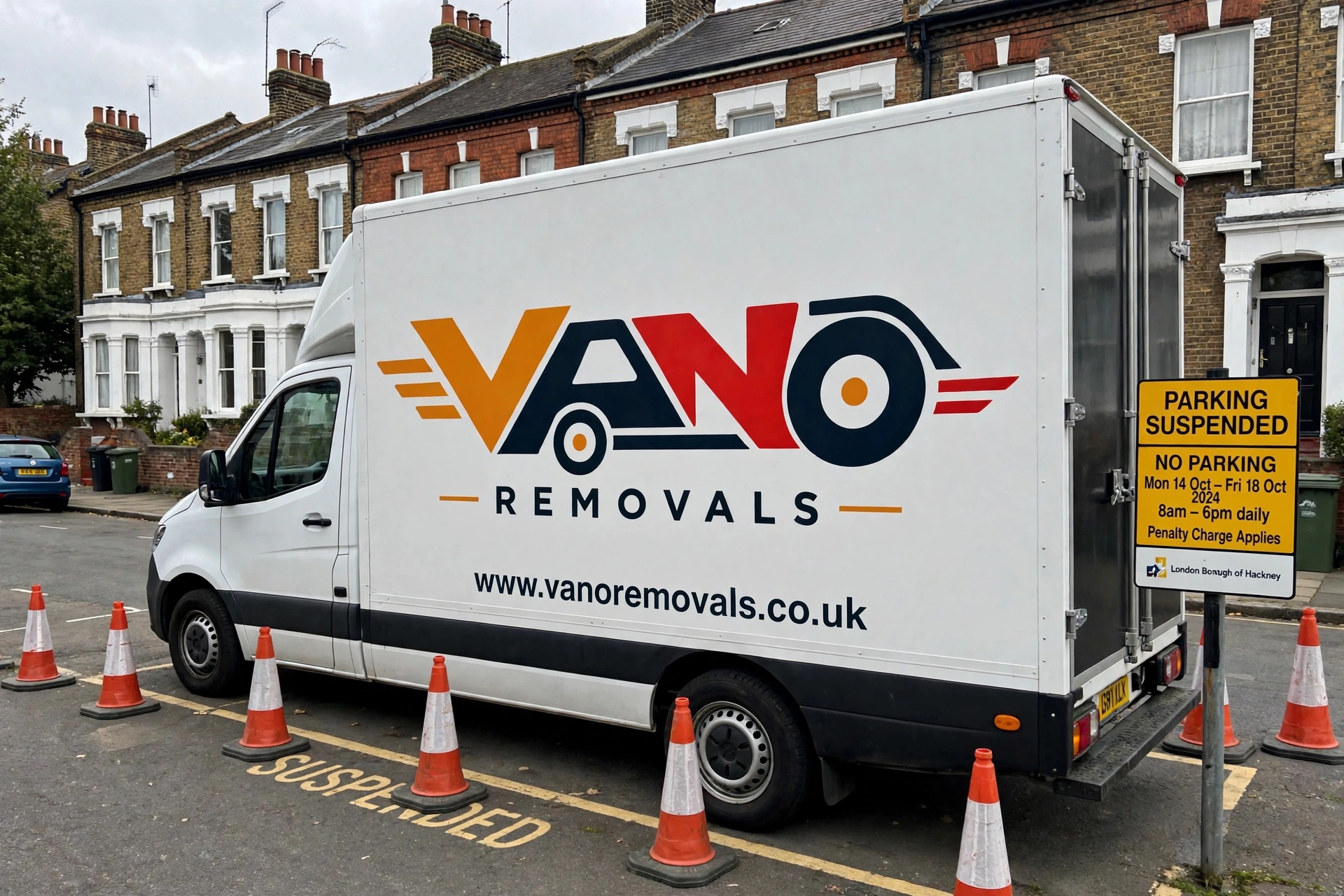
London moves are shaped by access: controlled-parking streets, red routes, estate roads, shared entrances, stairs, lifts and loading bays. Tell each company about the floor, the stair or lift route, the doorway widths and the distance from the loading point at both properties, and check parking or loading arrangements with the relevant council or building manager.
Agree the timing honestly. If keys are released late, a lift is booked for a fixed slot, or the destination cannot receive the vehicle before a certain time, say so early. A company that plans around the real constraints is more useful than one that promises an arrival time it cannot control. Our guide to how long a house move takes explains the London friction that affects timing.
Terms, deposits and cancellation
Read the terms before booking, not after. Check the deposit amount and when it is due, how it is paid, and what happens to it if you reschedule or cancel. Check the rescheduling and cancellation notice periods and any charges, and check how changes to the inventory, addresses or date are handled.
Also check the terms on waiting time, additional labour, extra trips and excluded items. If completion or key release could slip, ask in advance how a delay is handled and what it could cost. You can read our terms and conditions to see how we set ours out.
Keep the quote, the written scope and the terms together. If a promise was made on the phone, ask for it in writing before you rely on it.
Red flags
Pause, and ask more questions, if a company:
- Will not provide a written quote, scope or terms before booking.
- Quotes a firm price without asking about the inventory, addresses or access.
- Cannot explain what insurance applies, or what its limits and exclusions are.
- Asks for a large upfront payment with no written terms or cancellation wording.
- Guarantees an exact arrival or finish time for a move with keys, chains or building slots it does not control.
- Cannot say who will actually carry out the work, or whether subcontractors are used.
- Has no clear process for reporting damage or resolving a complaint.
One red flag on its own may have an innocent explanation. Several together usually mean the offer is not properly scoped, and the price or the plan is likely to change.
Questions to ask
Use these questions with every company you compare, and keep the answers with the written quote:
- What exactly is included in this quote, and what is excluded?
- How is the price calculated, and what would change it?
- What insurance applies, what are the limits and exclusions, and how do I report a concern?
- Who will carry out the work, and are subcontractors used?
- How do you handle waiting time, delays, key release problems or a second trip?
- What are the deposit, rescheduling and cancellation terms?
- What do you need from me about parking, lifts and building access?
- What should I pack, dismantle or disconnect myself, and what can you do?
The best answer is a specific one, tied to your inventory and addresses. Vague answers to specific questions are a reason to keep comparing.
FAQs
Should I choose the cheapest removal quote?
Not automatically. Compare the same scope first: the inventory, both addresses, access, date, included tasks, exclusions and terms. A lower quote that leaves out packing, waiting, dismantling or storage is not the same offer as a fuller one.
What should a written removal quote include?
The addresses, the inventory or volume, the date, the crew and vehicle, the tasks included, the charges, any additional charges that could apply, exclusions, and the applicable terms. If any of those are missing, ask for them before booking.
How do I check insurance for a removal company?
Ask for the current goods-in-transit and public-liability terms, including limits, exclusions and the claims process. Disclose high-value, fragile or specialist items before loading and confirm any applicable terms in writing.
Do I need a home survey before booking?
Not always, but a survey or a detailed inventory helps for larger or awkward moves. A room-by-room list with photographs or measurements of large items gives a more reliable basis for a quote than a bedroom count alone.
What deposit should I expect to pay?
Deposit arrangements vary by company. Ask for the deposit amount, when it is due, how it is paid, and what happens to it if you reschedule or cancel. Get the answer in writing with the rest of the terms.
How far in advance should I book a removal company?
Book as soon as the date is reasonably firm, especially for end-of-month, weekend or peak-period moves. Earlier booking also leaves time to arrange parking, building access, keys and packing.
What if the company subcontracts my move?
Ask who will actually carry out the work, whether subcontractors are used, and who is responsible if something goes wrong. The answer should be clear before you book, not discovered on moving day.
Can I change the date after booking?
It depends on the company’s terms. Ask about rescheduling and cancellation before booking, including notice periods and any charges, and keep the confirmed terms with your quote.