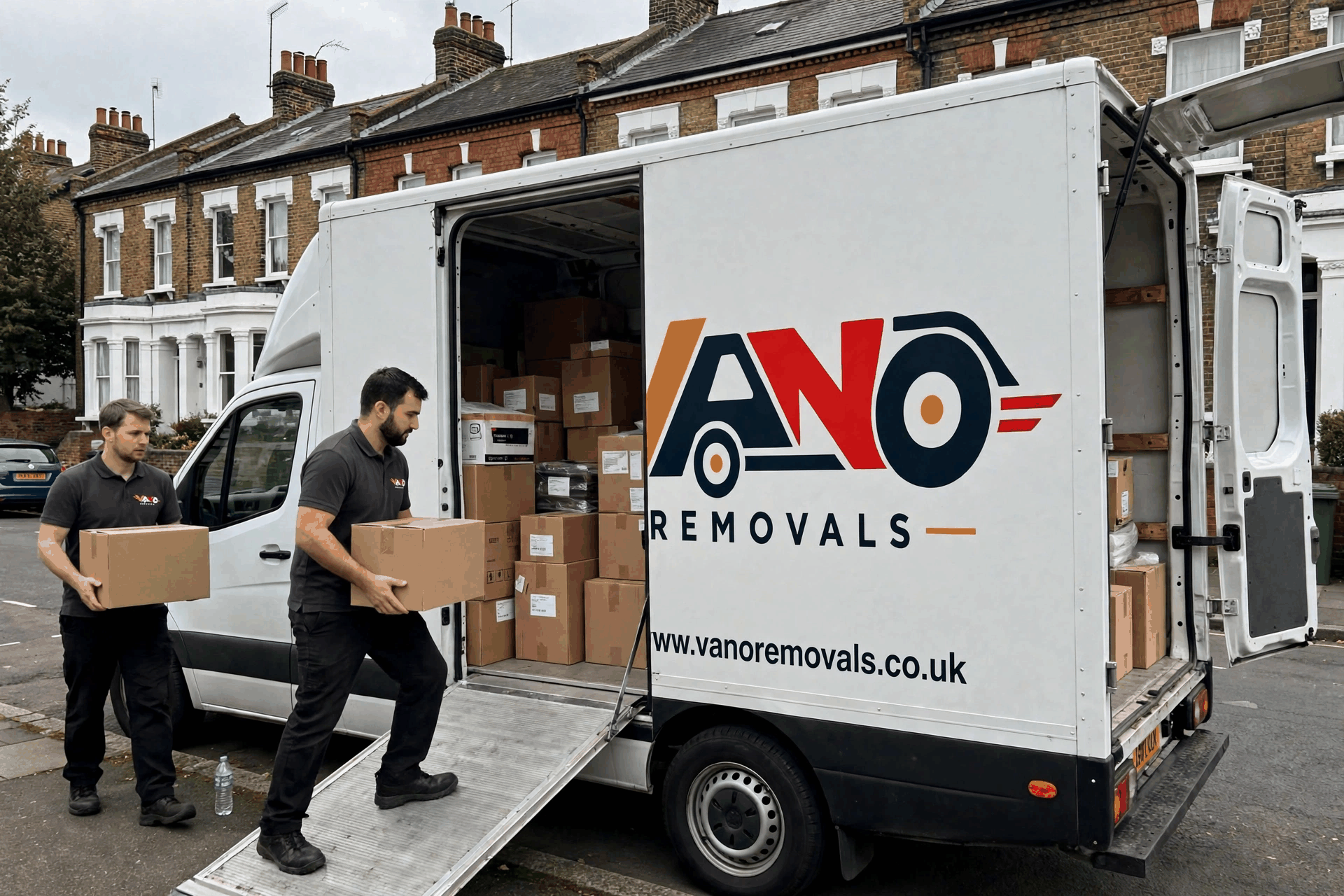
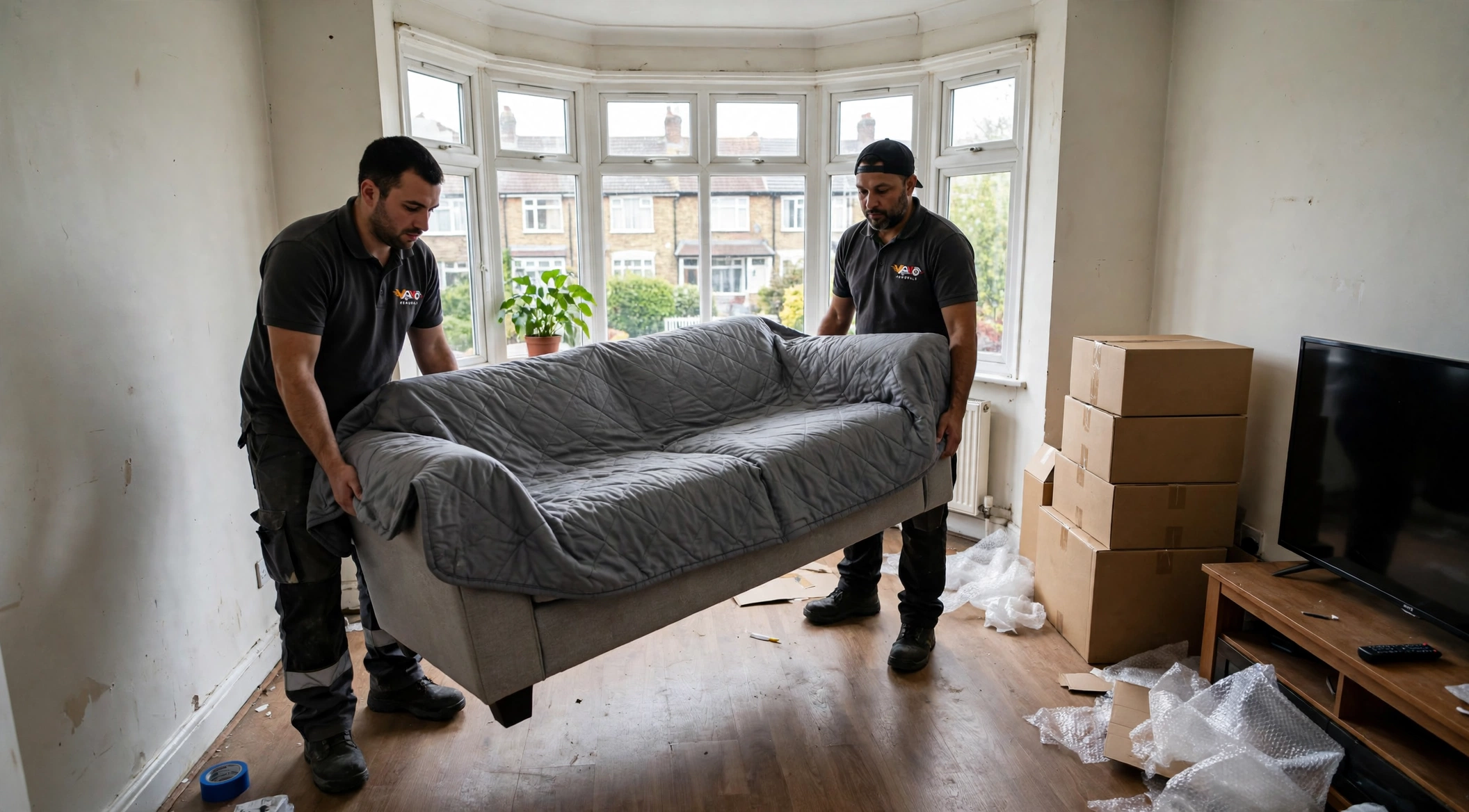
London’s housing was built in layers, and each layer moves differently. The inner boroughs run on Victorian and Edwardian terraces, a large share of them long since converted into flats with shared stairs, and on the mansion blocks that line the wider streets: portered entrances, small lifts, buildings that set their own moving rules. Post-war estates add parking courts and arrangements of their own. Further out, the 1930s semis take over, with driveways, garages and lofts that hold far more than the room count suggests. The newest layer is vertical: towers in the regeneration districts at Stratford, Nine Elms, Canary Wharf, Woolwich and Croydon town centre, where the move runs on a concierge’s lift booking and a loading bay slot.
The moves follow the housing and the calendar. Renters are the volume: tenancies end at month ends, so the last Friday and Saturday of the month are London’s busiest moving days all year. Buyers move on completion chains, which bunch on Fridays and peak in late August, when families time the move before the school term. Underneath both sits the day’s fixed point: keys. A purchase with no chain usually releases keys around 11am; a chain staggers its releases through the afternoon, the last around 2pm, so a London move is planned backwards from a handover the mover does not control.
And most of these moves cross a line on the map. A move from Islington to Hackney, or from Croydon to Sutton, crosses a borough boundary, and everything local changes at that border: the parking product, its price, its notice period, even the hours the controlled zone operates. The journey changes too. A cross-London drive at peak times, on the North or South Circular or through the centre, can take longer than the loading at either end. That is why our quotes are built from both addresses and the route between them, never from the distance on a map or a city-wide average.