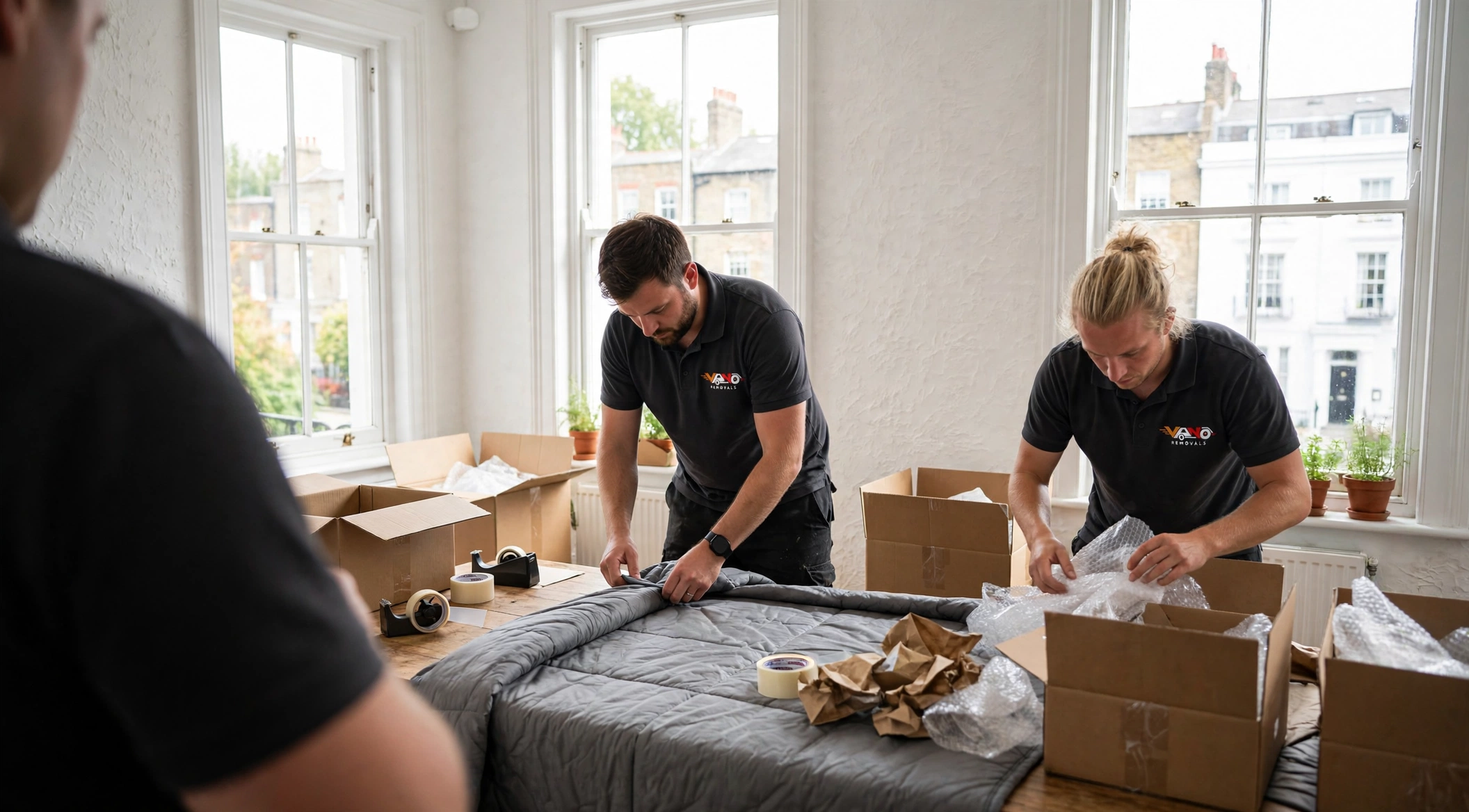
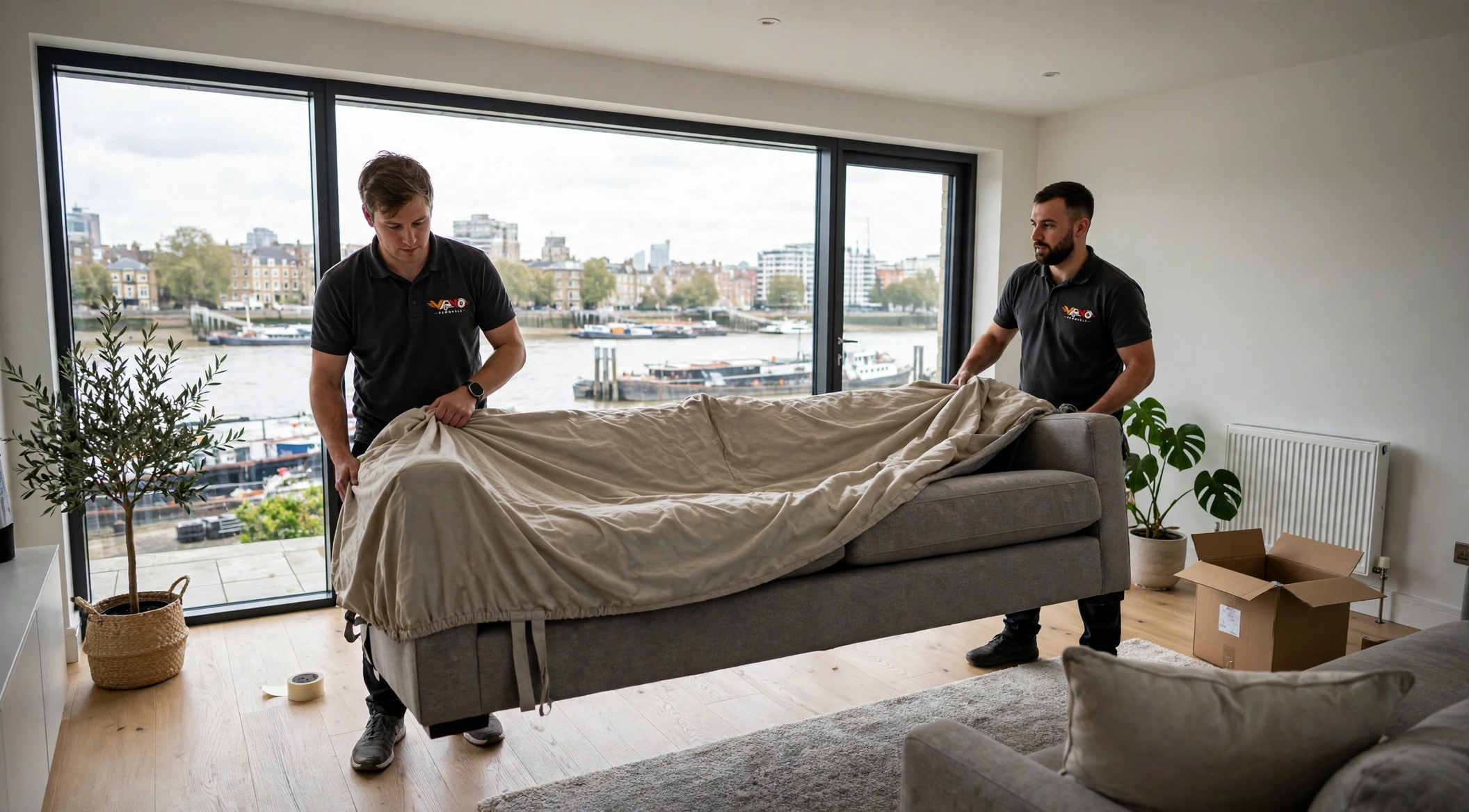
The housing was built in layers that still set the work. Fulham’s layer is the Victorian terrace grid: streets of three and four-storey houses between Fulham Broadway, Parsons Green and the river, most of them converted into flats over the last century, so the standard Fulham move is a flat move with a house’s staircase, a shared entrance, and often a basement flat reached down the front area steps. The mansion block layer runs through Barons Court, West Kensington and the Hammersmith Broadway fringe: portered blocks with rules, small lifts and neighbours to work around. The newest layer is vertical: riverside towers at Fulham Reach, Palace Riverside and Sands End, and the White City new-builds, where the concierge’s slot is the fixed point of the day.
The moves follow the stock. Renters churn through the Fulham and Shepherd’s Bush conversions on one and two-year tenancies, which keeps one and two-bed flat moves running all year. Families trade up inside the borough when they can, from a two-bed conversion to a whole terrace around Parsons Green, Bishop’s Park or Brook Green, and downsizers make the same journey in reverse into the mansion flats and riverside blocks. Students and young professionals cluster around the District and Piccadilly line stations in the north of the borough. Because the borough is small, journeys are short; what fills the hours is the carrying, the stairs and the street.
The calendar has two local shapes. Tenancy changeovers bunch at month end, as everywhere, and family moves cluster in the school holidays. On top of that, two football grounds sit inside the borough, Craven Cottage on the river at Fulham and Stamford Bridge at Fulham Broadway, and match-day parking controls and crowds reshape the streets around both on fixture days, Saturdays especially. A weekend move anywhere near either ground is checked against the fixture list before the date is fixed, not discovered on the morning.