








Vano Removals
About Us
Contact
Practical moving guide

How to prepare for a house move

“Prepare a house move in stages: declutter and inventory first, then parking and access, then packing, then a completion-day plan and an essentials box, so moving day is loading and delivery, not sorting and searching.”

Most moving-day stress comes from preparation left until the last week. A staged plan fixes that.

Moving preparations related to how to prepare for a house move

Preparation is not one big job; it is a sequence of smaller ones. Decluttering and inventory come first, because everything else, the quote, the vehicle, the packing and the access plan, depends on what is actually moving. Parking, lifts and building access come next, because they need other people’s agreement and cannot be arranged on the day.

Use the timeline below as a checklist. If your move is sooner than eight weeks away, work through the same stages in the same order, just faster.

Moving checklist and belongings for how to prepare for a house move

Quick facts

  • Inventory first: the quote, vehicle and packing all depend on it
  • Arrange parking, lifts and building access early
  • Pack room by room and label every box
  • Keep keys, documents and essentials separate
  • Plan completion day around key release, not the clock
Illustration: How to prepare for a house move in London

6–8 weeks before

  • Declutter: decide what moves, what stays, what goes to storage, and what leaves the property another way. Removing items now is cheaper and faster than moving them twice.
  • Build the inventory: walk room by room and list furniture, appliances, boxes, loft, garage and garden items. Note anything large, heavy, fragile or awkward.
  • Request written quotes: send both addresses, the inventory, access details and the preferred date to each company, and compare the same scope. See how to choose a removal company.
  • Decide on packing: whether you will pack everything, pack part of the home, or ask for packing help. If you need packing support, book it now.
  • Check the calendar: note school terms, work commitments, tenancy end dates and completion dates that could affect the day.
Illustration: Moving house checklist for London, preparing for a house move

4 weeks before

  • Confirm the booking: agree the written scope, charges, exclusions and terms, and confirm the date and arrival window.
  • Arrange parking and building access: check parking or loading arrangements with the relevant council or building manager for both addresses, and confirm lift bookings and any move slot. See the parking, lifts and access section below.
  • Start packing non-essentials: books, out-of-season clothes, decorations and rarely used items. Label each box with its destination room and a brief contents note.
  • Gather materials: boxes, tape, wrapping and markers. Use the packing calculator to estimate quantities against a real box count.
  • Plan storage if dates do not line up: if collection and delivery dates differ, agree storage, access and redelivery in writing before moving day.
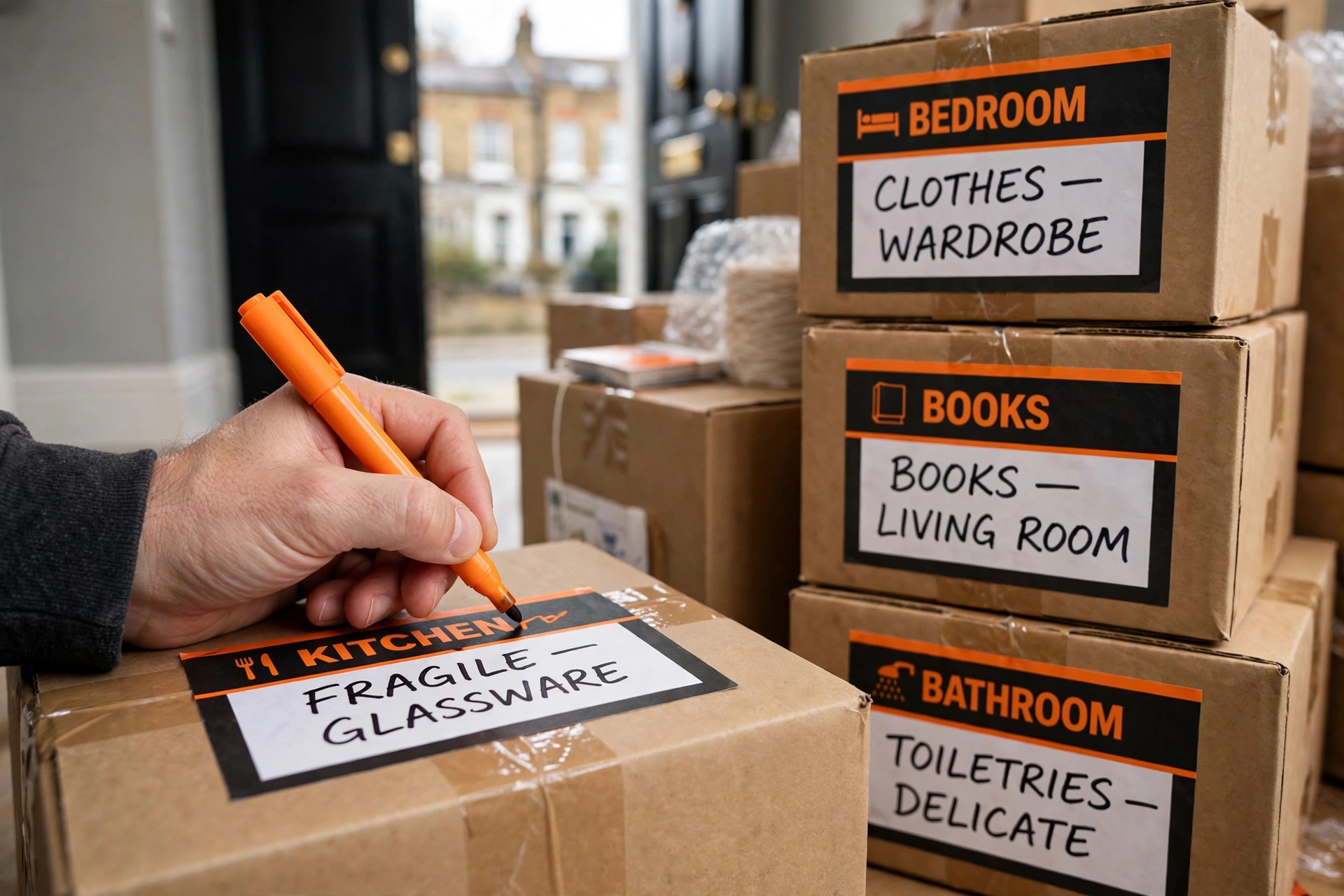
Illustration: Labelling boxes for a London house move

2 weeks before

  • Pack room by room: finish one room before starting the next. Keep a list of what is in each box, and mark fragile boxes clearly.
  • Measure large items: check furniture against doorways, stair turns, corridors and lift dimensions at both addresses. Flag anything that may not fit.
  • Confirm what is dismantled: check whether dismantling is included in your written scope. If it is not, dismantle items yourself or ask for it to be added.
  • Prepare appliances: empty, clean and dry fridges and freezers, and arrange disconnection by the relevant qualified person where required.
  • Confirm the handover: key collection and return times, who will be present at each address, and the building contact at both ends.
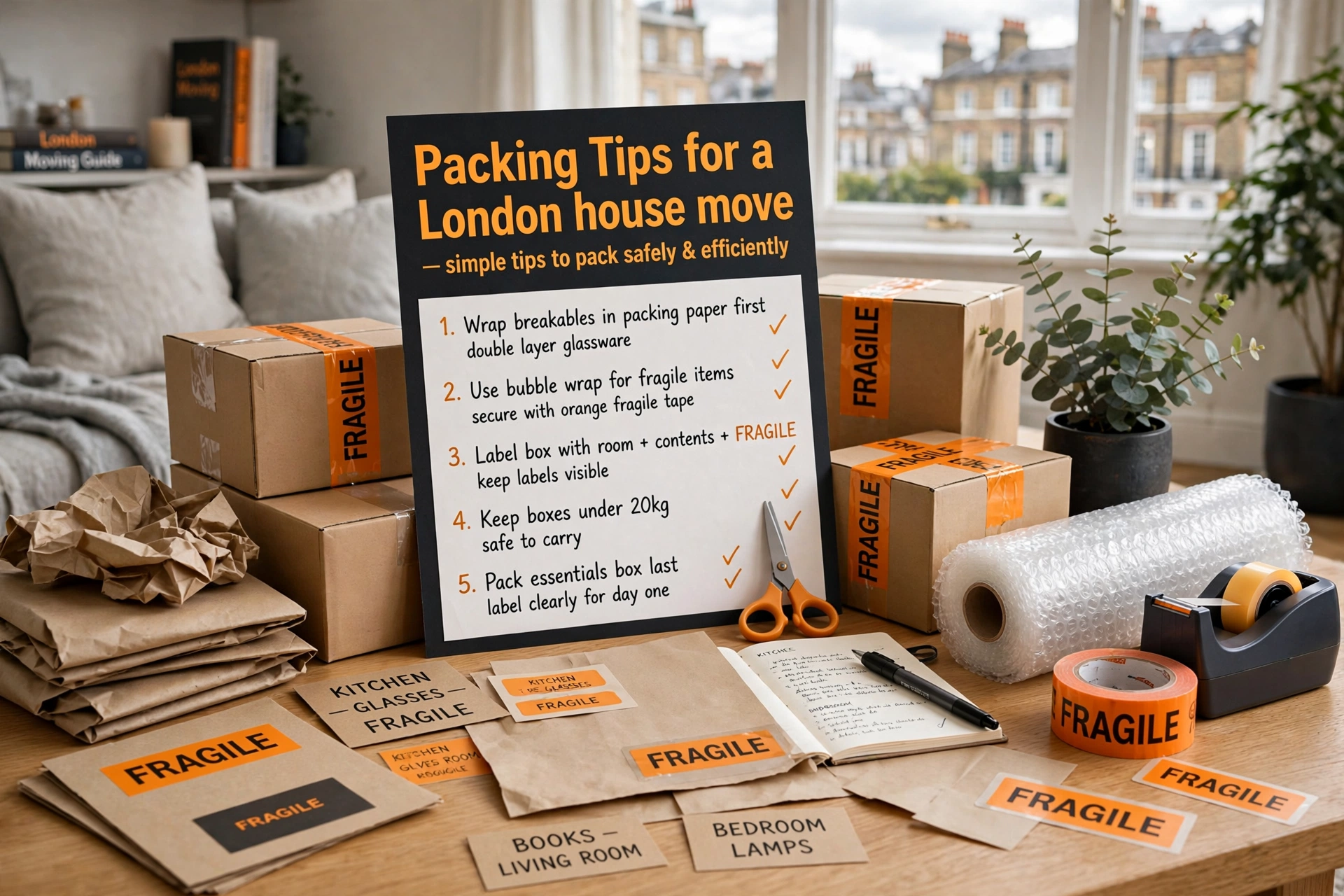
Illustration: Packing tips for a London house move

1 week before

  • Finish packing except daily essentials: only everyday items should remain unpacked. Pack a first-night box for each person.
  • Reconfirm everything: the removals booking, the arrival window, parking and loading arrangements, lift bookings, key times and the destination’s readiness.
  • Prepare the essentials box: see the essentials box section below. Keep it separate from the general inventory.
  • Clear the route: make sure hallways, stairs, entrances and the loading point are clear, and that doors and gates can be held open.
  • Set aside what stays: label anything that is not moving, so nothing is loaded by mistake.
Final boxes packed the day before a London move

Day before

  • Pack the last daily items and leave out only what you need for the morning.
  • Charge phones, and keep chargers, keys, documents and medication together.
  • Defrost and dry the freezer and fridge if you have not already.
  • Walk the property and check every room, cupboard, loft, garage and garden for forgotten items.
  • Confirm the morning plan: who opens the property, where the vehicle loads, and the order of the day.
Illustration: Moving day timeline in London

Moving day

  1. Be present or represented: someone who can make decisions should be at the collection address, and someone should be available at the destination.
  2. Walk the crew through the property: show what moves, what stays, what is fragile, and where the loading point is.
  3. Check rooms as they empty: open cupboards, check lofts, garages and gardens, and confirm nothing is left behind.
  4. Travel with the essentials: keep keys, documents, medication, valuables and the essentials box with you.
  5. Walk the destination: show where large items go, check rooms as they fill, and confirm the final state before the crew leaves.
  6. Record the outcome: note what was delivered, what (if anything) remains, and any concern to raise, promptly, and in writing where needed.

For timing, see our guide to how long a house move takes.

Illustration: Parking permits for removals in London

Borough parking, lifts and access

In London, access is part of the move, not an afterthought. The same checks apply in every borough, but the answers differ by address:

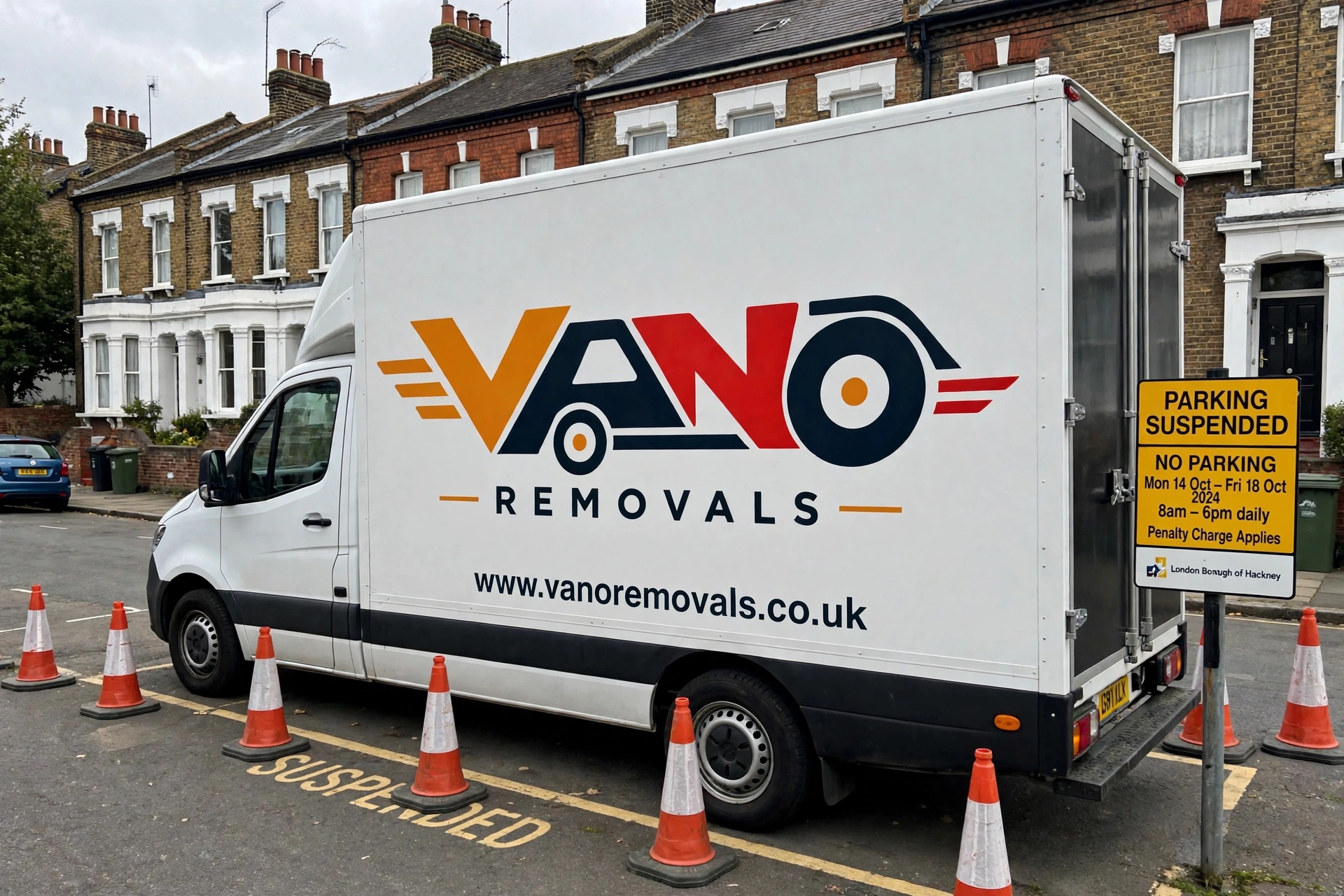
  • Parking: check with the relevant council whether a parking suspension or permit is needed at either address. Do not assume kerbside space will be free, and do not stop where it is prohibited.
  • Loading point: confirm where the vehicle may load at each address, and the distance from that point to the entrance. A long carry changes the time and labour required.
  • Lifts: confirm lift availability, dimensions, booking and any protection or move-slot requirements with the building manager. If there is no lift, describe the stairs and turns.
  • Building rules: managed buildings may restrict moving hours, require a booked slot, or require a contact to be present. Confirm these before the day.
  • Stairs and doorways: measure large items against the tightest point on the route at both addresses.

Share the confirmed arrangements with the removals team before moving day, and tell them promptly if anything changes.

Keys and boxes ready on completion day in London

Completion-day plan

On completion day, the schedule is set by the chain and the key release, not by the removals team. Plan for the keys to be late, and the day becomes manageable; plan for them to be early, and a delay becomes a crisis.

  • Confirm the key plan: who releases the keys, where, when, and who collects them. Keep the estate agent’s and solicitor’s contact details with you.
  • Keep the day clear: avoid other commitments that depend on an exact finish time.
  • Agree the waiting plan in advance: ask the removals company how waiting, a late key release or a revised delivery is handled, and what it could cost, before moving day.
  • Have a fallback: know what happens if the destination is not ready (waiting, storage, or a revised delivery) and who decides.
  • Prioritise essentials: if the day slips, the essentials box, bedding, medication and basic kitchen items matter most.

Tell the removals team as soon as you know the keys are delayed. An overrun discussed early is far easier to manage than one discovered late in the day.

Illustration: Packing materials supplied for a London move

Packing

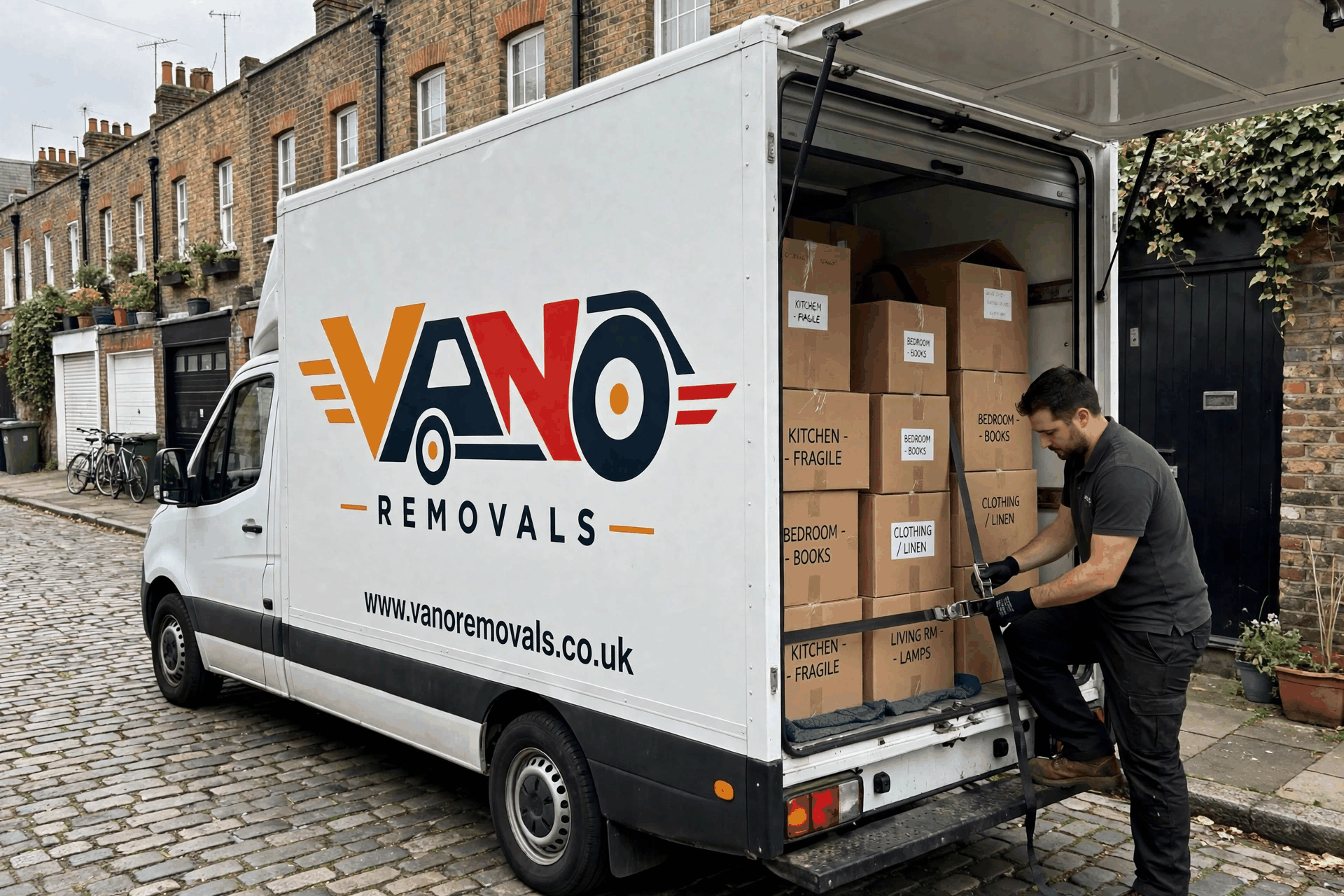
Good packing protects belongings and speeds up the day. Pack room by room, use sturdy boxes, and do not make containers too heavy to lift safely. Close and label every box with its destination room and a brief contents note, and mark fragile boxes clearly.

  • Fragile items: wrap individually, keep them together only when each is protected, and mark boxes that need a particular orientation.
  • Books and heavy items: use small boxes and spread the weight. A large box full of books is a hazard, not a saving.
  • Clothes and soft items: use wardrobe boxes or bags, and keep a change of clothes accessible.
  • Liquids: seal containers, pack upright, and keep them separate from soft furnishings and electronics.
  • Furniture: clear drawers where appropriate, secure loose parts, and keep screws and fittings labelled with the item they belong to. Photograph complex assemblies before dismantling.
  • Documents and valuables: keep these with you, not in the general inventory.

If you would rather not pack yourself, ask about packing services and confirm what is included in writing. Use the packing calculator to estimate materials against a real box count.

Illustration: Moving day essentials box for a London move

Essentials box

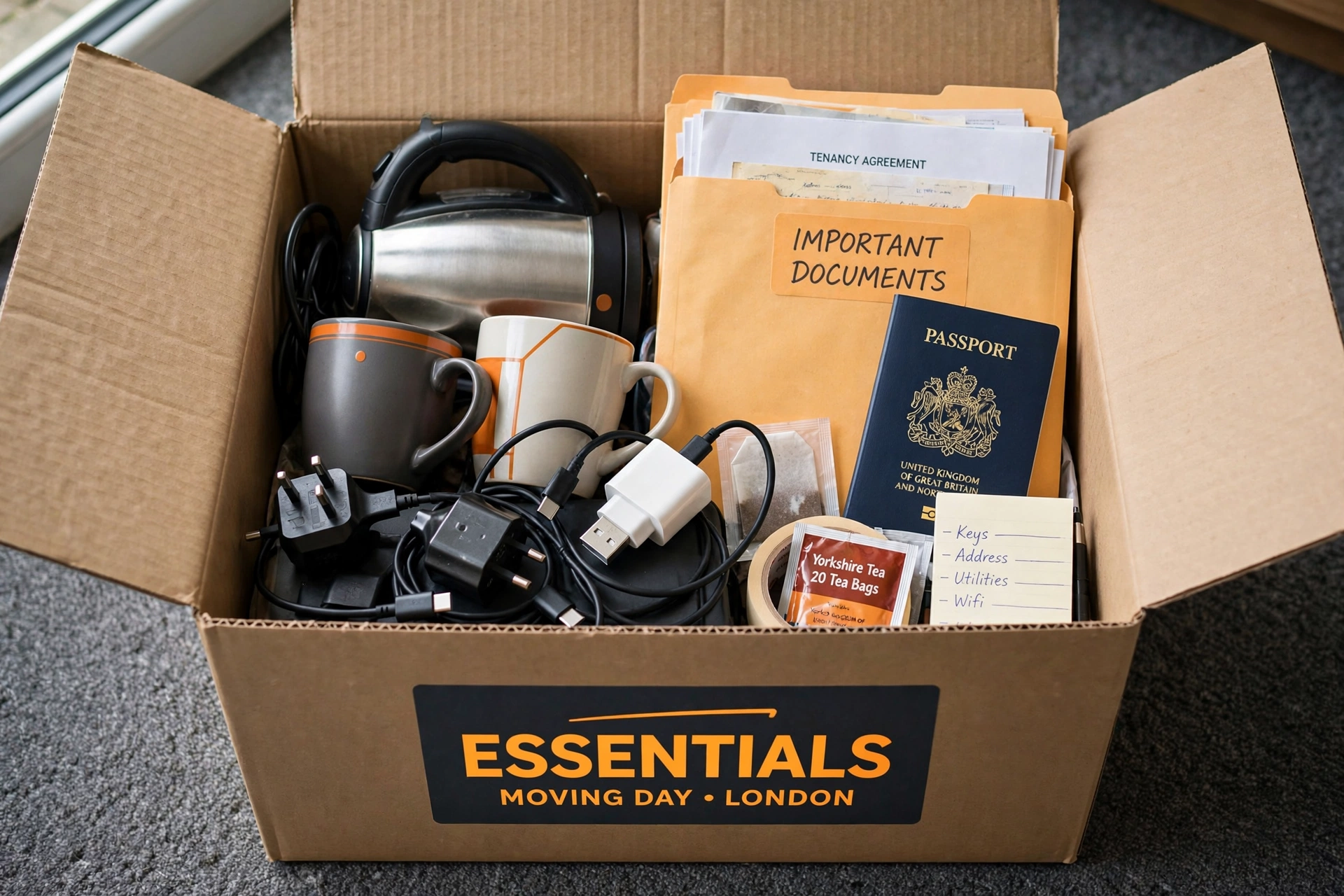
The essentials box is the one box that travels with you, not with the load. Pack it last, label it clearly, and keep it accessible from the moment you arrive:

  • Keys, documents, medication and chargers.
  • Toiletries, toilet paper, soap and towels.
  • A change of clothes and bedding for the first night.
  • Basic cleaning supplies, bin bags and paper towels.
  • Snacks, drinks, mugs and a kettle if you have one handy.
  • Phone chargers, a torch and basic tools for reassembly.

If children or pets are moving with you, pack a separate essentials bag for them too.

Illustration: Frequently asked questions about London removals, preparing for a house move

FAQs

When should I start preparing for a house move?

Start six to eight weeks before the move if you can. That leaves time to declutter, gather an inventory, arrange parking and building access, and book packing or storage if you need it. A shorter timetable is workable, but the same tasks still need to happen, just faster.

What should go in the essentials box?

Keys, documents, medication, chargers, toiletries, a change of clothes, basic cleaning supplies, snacks, drinks, toilet paper and anything you need on the first night. Keep it with you or clearly marked so it is not loaded with the general inventory.

Should I pack room by room?

Yes. Packing room by room keeps boxes organised, makes labelling accurate and makes unpacking faster. Finish one room before starting the next, and label each box with its destination room and a brief contents note.

How do I prepare for parking and access on moving day?

Check parking or loading arrangements with the relevant council or building manager for both addresses, confirm lift bookings and any move slot, and tell the removals team the loading point, floor, stairs or lift details and any access windows.

What if the keys are released late on completion day?

Tell the removals team as soon as you know. A late key release may mean waiting, a revised delivery time, or storage and a later delivery. Additional time or work may affect the charges, and that should be explained and agreed before it goes ahead.

Should I dismantle furniture before moving day?

Confirm what dismantling is included in your written scope. If furniture needs dismantling and it is not included, either dismantle it yourself before moving day or ask for it to be added to the scope. Keep screws and fittings labelled with the item they belong to.

What should I keep with me on moving day?

Keys, documents, medication, valuables, chargers, the essentials box and anything irreplaceable. Do not pack these with the general inventory unless a different arrangement has been expressly agreed.

How do I prepare appliances for a move?

Empty, clean and dry fridges and freezers in advance, disconnect appliances as required by the relevant qualified person where needed, and secure doors and loose parts. Confirm with the removals team whether appliance handling is included in your scope.

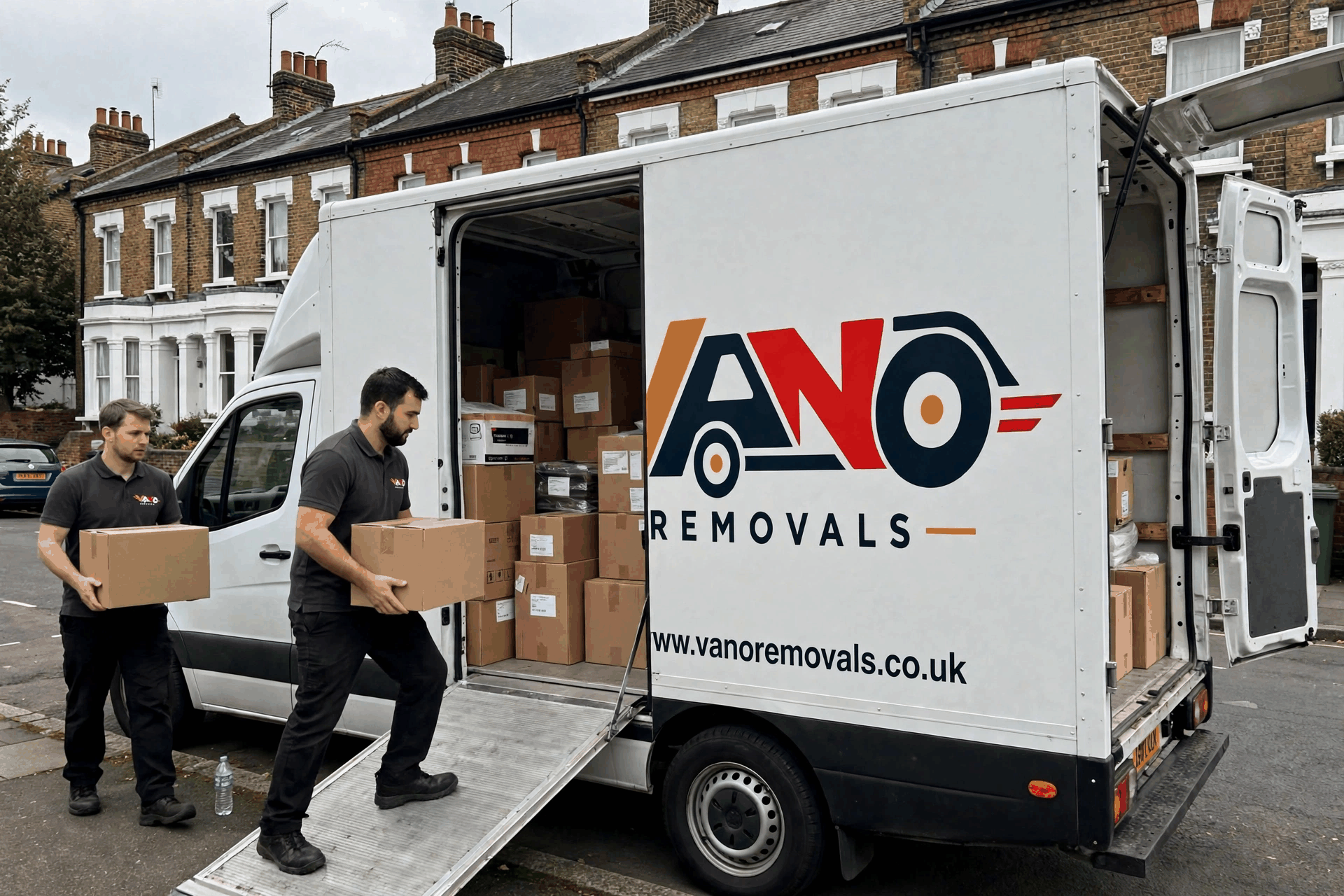
House move in progress in London
Preparation is a sequence, not a single day: inventory, access, packing, then a completion-day plan and an essentials box. Work the stages in order and moving day becomes loading and delivery.
Illustration: Vano Removals service areas across London, preparing for a house move
Illustration: Request a written quote from Vano Removals, preparing for a house move

READY TO PREPARE?

Request a written quote

Send both postcodes, the inventory, the access details and your preferred date, and we will set out the scope, charges and terms in writing.

About the author

Ahmer Faiz, founder of Vano Removals

Ahmer Faiz, Founder, Vano Removals

Ahmer runs the small London crew that carries out every Vano move, sets the published hourly rates on this website, and replies to every Google review personally. Every guide on this site is written from the moves the team actually does, and checked against the council and TfL pages it quotes.

Reviewed by Ahmer Faiz on 5 November 2026 · Next review: 5 May 2027 · More about Vano Removals

A clearer move starts with a clear scope

  • Describe the inventory, route and access at both addresses
  • Identify bulky, fragile or unusually valuable items in advance
  • Agree any packing, storage or specialist work before booking
  • Confirm the moving date and site restrictions before arrangements are final
  • Ask how waiting time or a change in scope affects the quote

Confirm the agreed service, timing, price and any exclusions in writing before booking.

Moving house checklist for London

Customer Reviews

What our customers say

Real, unedited reviews from customers we’ve moved across London.

5.0Excellent
Google reviews

“Best house removal company around. The team at Vano Removals was punctual, hard-working, and handled our furniture with great care. If you need reliable, stress-free local movers or packing services, I highly recommend them.”

Muhammad Saad

Google review · October 2026

Review 1 of 7: Muhammad Saad
Read all reviews on Google

These are unedited reviews from our Google Business Profile. Moved with us recently? Your honest review helps other Londoners choose with confidence.