Updated 13 November 2026 · Reviewed by Ahmer Faiz, Founder, Vano Removals
Nobody books a rainy moving day on purpose, but in London it is always a possibility — and rain does not cancel a move. What it does is change the rules: cardboard weakens, floors get slippery, and everything takes a little longer. A move that is prepared for rain goes ahead with less stress; a move that is not gets damp, muddy and slow. The difference is not luck — it is what you do the night before.
Boxes: cardboard’s weakest point is water
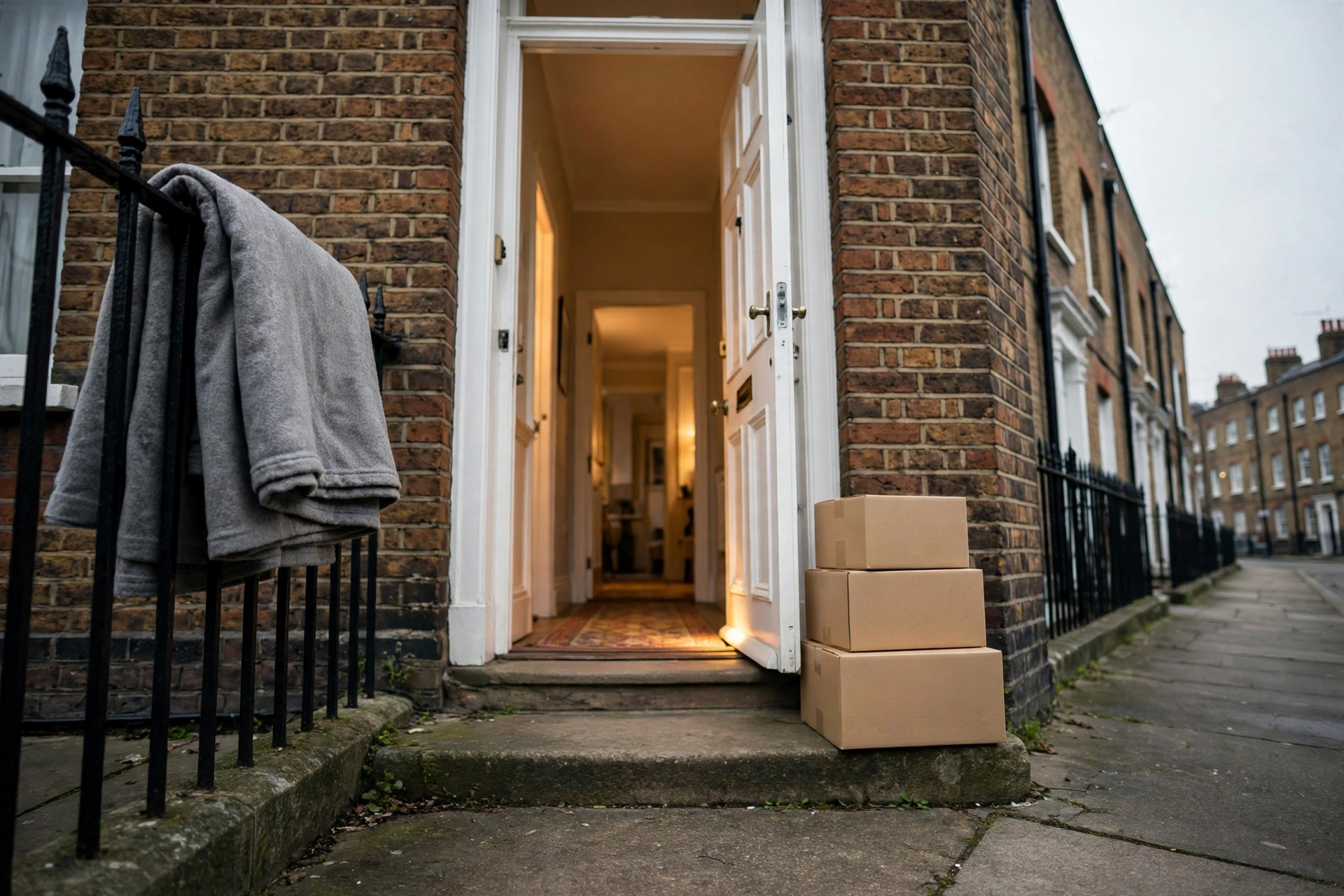
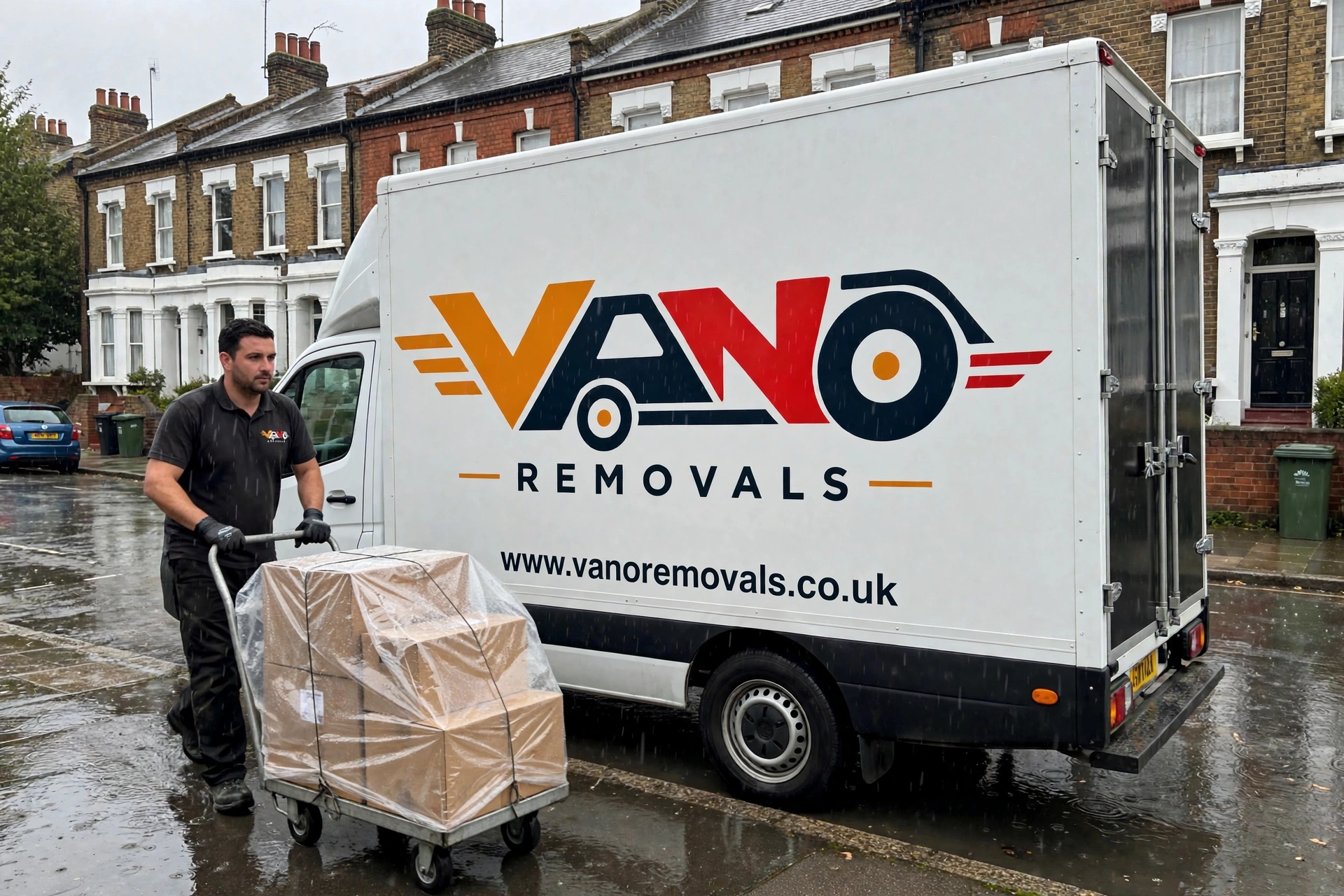
Cardboard is strong until it gets wet. A soaked box sags, tears, and can give way just as someone lifts it — which is how things get dropped on a wet doorstep. The fix is simple: keep boxes off the ground and keep them wrapped. If rain is forecast the night before, have a roll of clear plastic sheeting or a few large bin bags ready and wrap the boxes that hold anything you care about — books, clothes, electronics. Loaded boxes should never sit waiting on the path or the pavement. Keep them inside the property, near the door, and let them move straight from the hallway into the van.
Furniture and fabrics in the rain
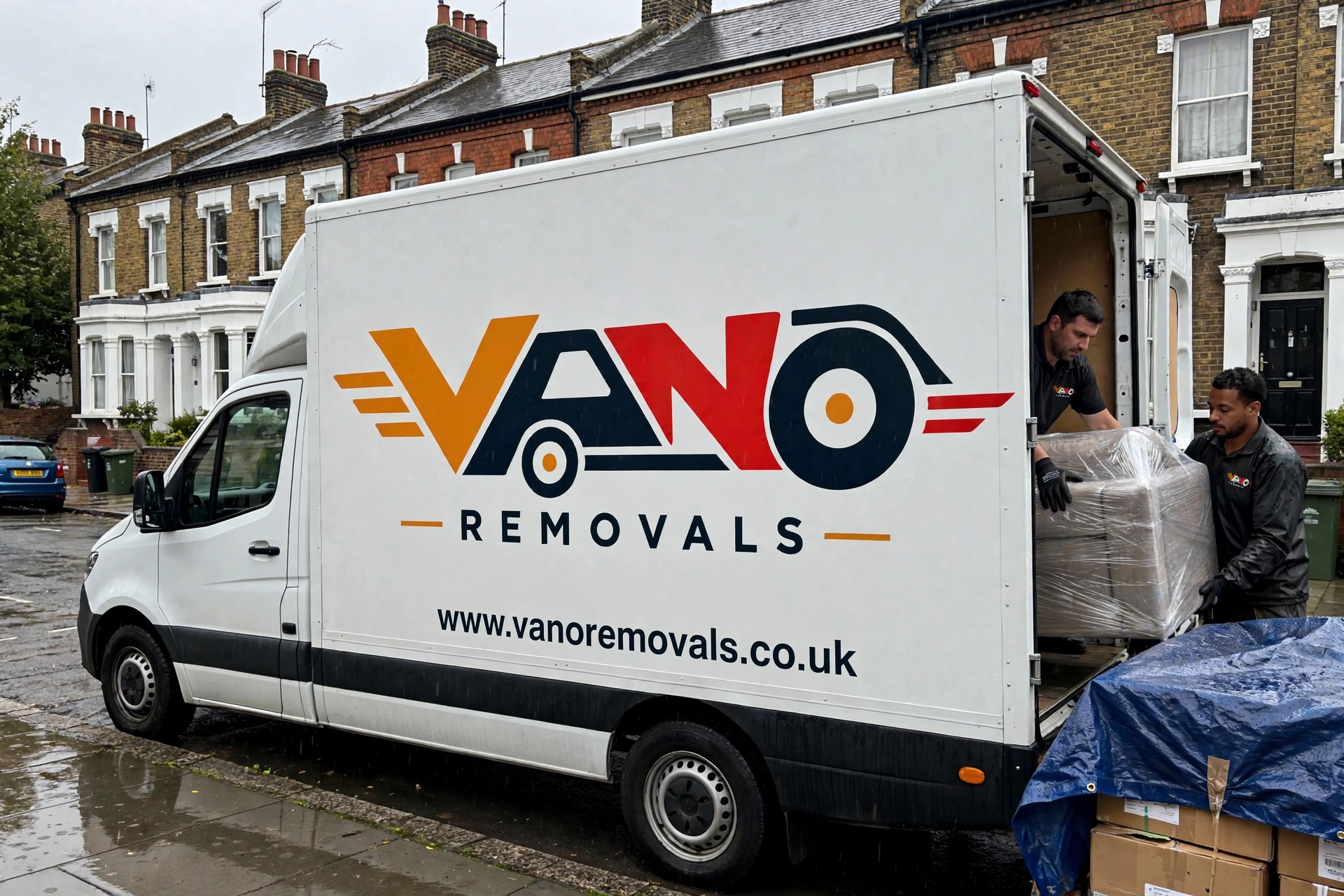
Boxes are only half the wet-weather problem; the other half is the furniture itself. Upholstery, mattresses and anything with a fabric face should be wrapped before it leaves the room, not at the van door, so its journey across the pavement is a covered one. Mattresses travel in mattress covers, sofas in wrap, and wooden furniture gets its protection from blankets that stay dry until the moment they are needed. The discipline is simple: nothing crosses the wet ground unprotected, and nothing damp gets sealed inside wrap for a long journey, because trapped moisture does more harm in a day than rain does in an hour.
Floors and hallways: the mud trail
Wet shoes carry mud and water through the house twice over — once at the old place, once at the new one. A runner of old towels, dust sheets or cheap carpet protector along the route from the front door to the loading area keeps both homes clean and cuts the slip risk on tiles and wooden floors. This is also the day to check what your new property allows: some buildings have rules about covering hallways and lifts during moves, and it is better to know before the crew arrives. If stairs or a lift are involved, wet treads are genuinely slippery — slow the pace down rather than fighting the clock. For the full method, see our guide to protecting floors, doors and walls on moving day.
Timing: rain makes everything slower
Loading a van in the rain takes longer. Trips take longer. Unloading takes longer. That is not a complaint — it is physics: fewer boxes per trip, more care with footing, and covers going on and off. If your move has a fixed window — a lift booking, a parking bay with a time limit, keys to collect — build the extra time in. The most common rain-day problem is not the rain itself but a schedule that was too tight for it. Tell everyone involved that you are planning for wet weather, and agree what happens if the day runs long, before it does. If the timetable itself moves, see what to do when completion day slips.
How the loading changes in wet weather
A crew that works in London works in rain most months of the year, and the loading pattern changes in small, practised ways. The van is loaded so the items needed first at the other end stay driest, the carrying route between door and van is kept as short and as covered as the buildings allow, and the van door is open for minutes rather than as a standing invitation to the weather. Floors inside the van matter too: dry blankets and a swept floor keep the load from sitting in the wet that the first carries tracked in. None of it is dramatic, and that is the point: wet-weather moving is a routine done properly, not an emergency.
What stays the same
Rain does not change what needs to happen, only how carefully it happens. The boxes still need to be taped, labelled and kept dry. The furniture still needs protecting — wet blankets and wraps are worse than useless, so ask how wrapping is kept dry between the van and the door. Fragile items get extra attention on wet days because a slippery grip is a risk to them, not because the rules change. And the "carry yourself" bag — documents, keys, chargers, medication — should travel with you in your car, never in a wet stack by the front door.
The night before: a wet-weather kit
If the forecast shows rain, pack a small kit: plastic sheeting or a roll of pallet wrap, a few large bin bags, old towels, dust sheets or carpet protector, a dry change of clothes and shoes for yourself, and a towel for the van’s loading area if you are doing part of the move yourself. None of this is expensive, and none of it gets used on a dry day. It sits in the corner and gives you options. The most important item is the simplest: confirm the plan with your removal company. Ask how they handle wet moves — covers, order of loading, anything they want you to prepare — and get the answers in your written quote so there is no debate in the rain.
On the day: keep it simple
When the rain starts, do three things: keep boxes inside until the moment they move, keep one clear dry route through the property, and keep the crew informed about anything that has changed — a flooded parking spot, a door that now needs to stay closed, a lift booking you have shortened. Do not try to rush through rain; the time you save rushing is the time you spend cleaning up a dropped
 box. If anything is genuinely too wet to load — paperwork, electronics, anything that must stay dry — say so. It can travel with you.
Before you book: ask, do not assume
Every removal company handles wet weather differently, so do not assume one company’s routine matches another’s. Before you book, ask: how do you protect boxes and furniture in the rain, what happens if the day runs long because of weather, and what should I prepare the night before? Get it in your written quote. A short conversation now is far easier than a wet argument on moving day. Then compare your options before you commit.
Planning a move in London, rain or shine? Tell us about your move and we will confirm the details with a written quote before you book. Call 07459 180023 or get a written quote.
Questions people ask about wet-weather moves
Does rain cancel a move? Almost never. Rain slows a move and changes how it is protected; it does not stop it. The rare exceptions are safety calls, flooded access or storm conditions where carrying itself becomes dangerous, and those are made with you, not for you.
Does a wet-weather move cost more? On an hourly booking the honest answer is that rain costs time: carries are slower, protection takes longer, and the clock reflects it. There is no rain surcharge on our card; the same rates apply, and a written quote discusses the expected hours before the day.
What is my part in it? Small things that help a great deal: a cleared, lit hallway, towels at both doors, the car moved so the van loads close, and anything fragile already wrapped. The crew brings the protection and the routine; the address being ready is your half.
Related services and guides
About the author

Ahmer Faiz, Founder, Vano Removals
Ahmer runs the small London crew that carries out every Vano move, sets the published hourly rates on this website, and replies to every Google review personally. Every guide on this site is written from the moves the team actually does, and checked against the council and TfL pages it quotes.
Reviewed by Ahmer Faiz on 5 November 2026 · Next review: 5 May 2027 · More about Vano Removals