Updated 13 November 2026 · Reviewed by Ahmer Faiz, Founder, Vano Removals
Most moving-day damage is not dramatic. It is a scuffed skirting board, a scratched patch of hallway floor, or a door frame chipped by a sofa corner on the stairs. Small marks, but they cost real money to repair — and if you are renting, they can come straight out of your deposit. Nearly all of it is preventable with a bit of preparation. Here is how to protect floors, doors and walls on moving day.
Start with the floors
Floors take more punishment than any other surface on moving day. Heavy items get dragged a few centimetres, grit gets ground in under shoes, and dolly wheels leave tracks. What you need depends on the flooring:
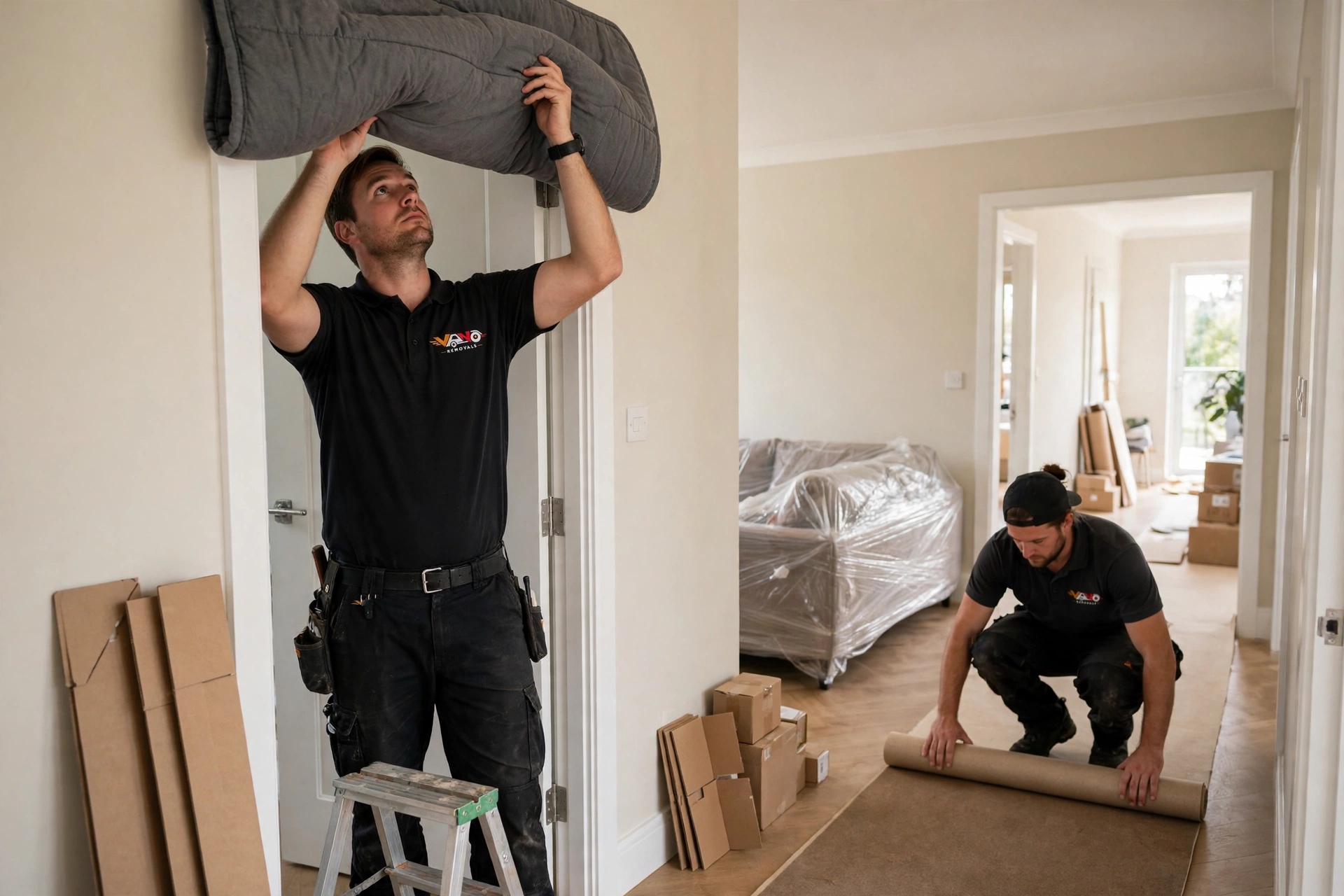
Hardwood and laminate. These scratch easily, and dragging is the main enemy — even short drags across a hallway. Lay a clear path from the front door to the rooms being emptied using hardboard sheets or adhesive floor protection film made for hard surfaces. Tape the seams so the sheets do not shift underfoot.
Carpet. Carpet hides scratches but shows dirt, and heavy furniture leaves crush marks that take days to lift. Use breathable carpet protection film or carpet runners along the carry routes, and ask everyone to wipe shoes or use overshoes at the door. Avoid leaving non-breathable plastic down for long in damp weather.
Tiles and stone. These resist scratches but chip when something heavy is set down hard or dropped. Padded floor runners along the route and a blanket at each doorway threshold absorb the worst of it.
Whichever flooring you have, protect the full route — from the front door to the van — not just the rooms. The hallway and entrance get the most foot traffic of the day.
Protect doors and door frames
Door frames are exactly at sofa-corner height, which is why they get hit so often. A few simple steps make a big difference:
- Take doors off their hinges where the swing narrows a hallway or the doorway is tight. Keep the hinge screws in a labelled bag taped to the door so nothing goes missing. This is a ten-minute job that can save a door frame.
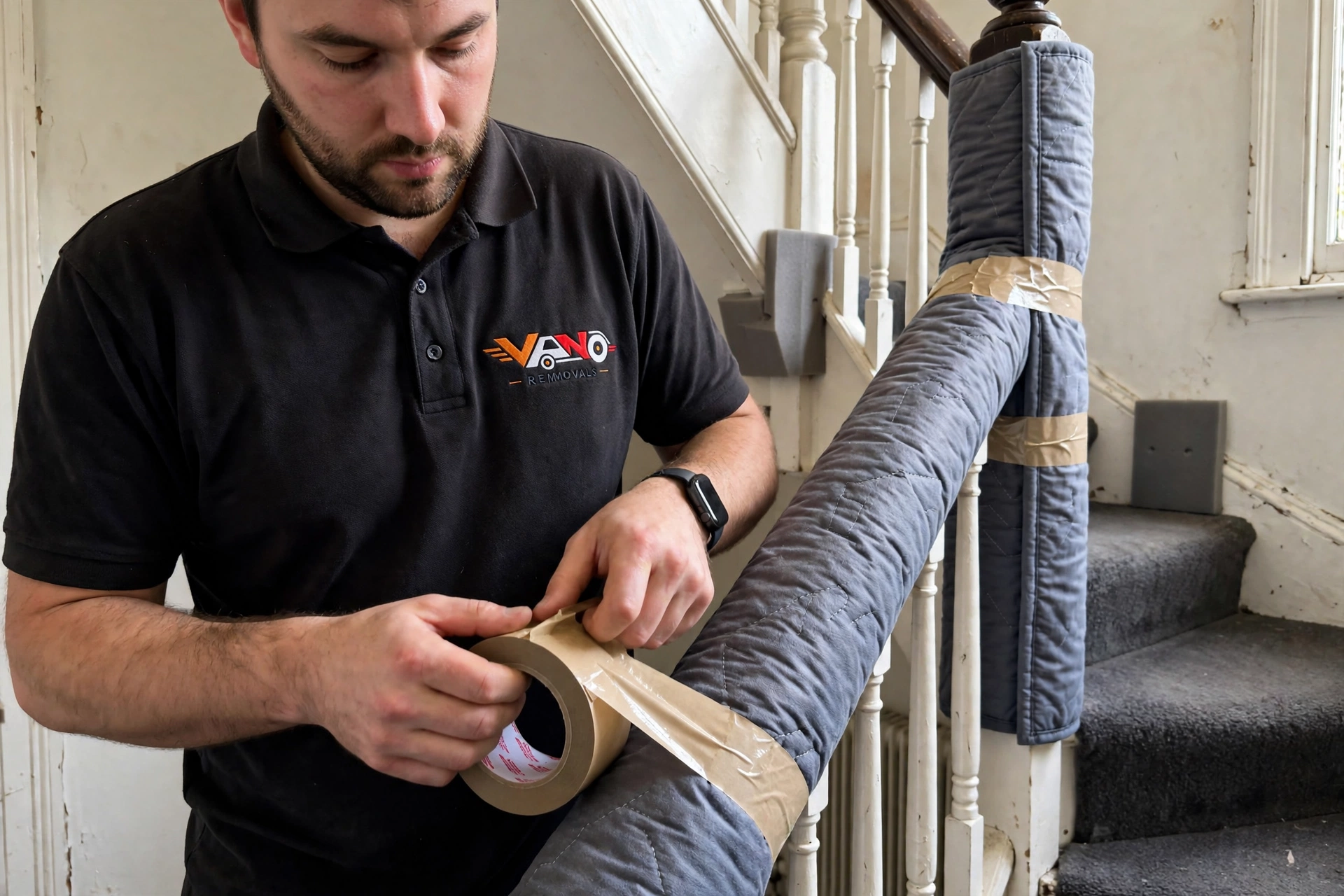
- Pad the frames. Door jamb protectors or simple padded covers slipped over the frame absorb knocks. In a pinch, thick moving blankets taped (with painter's tape, not duct tape) around the frame work well.
- Prop doors open securely. A door that swings shut mid-carry is a classic cause of chipped frames and trapped fingers. Use proper door stops rather than wedges of cardboard that slip.
- Wrap or remove protruding handles. Lever handles catch on everything carried past them. A wrap of bubble wrap and tape is usually enough.
If large furniture needs to come apart to fit through doors, our furniture assembly page explains how disassembly is normally handled as part of a move.
Walls, corners and banisters
Long items — sofas, mattresses, wardrobes — pivot in hallways, and the pivot point is always a wall or corner. Protect the contact points:
- Corner guards on hallway corners and anywhere the route turns. Foam or cardboard corner protectors are cheap and take minutes to fit.
- Wall sections beside narrow doorways can be covered with flattened cardboard boxes taped at the edges with painter's tape, which will not pull paint off when removed.
- Staircases deserve special attention: cover banisters with moving blankets and protect stair treads on the carry line. Stairwell walls get hit from both sides as items turn on the landing.
- Lift lobbies in mansion blocks and new builds: check the building's rules before the day. Many require the lift to be booked and the lobby protected, and some charge for damage to communal areas.
London homes add their own challenge here — narrow Victorian hallways, tight turns on staircases, and basement flats with low ceilings all mean more pivot points. Which brings us to the most useful step of all.
Measure before the day
A surprising amount of damage happens because an item almost fits. Measure your largest pieces of furniture against every doorway, hallway turn and staircase they must pass through — at both properties — allowing extra for the angle of the turn. Anything that will not fit should be dismantled in advance, which is worth confirming when you arrange your house removal.
If you are still deciding what level of help you need, our guide to packing services covers what a crew typically takes care of versus what you handle yourself.
Put together a simple protection kit
You do not need specialist equipment — most of this is inexpensive and available from DIY shops or moving suppliers:
- Hardboard sheets or hard-floor protection film
- Carpet protection film or washable runners
- Door jamb protectors or thick moving blankets
- Foam corner guards
- Painter's tape (low-tack, removes cleanly)
- Flattened cardboard boxes for wall sections
- Overshoes or a shoe-wiping mat at each entrance
- A labelled bag for door hinge screws
Lay the floor protection first, before any carrying starts, and walk the route yourself to check for gaps and trip hazards. Protection that slides around underfoot is worse than none.
Take photos before and after
Photograph the floors, walls and door frames at both properties before anything is moved, with timestamps. If you are renting, these photos are your evidence if there is any dispute about pre-existing marks versus moving-day damage at the end of the tenancy. Repeat the photos once the move is finished. It takes five minutes and can save an argument worth far more.
If there is a gap between leaving one place and getting the keys to the next, our storage solutions page explains the options — and our guide to how much storage space you need helps you size it.
Protection at the new address
Everything in this guide applies twice, because the new address has floors, doors and walls too, and they are usually the ones you care about more. The protection goes down at the destination before the first item comes off the van, not after the first scuff: the route from the front door to the main rooms gets its runners and corner protection first, and the carrying order follows it. If the two addresses differ (fresh paint at the new place, a landlord's inspection pending at the old one), say so at the quote stage, because it changes where the crew spends the protection time.
Confirm protection in your written quote
If you are hiring movers, do not assume floor and door protection is included — ask. A professional crew should arrive with their own floor runners, door covers and blankets, but the only way to be sure is to have it confirmed in your written quote before the day. Ask specifically what protection they bring, and whether doors-off-hinges and reassembly are part of the service. Anything agreed verbally is worth getting in writing.
For what to keep close on the day itself, see our first-night box checklist — and if you are still sorting what the crew will not take, read what removal companies won't move once it is published.
What protection cannot do
Protection prevents the avoidable; it does not rewind the existing. A scuff that was already on a skirting board stays there, which is why the before photographs matter as much as the blankets. Protection also has honest limits on the day itself: a staircase too tight for a wardrobe is a geometry problem before it is a care problem, and the answer is measuring and sometimes dismantling, not more padding. The right expectation is a crew that protects as a routine, tells you where the tight points are before they are reached, and leaves both addresses as they found them, evidenced by your own photographs.
Moving day protection — quick answers
Do I need to bother if I am renting?
Yes — arguably more so. Floor and wall damage is one of the most common deposit deductions, and your pre-move photos plus basic protection are the simplest way to hand the property back in good order.
Can movers take doors off hinges?
Many crews will, but confirm it in advance and in your written quote rather than assuming. Keep screws labelled and taped to the door they came from.
What if damage happens despite protection?
Photograph it straight away and raise it with the company promptly. Another reason a written quote matters — it records what was agreed.
Moving soon? Get a written quote or call 07459 180023 to discuss your move.

Related services and guides


About the author

Ahmer Faiz, Founder, Vano Removals
Ahmer runs the small London crew that carries out every Vano move, sets the published hourly rates on this website, and replies to every Google review personally. Every guide on this site is written from the moves the team actually does, and checked against the council and TfL pages it quotes.
Reviewed by Ahmer Faiz on 5 November 2026 · Next review: 5 May 2027 · More about Vano Removals