
Updated 13 November 2026 · Reviewed by Ahmer Faiz, Founder, Vano Removals
Most removal companies will carry almost everything in your home — furniture, boxes, appliances and bags. But there is a short list of items most will not load onto the van, and finding out on moving day is the worst possible time to learn about it. The reasons are usually safety, the law, or the risk of damage: some items are hazardous in a closed van, some are too valuable to put in shared transit, and some need specialist handling that a standard crew is not set up for.
This guide covers the full list — what is typically refused, why, and exactly what to do with each item instead — so nothing surprises you on the day.
Hazardous materials
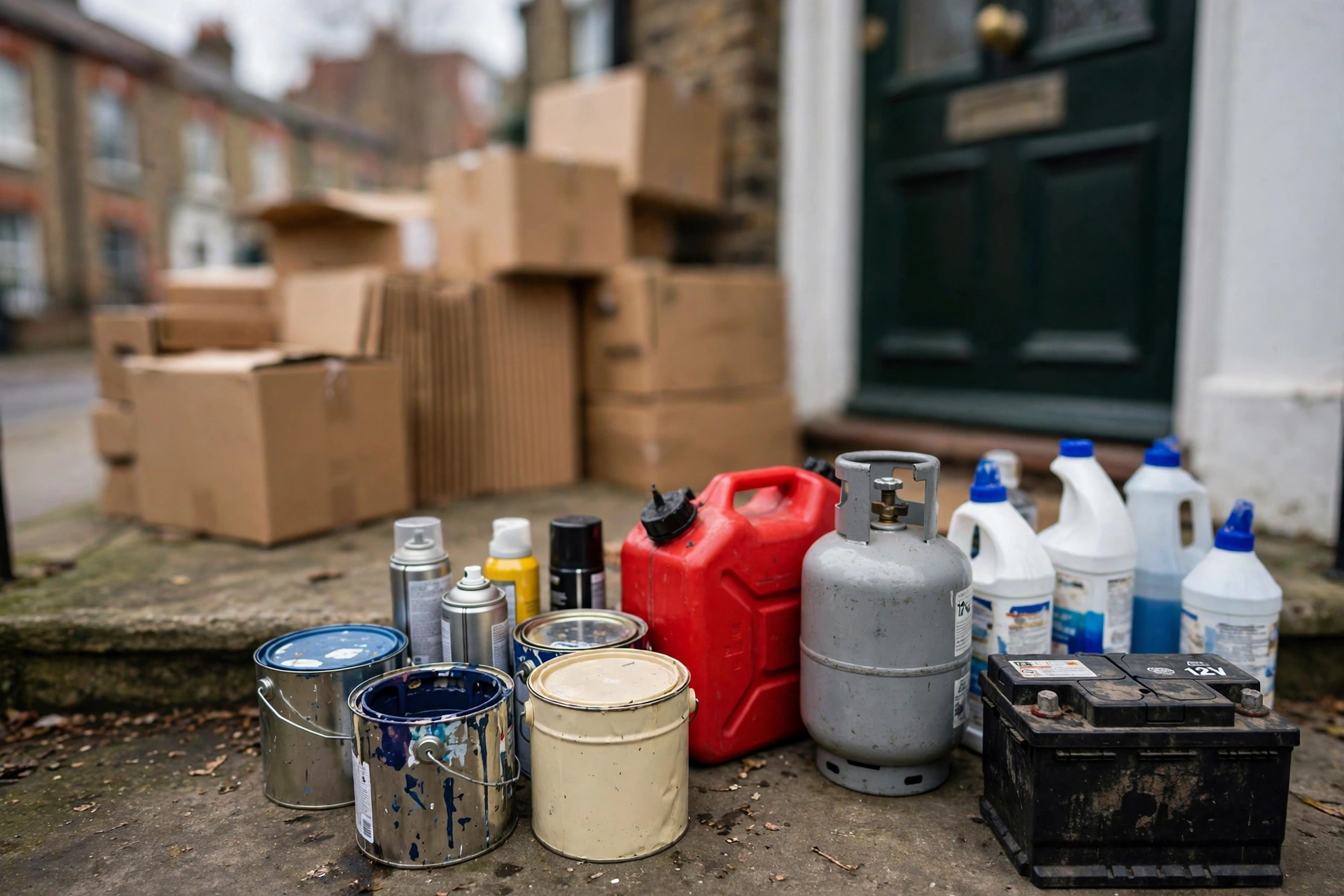
Paint tins, solvents, white spirit, fuel, gas canisters, aerosols, cleaning chemicals, bleach, fireworks and similar items are the most common refusals. In a packed van they can leak, catch fire, or react with other loads, and most removal companies will not take that risk — for the crew's safety as much as for your belongings.
What to do instead: use up what you can in the weeks before the move. Give unopened tins and bottles to a neighbour, or ask your London borough council about hazardous waste disposal — most councils run collection points or scheduled pickups. Never hide hazardous items inside a box. If a tin leaks in transit, it can damage everything around it, and if the crew discovers it, they may refuse the whole load on the spot.
Food and perishables
Frozen and chilled food, open food containers and anything that will spoil in transit are usually refused. A removal van is not a fridge, and a long day in London traffic can ruin food and leave a smell in the van that affects the next customer's load.
What to do instead: run the freezer and fridge down in the final week. Donate unopened tins and packets to a food bank, and carry a small cool bag for moving day itself with sandwiches, drinks and anything you will need before the fridge is running again. If you are moving a short distance and the timing is tight, ask your removal company in advance — some will agree to a small, clearly marked cool bag, but do not assume it without asking.
Cash, jewellery and important documents
Money, jewellery, watches, passports, birth certificates, tenancy agreements, house keys for the new property and similar documents should travel with you, not in the van. This is not a question of trust — it is because these are the items you cannot afford to be without if anything is delayed, and they are difficult to value or replace if lost in transit.
What to do instead: pack one “carry yourself” bag with documents, keys, chargers, medication, phone, wallet and anything you will need on the first night. Keep it in your car or with you at all times, and tell the crew clearly that it is not to be loaded. For more on the first-night essentials, see our guide on what to pack in your first-night box when moving house in London.
Pets
Dogs, cats and other pets are not cargo. Most removal companies will not carry animals in the van, and the noise, heat and movement would distress them anyway. There are also welfare considerations — a packed van is no place for a living animal.
What to do instead: arrange for a friend or family member to look after pets on moving day, or book a specialist pet transport service. If you must move them yourself, keep them in a secure carrier in your own car, with water and a familiar blanket, and move them before the crew arrives or after they leave so the front door can stay open for loading.
Large or specialist items
Some items are not refused outright, but they need to be agreed in advance: pianos, very large or heavy furniture, safes, aquariums, snooker tables and anything that needs dismantling or specialist equipment. A crew that arrives expecting standard furniture may not have the right equipment, the right vehicle layout, or enough people for a piano on the third floor with no lift.
What to do instead: list these items when you request your quote, including stairs, lifts, parking and access at both properties. If dismantling is needed, agree in advance who does it — you or the crew — and confirm it in the written quote before moving day. Photograph anything unusual before it is packed so there is a record of its condition.
Items that need a conversation, not a refusal
Between the everyday load and the will-not-move list sits a middle group where the honest answer is "it depends, so ask early". Upright pianos travel with a removals crew routinely; a full-size grand is a specialist job and should be booked with a piano specialist rather than argued onto a general van. A filled aquarium never travels as it stands: emptied, dried and packed, the tank moves like the fragile glass it is, and the fish travel with you. Very heavy items such as safes depend on the weight and the route through the building. None of these is a refusal; each is a quote-stage conversation, held while there is still time to arrange the right crew or the right specialist.
What to do before moving day
A week before the move, walk through your home with a simple three-way sort: load onto the van, carry yourself, and deal with separately. Label the “carry yourself” bag clearly and put it somewhere the crew will not touch — by the front door, in your car, or in a room you have marked as not to be loaded.
If something on the list is packed anyway
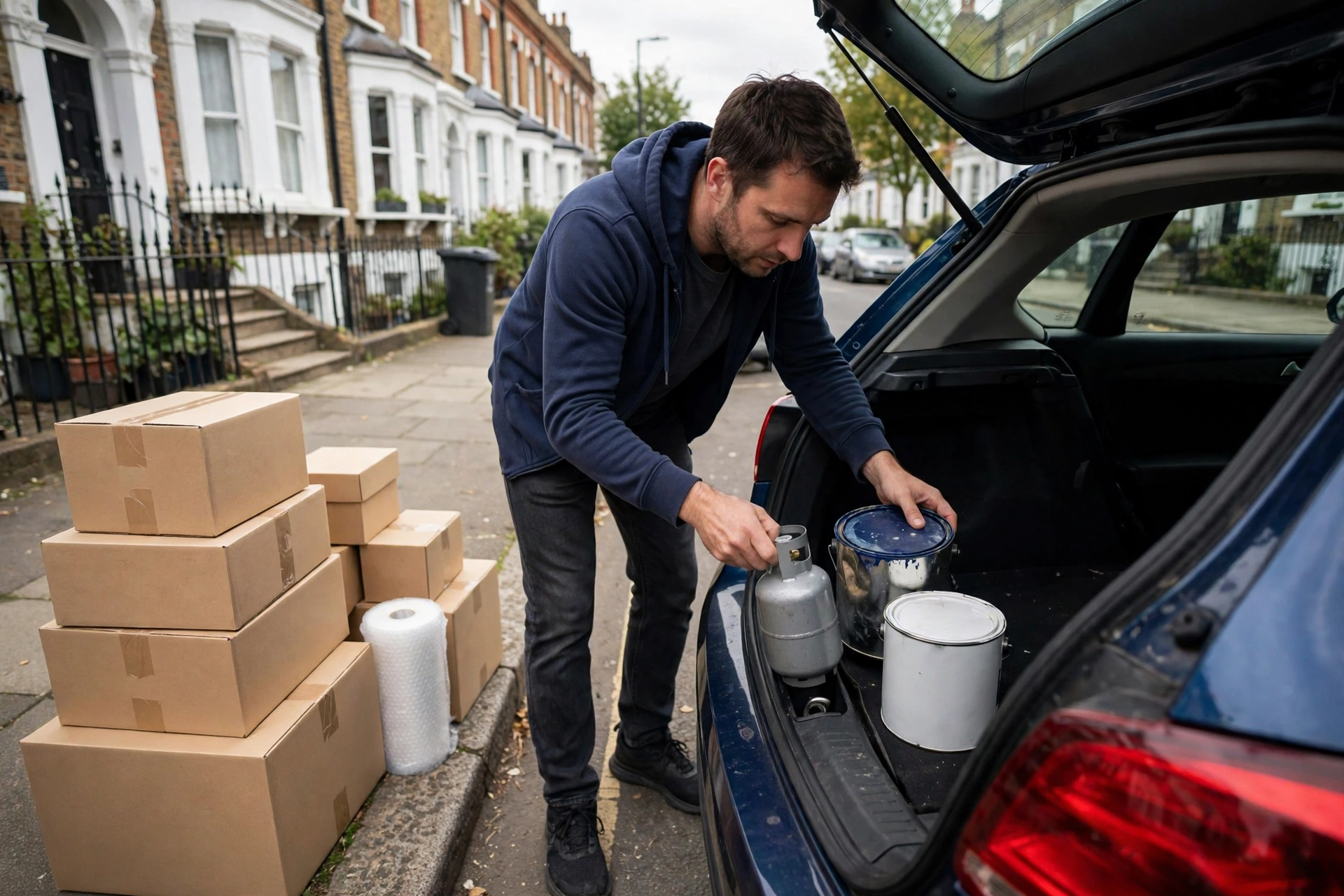
It happens: a sealed box turns out to hold paint, fuel or aerosols. A crew that finds them will set the items aside rather than load them, because carrying hazardous materials unknowingly helps nobody and can void the arrangements around the whole move. The practical routes are simple. Sealed household chemicals you are allowed to transport can travel in your own car, upright and secured. Paint, fuel and anything genuinely hazardous goes to the council's hazardous waste route or a licensed disposal point. The lesson is not to hide things better; it is to sort the garage, the shed and the under-sink cupboard a week early, when every option is still open.
Frequently asked questions
Can removal companies take paint and chemicals?
Most will not. Paint, solvents, fuel, gas canisters and cleaning chemicals are hazardous in a closed van and are among the most common refusals. Use them up, give them away, or arrange disposal through your London borough council before moving day.
Will movers take my plants?
Many companies are reluctant — plants can spill soil, break pots and suffer in a hot van. Small houseplants often travel fine in your own car. For large or valuable plants, ask your removal company in advance; some will agree if they are properly packed, but do not assume it.
Should I pack jewellery and documents myself?
Yes. Cash, jewellery, passports, tenancy agreements and keys should always travel with you in a “carry yourself” bag, not in the van. These are the items you cannot afford to lose or be without, even briefly.
What happens if the crew finds a prohibited item on moving day?
At best, they will leave it behind and you will need to deal with it yourself. At worst — for example with hazardous materials — they may refuse the load. This is why confirming the list in advance matters so much.
Do I need to tell the removal company about a piano in advance?
Always. Pianos, safes, aquariums and anything needing dismantling or specialist equipment must be declared when you request your quote, with full details of stairs, lifts and access at both addresses.
Confirm it in your written quote
Every removal company has its own list, so do not assume one company's rules match another's. Before you book, confirm in writing which items are included, which are excluded, and what happens with anything you were unsure about. If an item is not on the quote, ask — a short question now is far easier than a problem on moving day.
Planning a move in London? Tell us about your move and we will confirm the details with a written quote before you book. Call 07459 180023 or visit /get-a-quote.
If you are clearing out items that will not be moving with you, we can move them to storage or a named charity; disposal itself is via your council's bulky collection or a registered waste carrier you appoint.
For a week-by-week plan, work through our 8-week moving checklist so nothing on this list is left until the last minute.

Related services and guides

About the author

Ahmer Faiz, Founder, Vano Removals
Ahmer runs the small London crew that carries out every Vano move, sets the published hourly rates on this website, and replies to every Google review personally. Every guide on this site is written from the moves the team actually does, and checked against the council and TfL pages it quotes.
Reviewed by Ahmer Faiz on 5 November 2026 · Next review: 5 May 2027 · More about Vano Removals