
Updated 13 November 2026 · Reviewed by Ahmer Faiz, Founder, Vano Removals
A house move that runs an hour long is an inconvenience. A commercial move that runs a day long is lost trading, missed deliveries and staff standing around with nothing to do. That is why a warehouse or office move is planned backwards from one question: when does the business need to be working again?
The answer to that question decides everything else — the crew size, the order of the move, whether it happens in phases or over a single weekend, and what the quote should actually cover. Get the restart time right and the rest of the plan falls into place.
Start with the restart, not the van
Before anyone talks about vehicles, fix three dates and times in writing: the last working hour at the old site, the first working hour at the new site, and any deadline in between that cannot move — a delivery window, a client deadline, a lease handover. A move planned around "sometime next week" will drift; a move planned around "trading again at 9am on Monday" can be costed, staffed and checked.
Tell your removals company about anything that stops work if it is not ready: racking that must be rebuilt before stock goes back on it, desks that need power and network before staff sit down, a goods-in door that is only open at certain hours. The restart time is only real if the things work depends on are in the plan.
Phase it: what moves first, what moves last
Very few commercial moves should be one single lift. Phasing is how downtime is controlled:
- Move the non-essentials first. Archived stock, spare furniture, anything the business can live without for a few days goes in an early phase, while trading continues.
- Move the working core last — and first at the new site. The stock, equipment and desks the business runs on should be the last out of the old site and the first set up at the new one, so the gap between stopping and restarting is as short as possible.
- Keep one thing working throughout if you can. If part of the operation can stay live — a skeleton dispatch desk, a phone line, a single workstation — say so at the planning stage. It changes the order of the move and it is much harder to arrange on the day.
A phased plan also spreads the risk. If one phase slips, the whole move does not slip with it.
Stock, racking and the things that break plans
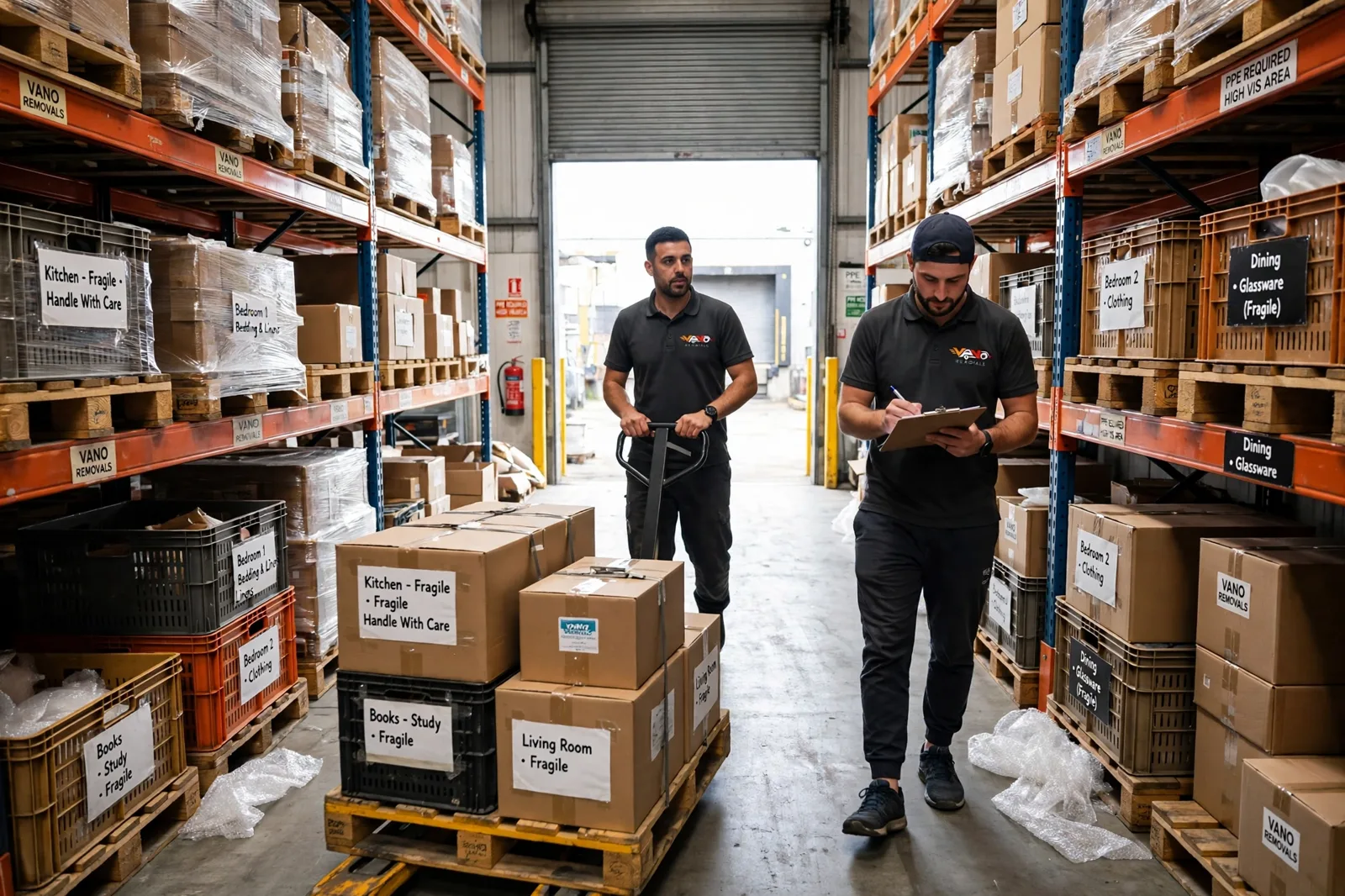
Warehouse moves fail on details that look small on a survey and loom large on the day. Walk both sites with the removals company and note, in writing:
- Racking and shelving: what comes down, what is rebuilt, and who rebuilds it. Dismantling and reassembly should be named in the quote, item by item, not assumed.
- Heavy and awkward items: pallets, safes, machinery, long lengths of racking. These decide the vehicle and the crew, and they are the items most often under-counted.
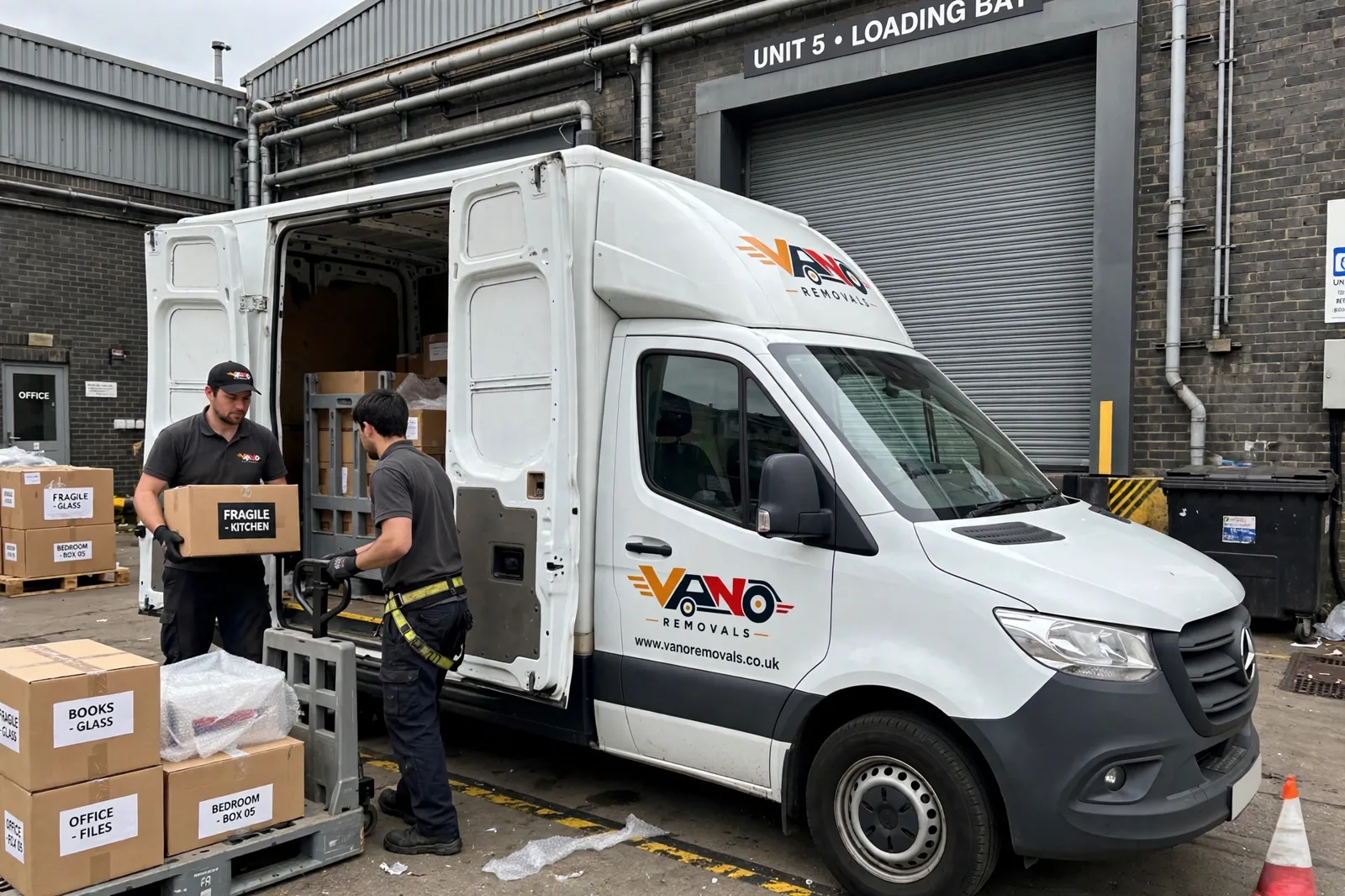
- Access at both ends: loading bays, height limits, goods lifts, and whether a large vehicle can actually reach the door. A van that cannot get to the loading bay costs hours, and hours are the whole budget on a commercial move.
- Labelling that survives the move. Every pallet, cage and crate should be labelled with its destination bay or room at the new site, not just "warehouse". Unlabelled stock is unpacked twice.
Our warehouse moves page covers how we plan warehouse relocations, and our commercial services page covers office and business moves more broadly.
What we move, and what sits with specialists
The honest division of labour keeps a warehouse move safe. Our crews dismantle, carry, transport and place: racking components, palletised and loose stock, shelving, workbenches and office furniture, all labelled to the plan for the new site. Two things sit with specialists rather than with a removals crew. Racking installation and its safety certification belong to racking specialists, because an installed system has to be signed off, not just stood up. And machinery or IT disconnection and reconnection belongs to your own engineers or IT team, who know the systems; we pack, label and move the equipment once it is safely shut down, and place it where the plan says at the other end. A quote that blurs those lines is a quote to question.
IT and office equipment: move it like it matters, because it does

Computers, servers, printers and phone equipment are where commercial moves most often lose a day after the move itself. Back up before anything is unplugged. Photograph the back of each workstation and server before cables come out, so reassembly is a matching exercise, not a puzzle. Keep cables, stands and small parts with the machine they belong to, in a labelled bag — not in a general box.
If IT equipment is part of your move, say so when you ask for the quote, and ask how it will be protected and sequenced. Our IT equipment moves page covers the equipment side of a business move in more detail.
Out-of-hours and weekend working: ask, don't assume
The cheapest way to cut downtime is often to move when the business is not trading — evenings, weekends, or a planned shutdown. Whether that is available, and what it costs, depends on the job: crew availability, building access hours at both sites, and any restrictions on the loading bay. Raise it at the quote stage, not the week before. If weekend or out-of-hours working is part of your plan, it should be written into the quote with its hours stated, so there is no argument about when the clock starts and stops.
What the move costs
Commercial moves are priced as written quotes for the whole job rather than off a domestic tariff, because the variables (phasing, access windows, volume, distance between sites) are the price. The crew time inside the quote still follows a published card: a 3 Men team is £100 an hour, a 2 Men team £85 an hour, Driver Help £70 an hour. To show the shape of it, a small unit move run over two phased days at seven crew hours a day with a 3 Men team is £100 × 14 hours = £1,400 of crew time, before the quote settles your exact phasing, vehicles and distances. What you are checking in any commercial quote is the same discipline: the phases named, the crew and vehicle for each phase, the hours assumed, and what happens to the price if a phase slips.
The quote to ask for
A commercial quote should read like a plan, not a number. Ask for it in writing, and check it covers:
- The phases and their dates, with the restart time stated.
- The crew and vehicles for each phase, not just the first day.
- Dismantling and reassembly, named item by item, where it is booked as part of the move.
- What happens if the day runs long — overruns should continue at the rate agreed at booking, stated in the quote, not negotiated on the day.
- The terms before you commit. Our terms are on the table upfront: no deposit, free cancellation up to 24 hours before the move (inside 24 hours, the fee is up to 25% of the quoted price), quotes valid for 7 days, and payment taken at the time of service.
If a quote arrives as a single bare figure with no phases, no inventory and no restart time, it is not a plan for your business — it is a guess, and guesses cost trading days.
The honest summary
A good commercial move is not the fastest van. It is a restart time, a phased order that protects it, stock and IT handled as if the business depends on them — because it does — and a written quote that names every phase. Plan it that way and the move becomes a weekend's work, not a week's disruption.
Planning a warehouse, office or commercial move in London? Call Vano Removals on 07459 180023 or request a written quote via /get-a-quote — tell us your restart time and both postcodes, and we will plan backwards from there.
Questions people ask about warehouse and commercial moves
Can the move happen without stopping the business? Usually, yes, in phases: the stock and equipment that operations need last are moved last, and the restart order at the new site is planned before the first van is loaded. Complete zero-downtime moves are rare; honest phased ones are routine.
Do out-of-hours and weekend moves cost more? On our card, no: the same hourly rates apply in the evenings and at weekends. The real constraint is availability and the buildings' own permitted hours at both sites, which the quote stage settles.
Who disconnects the machinery and the IT? Your own engineers or IT team. We pack, label, carry, transport and place equipment once it is shut down, and we work to your labelling plan so reconnection starts from the right piles.

Related services and guides


About the author

Ahmer Faiz, Founder, Vano Removals
Ahmer runs the small London crew that carries out every Vano move, sets the published hourly rates on this website, and replies to every Google review personally. Every guide on this site is written from the moves the team actually does, and checked against the council and TfL pages it quotes.
Reviewed by Ahmer Faiz on 5 November 2026 · Next review: 5 May 2027 · More about Vano Removals